 Pin It
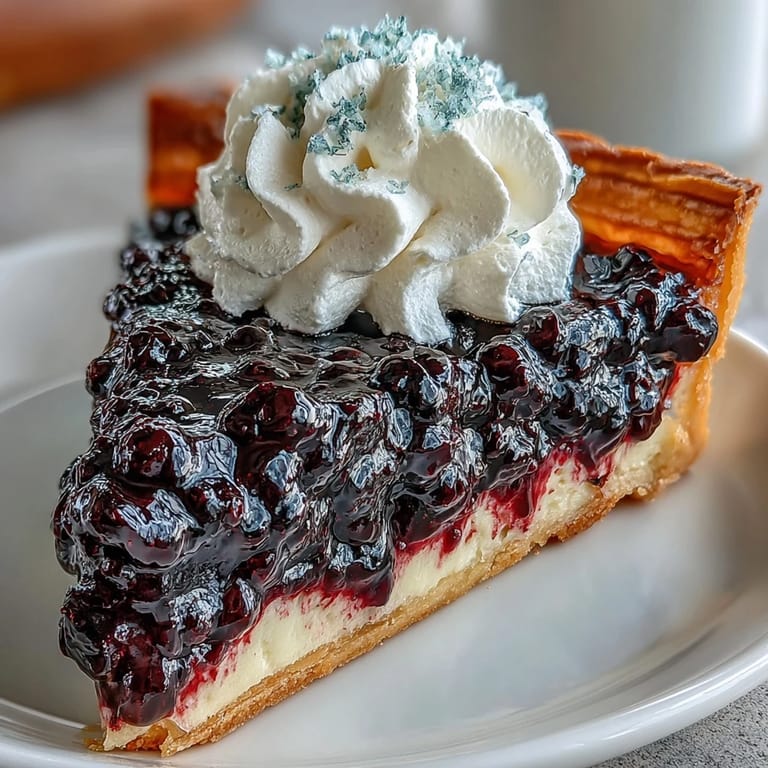
 There's something about black currants that stops me mid-conversation. A friend brought a jar of preserve to my kitchen last autumn, and the moment I twisted it open, the tartness hit like a small revelation. That day I decided to build a tart around them—something that would honor their bright, almost wine-like intensity. The buttery pastry shell came together easily enough, but it was that glossy, jewel-toned curd that made me understand why this berry deserved more than just a quiet spoonful.
I made this for my sister's birthday last spring, and she arrived to find it cooling on the counter, the cream still waiting to be whipped. She watched me work through the final steps, asking why I bothered when a bakery could have done it, and I realized I couldn't quite explain it. Some dishes exist for the doing, not just the eating.
Ingredients
- All-purpose flour (1 1/4 cups): The foundation of everything; room-temperature flour incorporates air differently than cold, so keep yours chilled until the last moment.
- Unsalted butter, cold and diced (1/2 cup): This is where patience pays off—those cold dice stay separate in the dough, creating the flakes that make pastry sing.
- Powdered sugar (1/4 cup for pastry): The fine grind dissolves into the butter, adding subtle sweetness without grittiness.
- Salt (1/4 tsp): A small anchor that lets every other flavor become more itself.
- Egg yolk (1 large): Use only the yolk; the white would make your pastry tough and you'd regret it immediately.
- Ice water (2–3 tbsp): Measure it by feel rather than sight; you want dough that barely holds together, not a shaggy mess.
- Fresh or frozen black currants (1 1/2 cups): Frozen work just as well and often taste brighter than fresh ones shipped across continents.
- Granulated sugar (1/2 cup): This sweetens the curd without overpowering the berry's tartness.
- Eggs and egg yolks (2 eggs plus 2 yolks): The eggs cook into a silky custard base that holds the curd together.
- Lemon juice and zest (2 tbsp juice, zest of 1): Lemon amplifies the currant's natural sharpness, making it taste more like itself.
- Unsalted butter, for curd (4 tbsp): Whisked in at the end, this creates the luxurious, glossy finish that makes curd worth the effort.
- Heavy cream, cold (1 cup): Cold cream whips faster and holds peaks longer; take it straight from the fridge.
- Powdered sugar, for cream (2 tbsp): Finer than granulated, it dissolves completely into the cream.
- Vanilla extract (1/2 tsp): A small note that doesn't announce itself but makes everything feel complete.
Tired of Takeout? 🥡
Get 10 meals you can make faster than delivery arrives. Seriously.
One email. No spam. Unsubscribe anytime.
Instructions
- Whisk and cut:
- In a bowl, combine flour, powdered sugar, and salt, then cut in the cold butter until everything looks like coarse bread crumbs. The texture matters here—you want visible butter pieces, not a fine sand.
- Bring it together:
- Stir in the egg yolk and 2 tablespoons of ice water, mixing just until the dough barely holds. If it resists, add another tablespoon of water one drop at a time; overshooting turns it into Play-Doh.
- Rest and chill:
- Shape the dough into a disk, wrap it tightly, and let it sit in the refrigerator for 30 minutes. This pause allows the gluten to relax and makes rolling dramatically easier.
- Preheat and roll:
- Heat your oven to 350°F (175°C). On a lightly floured surface, roll the chilled pastry into a thin sheet and transfer it to a 9-inch tart pan, pressing it gently into the corners.
- Blind bake:
- Prick the base with a fork, line it with parchment, and fill with pie weights or dried beans. Bake for 15 minutes until the edges are pale gold, then remove the weights and bake another 8 to 10 minutes until the bottom is set and golden.
- Cool the shell:
- Let the pastry shell cool completely on a wire rack; this is not a step to rush, as a warm shell will absorb moisture from the curd.
- Cook the currants:
- In a small saucepan, combine black currants, sugar, lemon juice, and zest over medium heat. Stir gently until the berries burst and release their juice, about 5 minutes—you're listening for a soft murmur, not a rolling boil.
- Strain and smooth:
- Puree the mixture, then press it through a fine mesh sieve to remove the skins. This gives you a smooth curd without any gritty texture.
- Build the custard:
- Whisk the whole eggs and yolks together in a bowl, then gradually whisk in the warm currant puree. Return everything to the saucepan over low heat, stirring constantly until it thickens and coats the back of a spoon, about 10 minutes.
- Finish with butter:
- Remove from heat and whisk in the butter, piece by piece, until the curd is glossy and smooth. The mixture will seem thin at first, then suddenly tighten—that's exactly right.
- Fill and chill:
- Pour the curd into the cooled tart shell and refrigerate for at least 1 hour until it's fully set. You can make this up to a day ahead; it actually improves as it sits.
- Whip the cream:
- Just before serving, whip the cold heavy cream with powdered sugar and vanilla to soft peaks. Stop before it becomes grainy or you'll have sweetened butter instead of clouds.
- Serve:
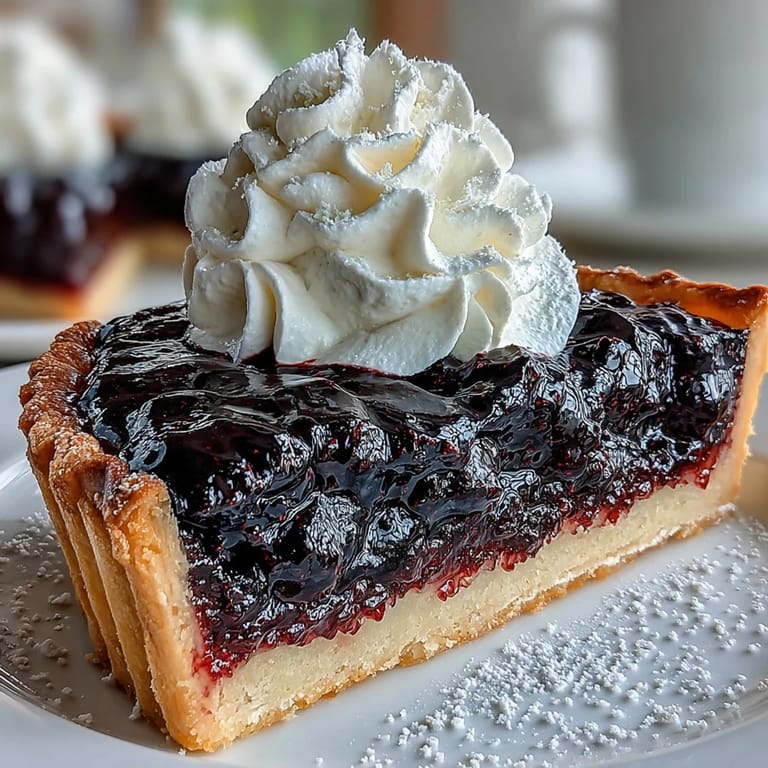
- Top the chilled tart with whipped cream, either piped decoratively or simply spooned on with a casual hand.
 Pin It
 My mother tasted this tart one quiet Sunday afternoon and didn't say much of anything, which somehow meant more than if she'd offered praise. She just closed her eyes and took another bite, and in that moment I understood that some dishes transcend their ingredients and become small acts of care.
The Pastry Secret
The difference between a pastry that shatters and one that crumbles lies in the temperature of everything you touch it with. I learned this the hard way after turning out a dozen tough shells before someone older and wiser reminded me that butter wants to stay cold and aloof. Your hands should be cool, the water should be ice, and the butter should never apologize for its firmness. Once you accept this, the pastry stops resisting and surrenders beautifully.
Black Currants Beyond the Obvious
These berries taste almost floral when they're good, with a depth that grocery store raspberries can only dream of. If you can't find them fresh, frozen actually preserves that intensity better—the thaw somehow concentrates their personality rather than diminishing it. I've made this tart with blackberries when I was desperate, and while it was still delicious, it was a different song entirely. Black currants sing louder.
Variations and Timing
This tart thrives on flexibility, which makes it perfect for days when you're cooking without a detailed plan. The pastry can be made a day ahead and simply left wrapped in the cold; the curd can rest overnight and actually tastes rounder the next day. Only the whipped cream needs to be timed close to serving—it holds its nerve for maybe two hours before it starts to weep.
- For nuttiness, stir 1/4 cup of ground almonds into the flour before cutting in the butter; it adds a subtle earthiness that complements the tartness.
- If black currants are impossible to find, raspberries or blackberries work in a pinch, though you might add an extra tablespoon of lemon juice to match the brightness.
- This dessert pairs beautifully with a chilled glass of Moscato or Riesling if you're feeling celebratory.
 Pin It
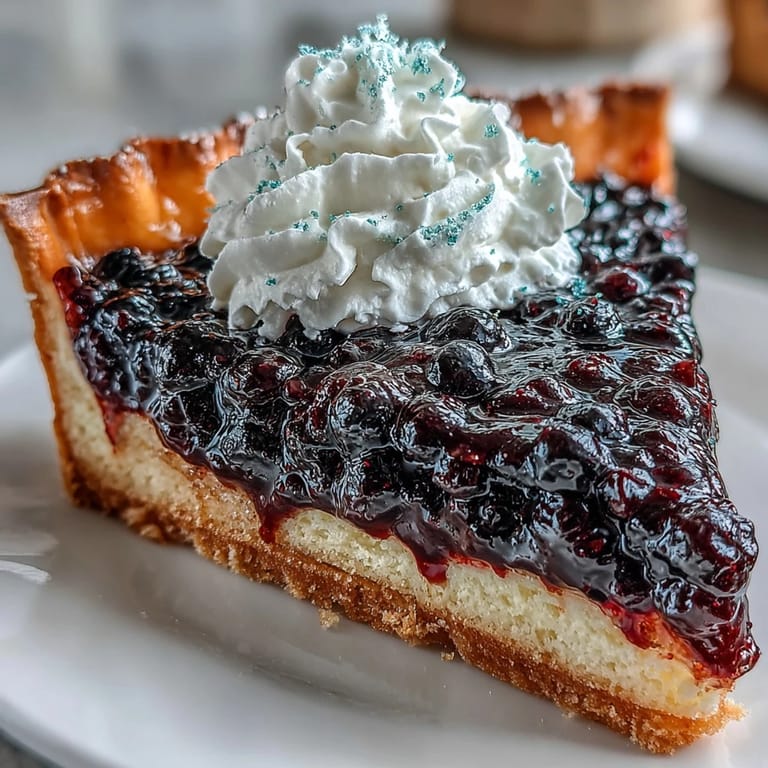
 Black currant tart is worth making because it reminds you that patience and good ingredients are still the most honest kind of cooking. Serve it with someone who understands that the best moments in the kitchen are often the quiet ones.
Recipe FAQs
- → How do I prevent a soggy tart crust?
Blind baking the pastry with weights creates a crisp base that resists sogginess from the curd filling.
- → Can I use frozen black currants?
Yes, frozen black currants work well and can be used directly after thawing for the curd.
- → What alternatives can be used for black currants?
Blackberries or raspberries are good substitutes that maintain a similar tartness and color.
- → How should the whipped topping be prepared?
Whip cold heavy cream with powdered sugar and vanilla extract until soft peaks form for a light, sweet finish.
- → How long should the tart chill before serving?
Chilling for at least one hour ensures the curd is fully set and flavors meld beautifully.