 Pin It
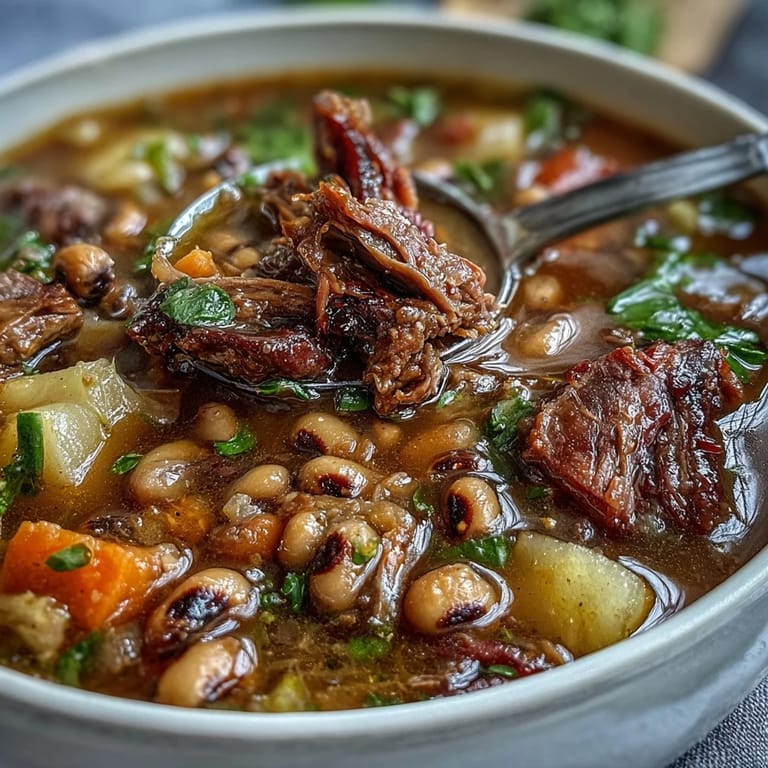
 My grandmother used to say that black-eyed peas were good luck, but honestly, I think the real magic was in those smoked ham hocks simmering away on her stove, filling the kitchen with a warmth that had nothing to do with the oven. The first time I made this stew without her guidance, I stood in my own kitchen at dusk, watching the broth turn that beautiful amber color, and suddenly understood why she made it so often. It wasn't just about feeding people—it was about that feeling you get when something is being made with intention, the kind of meal that makes folks linger at the table long after they've finished eating.
I made this for my neighbor who'd just moved in, and she showed up at my door the next afternoon asking if I had leftovers because her kids wouldn't stop talking about the cornbread we'd served alongside it. That's when I knew this recipe was a keeper—not just because it was delicious, but because it sparked that kind of conversation that builds friendships. Now whenever there's a reason to gather, whether it's a holiday or just a random Tuesday night when people need comfort, this stew is what I reach for.
Ingredients
- Smoked ham hocks (2, about 1.5 lbs): These are the soul of the stew—don't skip them or substitute with regular ham, as the smoke and bone-deep flavor is irreplaceable.
- Dried black-eyed peas (2 cups, soaked overnight): Soaking them overnight makes them cook evenly and prevents that mushy, broken texture that ruins the whole thing.
- Onion, carrots, and celery (1 large onion, 2 carrots, 2 celery stalks, all diced): This holy trinity builds the foundation—don't rush the sauté step or you'll miss out on that sweet, mellow depth.
- Potatoes (2 medium, cut into 1-inch cubes): They add body and heartiness, but keep them sized evenly so they cook at the same rate as everything else.
- Diced tomatoes with juice (1 can, 14.5 oz): The acidity brightens everything and keeps the broth from tasting one-note and heavy.
- Garlic (3 cloves, minced): Added after the vegetables soften, it prevents burning and keeps its flavor sharp and present.
- Low-sodium broth (6 cups): Use chicken or vegetable—either works beautifully, and low-sodium lets you control the salt level yourself.
- Bay leaves, dried thyme, smoked paprika, black pepper, and cayenne: Layer these gradually and taste as you go; the cayenne is optional but gives a gentle kick that makes people ask for the recipe.
Tired of Takeout? 🥡
Get 10 meals you can make faster than delivery arrives. Seriously.
One email. No spam. Unsubscribe anytime.
Instructions
- Soak your peas the night before:
- If you're using dried black-eyed peas, cover them generously with cold water and let them sit overnight—this softens them so they cook evenly without splitting apart. If you're in a rush or forgot, canned peas work perfectly fine; just rinse them well before using.
- Build your flavor base:
- Heat a splash of oil in your Dutch oven over medium heat, then add the onion, carrots, and celery, stirring them for about 5 minutes until they soften and start to smell sweet. This is the moment to pay attention—you're coaxing out their natural sugars, and the kitchen should smell almost like Thanksgiving.
- Toast the garlic:
- Add your minced garlic and cook for just 1 minute, stirring constantly so it doesn't burn and turn bitter. You'll know it's ready when the whole kitchen smells alive and fragrant.
- Combine everything and bring to a boil:
- Add the ham hocks, drained peas, potatoes, tomatoes with their juice, broth, bay leaves, thyme, smoked paprika, black pepper, and cayenne if you're using it. Stir everything together, then let it come to a rolling boil—you'll see the surface start to bubble and dance.
- Low and slow is the name of the game:
- Once it boils, reduce the heat to low, cover the pot, and let it simmer for about 2 hours, stirring occasionally to make sure nothing sticks to the bottom. The stew will darken slightly and smell absolutely incredible as the peas break down and the ham adds its smoke to everything.
- Shred that ham and return it to the pot:
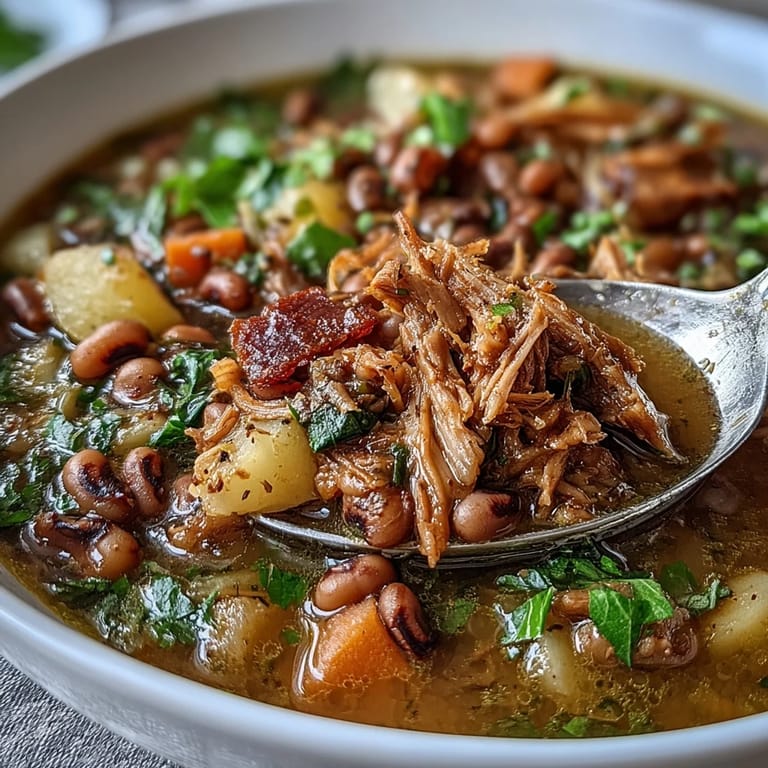
- After 2 hours, pull out the ham hocks and let them cool just long enough to handle, then pick the meat off the bone, shred it with two forks, and discard the skin and excess fat. Stir the shredded meat back into the stew—this is what makes it feel abundant and makes people feel actually fed.
- Taste, adjust, and finish:
- Taste for salt and add more if needed, then simmer uncovered for another 10 to 15 minutes if you want it thicker, or skip this step if you like it brothier. Either way works; it's about what feels right to you.
- Serve with joy:
- Remove the bay leaves, ladle the stew into bowls, top with fresh parsley if you have it, and set out hot sauce for anyone who wants an extra kick. Cornbread or rice on the side turns this into something people remember.
 Pin It
 There's a moment toward the end of cooking this stew when you lift the lid and the steam hits your face all at once—that's when you know something sacred has happened in that pot. My kids now ask for this by name, which means it's graduated from being just dinner to being part of who we are as a family.
Why This Stew Wins Every Time
The beauty of this stew is that it requires almost no active cooking once everything is in the pot. You can prep your ingredients in 20 minutes, get everything simmering, and then walk away to do whatever else needs doing—this isn't a recipe that demands your attention every 10 minutes. The smoked ham hocks do the work, transforming simple vegetables and legumes into something that tastes like it took all day to make when really you just needed patience and a good pot.
Making It Your Own
I've made this stew probably fifty times, and I've changed it just about as many ways. Sometimes I add a splash of apple cider vinegar at the end, which adds a brightness that makes people tilt their head and wonder what they're tasting. Other times I've thrown in collard greens during the last 15 minutes, or swapped the potatoes for sweet potatoes when I'm feeling like something different.
Storage and Serving Ideas
This stew actually improves after a day or two in the refrigerator, as all the flavors get to know each other better and the broth thickens naturally. It keeps well for up to 3 days and freezes beautifully for up to 3 months, which makes it perfect for doubling on a Sunday afternoon and having weeknight dinners basically already made.
- Serve over steamed rice for a classic pairing, or with cornbread on the side for soaking up every last bit of broth.
- If you want to make it vegetarian, omit the ham hocks and add a tablespoon of liquid smoke plus an extra teaspoon of smoked paprika to keep that depth.
- Leftovers can be thinned out with extra broth to make a lighter soup, or thickened more by simmering uncovered if you like it stew-thick.
 Pin It
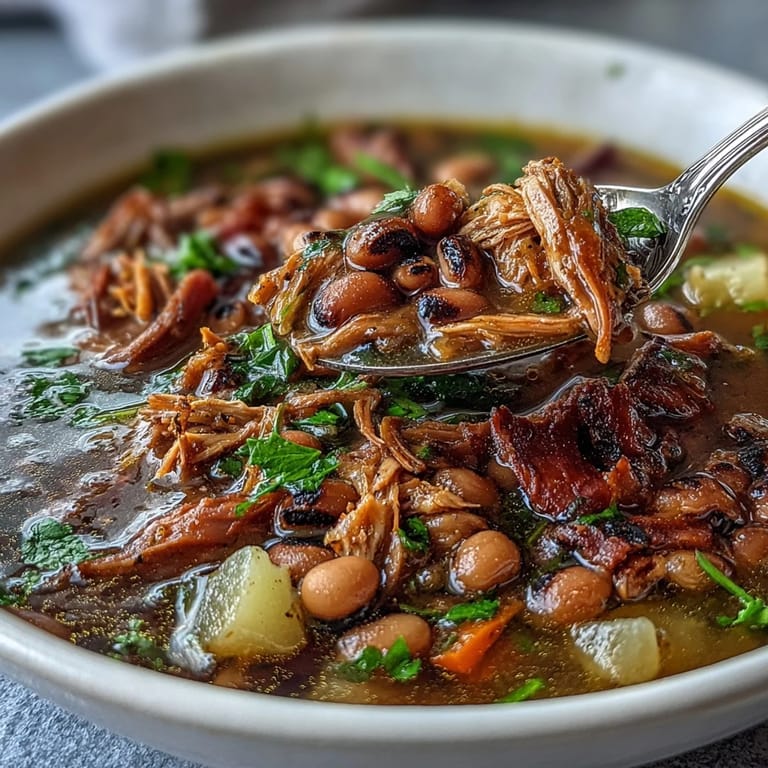
 This stew is the kind of dish that bridges generations and seasons, equally at home at a New Year's celebration or a quiet winter night when you just need something warm and true. Make it, and it'll become one of those recipes you find yourself making again and again, each time feeling like you're sharing something real with the people who eat it.
Recipe FAQs
- → Do I need to soak dried black-eyed peas before cooking?
Yes, dried black-eyed peas should be soaked overnight in plenty of water before adding them to the stew. This reduces cooking time and helps them cook evenly. Alternatively, you can use canned black-eyed peas that have been rinsed and drained to skip the soaking step entirely.
- → Can I make this stew vegetarian?
Absolutely. Simply omit the smoked ham hocks and use additional smoked paprika or a few drops of liquid smoke to maintain that smoky flavor. You may want to add extra vegetables or increase the quantity of black-eyed peas to make the stew more filling without the meat.
- → What should I serve with black-eyed pea stew?
Cornbread is a classic Southern accompaniment that pairs beautifully with this stew. You can also serve it over steamed white rice, which helps soak up the flavorful broth. Crusty bread, buttermilk biscuits, or a simple green salad also make excellent sides.
- → How long does this stew keep in the refrigerator?
This stew stores well refrigerated for up to 3 days. The flavors actually improve after a day or two as the ingredients continue to meld together. Reheat gently on the stovetop, adding a splash of broth or water if the stew has thickened too much.
- → Can I freeze this stew?
Yes, this stew freezes exceptionally well. Let it cool completely before transferring to airtight containers or freezer bags. It will keep for up to 3 months in the freezer. Thaw overnight in the refrigerator before reheating on the stovetop.
- → How do I know when the ham hocks are fully cooked?
The ham hocks are done when the meat is falling off the bone and shreds easily with a fork. This typically takes about 2 hours of simmering. Once removed from the pot, you should be able to separate the meat from the skin, bone, and excess fat without much effort.