 Pin It
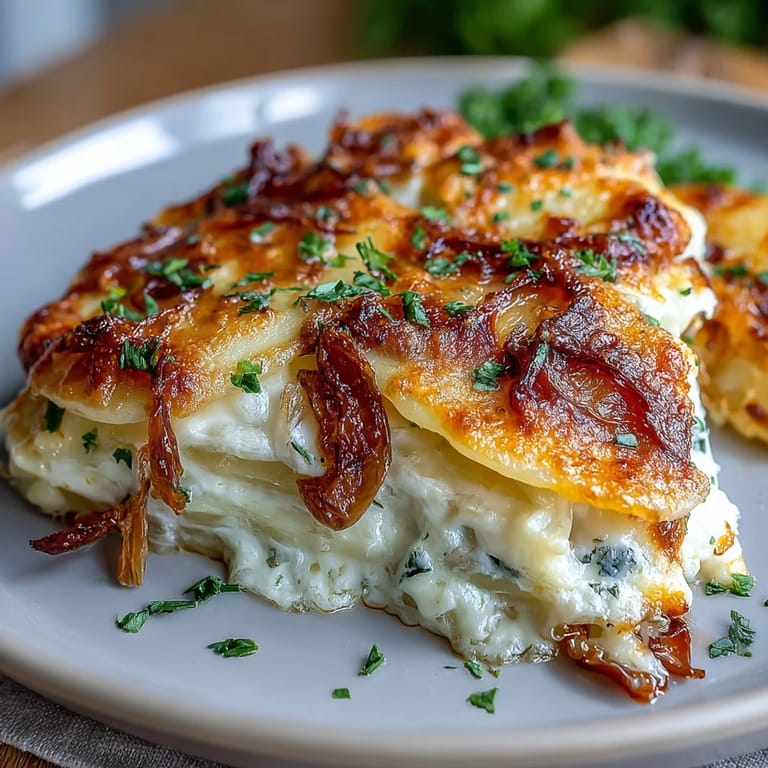
 My aunt showed up to a holiday potluck with this casserole one November, and I watched it disappear faster than any dessert at the table. That golden, bubbling top caught the light, and the smell of melted cheddar and cream had everyone hovering nearby before it even cooled. Years later, I finally asked for her method, and what she shared was refreshingly straightforward—no complicated tricks, just good layering and patience. Now I make it myself whenever I need something that feels both humble and impressive, something that somehow makes ham taste even better than it already does.
I made this for a dinner party once and accidentally sliced my potatoes way too thick, panicking as I layered them. They still cooked through, but slower—which actually taught me something valuable: thinner slices aren't just about looking nice, they soak up the sauce better and create that creamy interior everyone loves. That small mishap became the reason my version turned out even better the second time around.
Ingredients
- Yukon Gold or Russet potatoes (2 lbs, peeled and thinly sliced): Waxy varieties like Yukon Gold hold their shape beautifully, while Russets get slightly creamier—pick whichever you have on hand, but slice them thin enough that light passes through them.
- Medium yellow onion (thinly sliced): Onions soften into sweetness as they bake and distribute flavor throughout every layer without overpowering anything.
- Sharp cheddar cheese (2 cups shredded): Don't use pre-shredded from a bag if you can help it; block cheese melts smoother and tastes less starchy.
- Mozzarella cheese (1 cup shredded): This keeps everything stretchy and creamy while the cheddar brings sharp flavor—using both is the real secret.
- Whole milk (2 cups): Half-and-half makes it richer, but whole milk is forgiving and lets the cheese shine without becoming overwhelming.
- Unsalted butter (2 tbsp): Unsalted lets you control the salt level, especially since the cheese adds its own.
- All-purpose flour (2 tbsp): This thickens the sauce just enough so it clings to the potatoes instead of pooling at the bottom.
- Salt, black pepper, garlic powder, and paprika: Garlic powder diffuses evenly through hot liquid better than fresh garlic, and paprika on top browns beautifully.
Tired of Takeout? 🥡
Get 10 meals you can make faster than delivery arrives. Seriously.
One email. No spam. Unsubscribe anytime.
Instructions
- Get the oven ready and prep your dish:
- Preheat to 375°F and grease your 9x13-inch baking dish with butter or oil so nothing sticks when you dig in later.
- Build your cream sauce:
- Melt butter over medium heat, sprinkle flour over it, and whisk for about a minute until it smells slightly toasted—this roux is what prevents lumps when the milk hits it. Pour the milk in slowly while whisking constantly, then let it bubble and thicken for a few minutes until you can coat the back of a spoon.
- Season and cheese the sauce:
- Off heat, stir in salt, pepper, garlic powder, and half of both cheeses until everything melts together into something smooth and glossy. Taste it now and adjust if needed—you're seasoning the whole dish, so be honest.
- Layer with intention:
- Spread half the potato slices across the bottom, scatter half the onions over them, then pour half the sauce to coat everything. Repeat with the remaining potatoes, onions, and sauce, making sure the top layer of potatoes gets sauce kissed over it.
- Top and cover:
- Scatter the remaining cheese blend and a sprinkle of paprika across the top, then cover the whole dish tightly with foil so it doesn't brown too fast while the potatoes cook through.
- Two-stage bake:
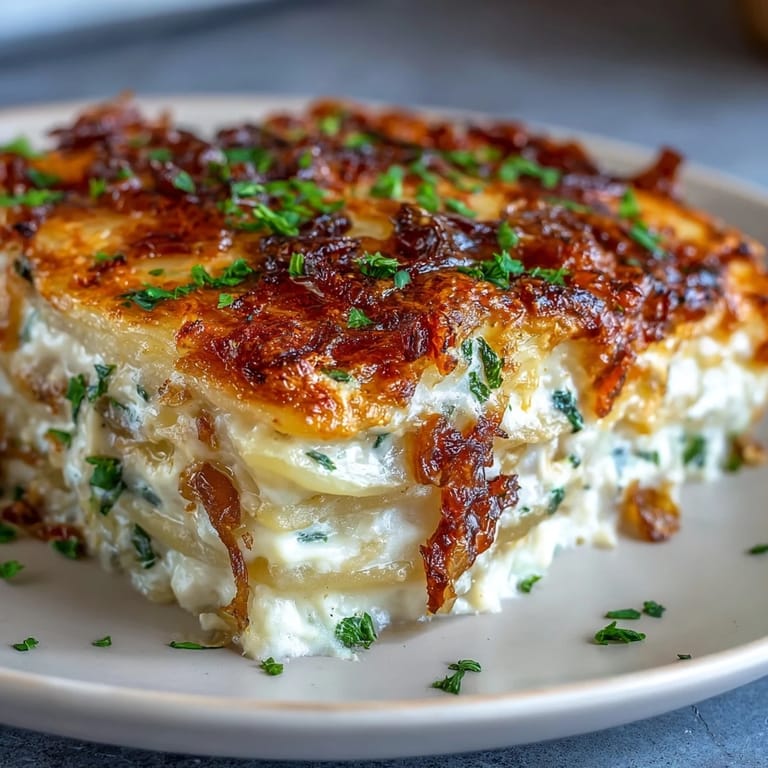
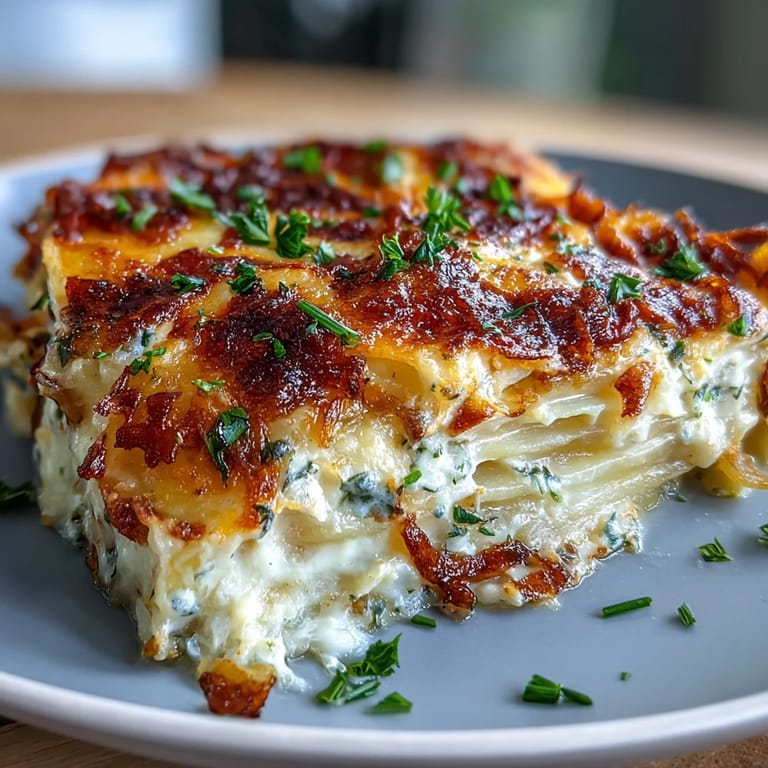
- Bake covered for 40 minutes, then pull the foil off and bake another 25 to 30 minutes until the top turns golden and the potatoes are tender when you poke them with a fork. The foil-off stage is when the magic happens—those edges get crispy and that top gets color.
- Rest before serving:
- Let it sit for 10 minutes out of the oven so the layers set slightly and serving becomes less messy.
 Pin It
 Someone once told me that scalloped potatoes are humble comfort in its truest form, and that stuck with me—this dish shows up at holiday tables not because it's trendy or complicated, but because people genuinely crave that creamy, cheesy warmth. It's become my answer whenever someone needs a side that never fails and somehow makes the main course taste even better.
Timing and Make-Ahead
You can absolutely assemble this dish in the morning and refrigerate it covered until dinner, which means less chaos when guests arrive. Just add 10 to 15 minutes to the total baking time if it goes straight from cold, and check it a bit earlier to make sure the potatoes are tender without the top burning.
Flavor Swaps and Variations
Gruyère brings a nutty sophistication that replaces cheddar beautifully, or mix in a small handful of chopped fresh thyme or sage if you want the sauce to feel more herbaceous. Some people add a tiny pinch of nutmeg to the cream sauce itself—just a whisper of it—and it adds a subtle depth that nobody can quite name but everyone notices.
Storage and Serving
Leftovers reheat gently in a low oven with foil on top so they warm through without drying out, and honestly, cold scalloped potatoes straight from the fridge make a surprisingly good next-day snack. This recipe pairs perfectly alongside ham, roast chicken, or even a simple grilled steak.
- Slice potatoes just thin enough that they cook through in the given time, or your dish stays raw in the center.
- Use a mandoline if you have one and patience for careful handling—it keeps slices perfectly even.
- Assemble a few hours ahead if your schedule demands it, but don't let it sit longer than 24 hours or the potatoes begin to discolor.
 Pin It
 This casserole has taught me that sometimes the most appreciated dishes are the ones that feel effortless but taste like you cared. Make it, share it, and let it become one of those recipes people actually ask you to bring again.
Recipe FAQs
- → What type of potatoes work best for scalloped potatoes?
Yukon Gold or Russet potatoes are ideal, as they hold their shape well and provide a tender texture when baked thinly sliced.
- → How do I achieve a creamy cheese sauce without lumps?
Whisk the flour with melted butter to create a roux before slowly adding milk while whisking constantly to ensure a smooth, lump-free sauce.
- → Can I prepare scalloped potatoes ahead of time?
Yes, you can assemble the layers several hours in advance and bake shortly before serving to retain freshness and texture.
- → What variations can enhance the flavor profile?
Add a pinch of nutmeg to the cheese sauce or substitute Gruyère cheese for a richer, more robust taste.
- → How do I know when the scalloped potatoes are done?
The potatoes are tender when pierced with a fork and the top is golden brown, usually after about one hour and ten minutes of baking.