 Pin It
 The steam rising from my cousin's pot in Baton Rouge smelled like butter, earth, and something I couldn't name but desperately wanted to understand. She stood at the stove for what felt like forever, stirring a bubbling brown paste with the focus of someone defusing a bomb. That was my first real lesson in patience and roux. Years later, I finally stopped rushing it, and everything changed.
I made this for a friend who had never tasted anything Cajun, and she went quiet after the first bite, which is the highest compliment in my book. We sat on my back porch with bowls balanced on our knees, and she asked if I could teach her to make it. I realized then that étouffée isn't just dinner. It's an invitation into a whole way of thinking about food, time, and care.
Ingredients
- Vegetable oil and all purpose flour: These two humble ingredients become the foundation of everything when cooked low and slow into a dark roux, so use a heavy pot and never walk away.
- Onion, green bell pepper, and celery: The holy trinity of Cajun cooking, these three vegetables add sweetness, structure, and a vegetal backbone that balances the richness of the roux.
- Garlic: Fresh minced garlic brings a sharp, aromatic punch that blooms in the hot oil and marries all the other flavors together.
- Shrimp or crawfish: Sweet, tender, and quick cooking, shrimp are traditional and accessible, though crawfish will give you that authentic Louisiana soul if you can find them.
- Seafood stock: This adds brininess and body to the sauce, but chicken stock works in a pinch if that's what you have on hand.
- Worcestershire sauce: A few dashes deepen the umami and add a subtle tang that rounds out the spice.
- Cajun seasoning and cayenne pepper: These bring the heat and complexity, but start light because you can always add more after tasting.
- Bay leaf: One leaf simmered in the pot adds an herbal, almost floral note that you'll miss if you skip it.
- Cooked white rice: Fluffy, neutral, and starchy, rice is the perfect vehicle for soaking up every bit of that silky, spiced sauce.
- Green onions and parsley: Fresh, bright, and grassy, these garnishes cut through the richness and make each bite feel alive.
Tired of Takeout? 🥡
Get 10 meals you can make faster than delivery arrives. Seriously.
One email. No spam. Unsubscribe anytime.
Instructions
- Start the roux:
- Heat the vegetable oil in a large heavy pot over medium heat, then whisk in the flour slowly until smooth. Stir constantly with a wooden spoon or whisk, watching as it darkens from blonde to peanut butter to deep chocolate brown, which takes about 15 to 20 minutes and cannot be rushed.
- Add the trinity:
- Toss in the diced onion, bell pepper, and celery, stirring them into the roux until they soften and release their moisture, about 5 to 7 minutes. The vegetables will sizzle and smell sweet.
- Bloom the garlic:
- Stir in the minced garlic and let it cook for just a minute until fragrant and golden. Any longer and it will turn bitter.
- Build the sauce:
- Gradually pour in the seafood stock, whisking constantly to prevent lumps, until the roux and stock come together into a smooth, velvety base. It should look glossy and coat the back of your spoon.
- Season and simmer:
- Add the shrimp, Worcestershire sauce, Cajun seasoning, cayenne, bay leaf, salt, and black pepper, stirring gently to distribute everything evenly. Bring the pot to a gentle simmer, then lower the heat and let it cook uncovered for 20 to 30 minutes, stirring occasionally as the sauce thickens and the shrimp turn pink and tender.
- Taste and finish:
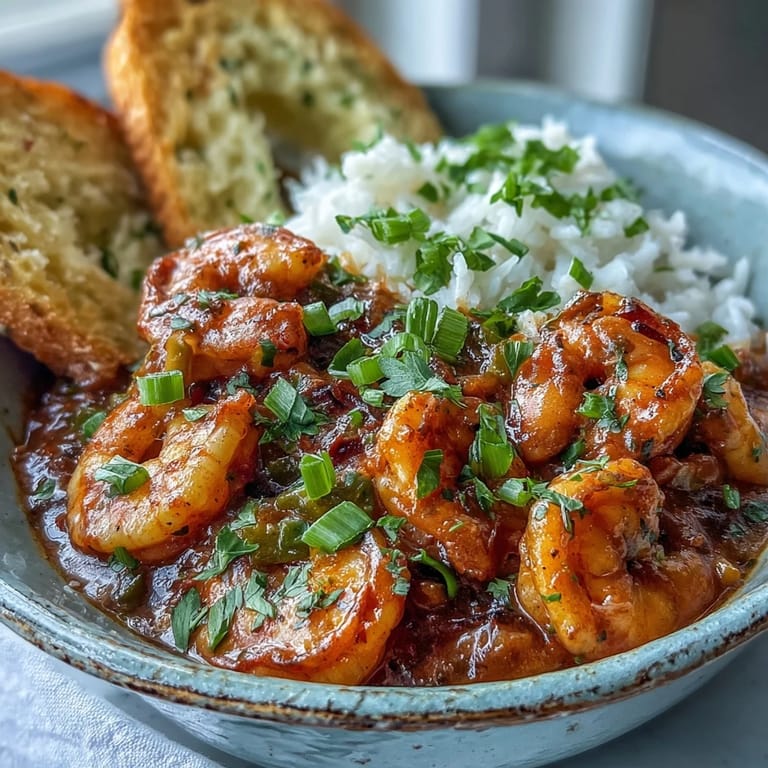
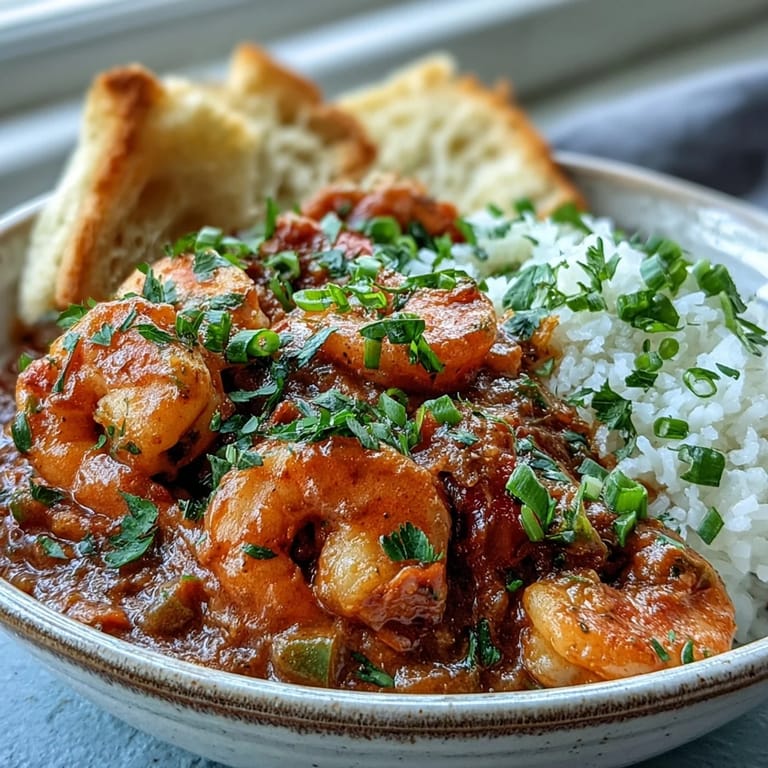
- Remove the bay leaf, taste the étouffée, and adjust the salt, pepper, or cayenne to your liking. Serve it over hot rice and scatter green onions and parsley on top.
 Pin It
 The first time I nailed the roux, I called my cousin and told her I finally got it. She laughed and said, Now you understand why we stand there so long. It's not just cooking. It's meditation. I've thought about that every time I make étouffée since, and it's true.
What to Serve With Étouffée
White rice is traditional and necessary, acting like a sponge for all that spiced, silky sauce. I also love putting out a basket of crusty French bread for mopping up every last drop. A simple green salad with a sharp vinaigrette or some lightly dressed coleslaw adds crunch and brightness that balances the richness. If you want to go all in, serve it alongside cornbread or hushpuppies for a true Southern feast.
How to Store and Reheat Leftovers
Let the étouffée cool completely, then transfer it to an airtight container and refrigerate for up to three days. Reheat it gently on the stovetop over low heat, stirring often and adding a splash of stock or water if it seems too thick. The flavors deepen overnight, so leftovers are never a disappointment. You can also freeze it for up to two months, though the shrimp may lose a bit of texture when thawed.
Ways to Make It Your Own
Swap the shrimp for chicken thighs, andouille sausage, or even mushrooms if you want a vegetarian version with the same soul. Dial the heat up or down by adjusting the cayenne and Cajun seasoning to match your tolerance. Some people like to stir in a little heavy cream at the end for extra richness, though purists might disagree.
- Use crawfish tails instead of shrimp when they are in season for a more authentic Louisiana flavor.
- Add a splash of hot sauce or a spoonful of Creole mustard for extra tang and complexity.
- Fold in diced tomatoes or tomato paste if you want a redder, slightly sweeter sauce.
 Pin It
 This dish has a way of turning an ordinary weeknight into something special without much fuss. Once you get the roux down, everything else falls into place like a conversation you have had a hundred times.
Recipe FAQs
- → What makes an authentic étouffée?
True étouffée begins with a dark roux cooked until chocolate-colored, providing the foundation for a rich, thickened sauce. The holy trinity of onion, bell pepper, and celery must be sautéed directly in the roux, and the dish should feature plenty of shellfish with traditional Cajun spices.
- → Can I make this étouffée in advance?
Absolutely. Like many Louisiana dishes, étouffée actually improves overnight as flavors meld and deepen. Store in the refrigerator for up to 3 days and reheat gently on the stovetop, adding a splash of stock if needed to adjust consistency.
- → What's the difference between étouffée and gumbo?
While both start with a roux, étouffée features a thicker, more concentrated sauce that coats the main ingredient, typically shellfish. Gumbo has a soupier consistency with more liquid and usually includes multiple proteins, filé powder, or okra as additional thickeners.
- → Can I substitute crawfish for shrimp?
Traditional étouffée often features crawfish, which provide a slightly sweeter, more delicate flavor profile. Use fresh or frozen crawfish tails in equal measure to shrimp. If using frozen, thaw and pat dry before adding to prevent excess liquid in the sauce.
- → How do I achieve the perfect dark roux?
Patience is key—cook flour and oil over medium heat, stirring constantly for 15-20 minutes until it reaches deep chocolate brown. The color transformation from blonde to peanut butter to chocolate provides the characteristic flavor base. Never leave unattended as roux burns quickly.
- → What sides pair well with étouffée?
White rice is traditional and essential for soaking up the rich sauce. Crusty French bread, a simple green salad with vinaigrette, or braised greens like collards or mustard greens complement the hearty main. Cornbread also makes an excellent accompaniment.