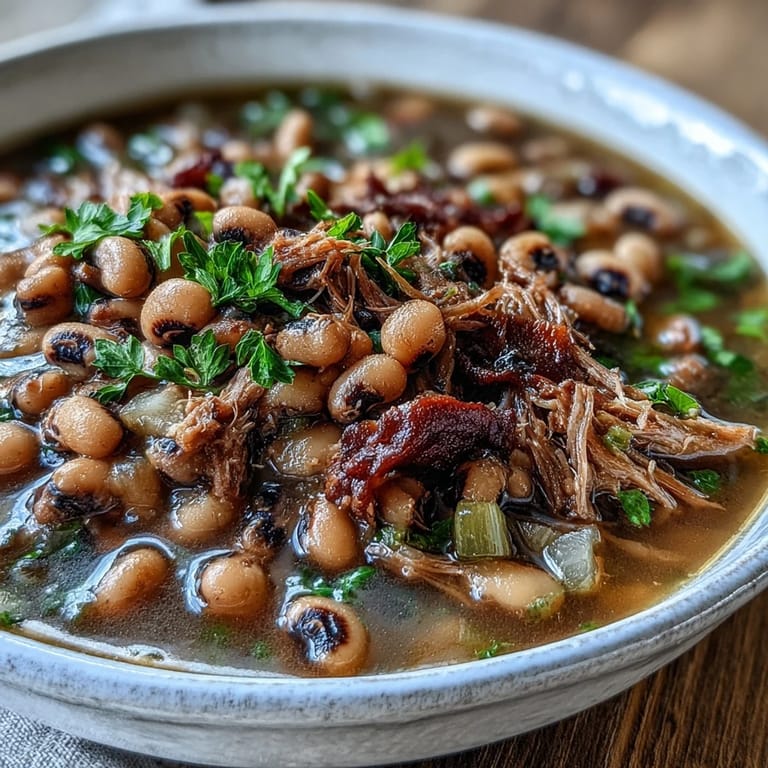
 Pin It
 My grandmother used to say that black-eyed peas on New Year's Day weren't just food—they were insurance against a year of bad luck. I didn't fully believe her until I watched her stir that massive pot with such intention, the steam rising up and fogging her glasses, her whole kitchen smelling like smoke and earth and promise. Now I make this same dish every January first, and honestly, I'm not taking any chances either.
I made this for a friend who'd just moved to the South and didn't understand the whole New Year's tradition. Watching her take that first spoonful and then immediately ask for seconds—that's when I knew this recipe had done its job. It wasn't just luck she was tasting, it was generations of people doing something together.
Ingredients
- Black-eyed peas (1 pound): Soak them overnight if you have time, but don't stress if you forget—the quick boil method works just fine and saves you a day of planning.
- Smoked pork neck bones or ham hocks (1½ pounds): This is where the magic happens; the meat seasons everything and becomes tender enough to shred back into the pot.
- Onion, celery, and bell pepper (1 large onion, 1 celery stalk, 1 green bell pepper): These are your holy trinity—the aromatic base that makes this taste like home.
- Garlic (4 cloves): Minced garlic added after your vegetables have softened prevents it from burning and keeps the flavor fresh.
- Water or low-sodium chicken broth (7 cups): I prefer broth because it adds depth, but water works if that's what you have on hand.
- Creole seasoning (1½ teaspoons): This blend carries the soul of the dish—if you can't find it, make your own with paprika, cayenne, garlic powder, and thyme.
- Bay leaf, dried thyme, smoked paprika, and black pepper: These seasonings layer into something bigger than their individual parts.
- Salt (1 teaspoon): Always taste as you go and adjust—some broths are already salty.
- Fresh parsley and hot sauce (optional): Parsley brightens the finish, and hot sauce is there for anyone who wants to take it further.
Tired of Takeout? 🥡
Get 10 meals you can make faster than delivery arrives. Seriously.
One email. No spam. Unsubscribe anytime.
Instructions
- Soak your peas the night before:
- Cover them with plenty of cold water and let them sit on the counter or in the fridge overnight. If you're in a hurry, pour boiling water over them and wait an hour instead—either way, you're softening them up so they cook evenly.
- Get your vegetables ready:
- Chop your onion into fine pieces, dice the celery and bell pepper into similar-sized chunks, and mince your garlic. Having everything prepped before you start cooking makes the whole process feel calm instead of frantic.
- Build your flavor foundation:
- Heat a splash of oil in a large Dutch oven or heavy pot over medium heat and sauté the onion, celery, and bell pepper for about 5 minutes until they soften and start to turn translucent. Add the garlic and cook for just a minute more—you want it fragrant but not browned.
- Combine everything in the pot:
- Add your drained black-eyed peas, smoked pork bones, water or broth, Creole seasoning, bay leaf, thyme, smoked paprika, and black pepper all at once. Give it a good stir so the peas and seasonings are evenly distributed.
- Bring to a boil, then settle into a simmer:
- Let the pot come to a rolling boil first, then turn the heat down low, cover it, and let it bubble gently for about an hour and a half. Stir it every 20 minutes or so and taste the broth—that's how you know when the peas are getting tender.
- Finish the pork:
- Once the peas are soft and creamy, pull out the smoked pork bones and let them cool just enough to handle. Shred any meat clinging to the bones and return it to the pot, leaving the bones and excess fat behind.
- Season and serve:
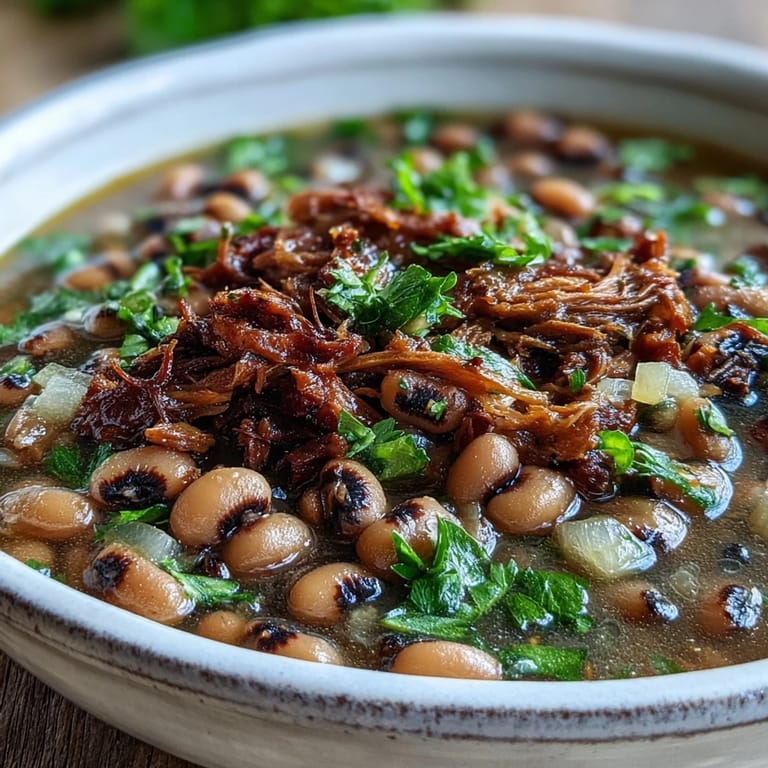
- Remove the bay leaf, taste the whole pot, and add salt until it tastes right to you. Ladle it into bowls, top with fresh parsley if you're feeling fancy, and set out hot sauce for anyone who wants an extra kick.
 Pin It
 There's something about standing at the stove on January 1st, watching this pot simmer, that feels like you're participating in something bigger than yourself. Every person in my family who's made this dish has probably thought the same thing while stirring.
The Story Behind New Year's Peas
Black-eyed peas have been served on New Year's Day in the South for generations, believed to bring luck and prosperity to those who eat them on January 1st. The tradition has roots in African American heritage and shows up across different Southern families in slightly different ways, but the intention is always the same. Whether you believe in the luck or not, there's something powerful about sitting down to a meal that connects you to tradition and to everyone else doing the exact same thing that day.
Making It Your Own
This recipe is forgiving in the best way—it can handle adjustments based on what you like and what you have on hand. Some people add a little hot sauce directly to the pot while it cooks, others layer in a ham bone instead of neck bones, and some folks serve it over rice while others eat it with cornbread. The core stays the same, but the details are yours to play with.
Storing, Freezing, and Serving Ideas
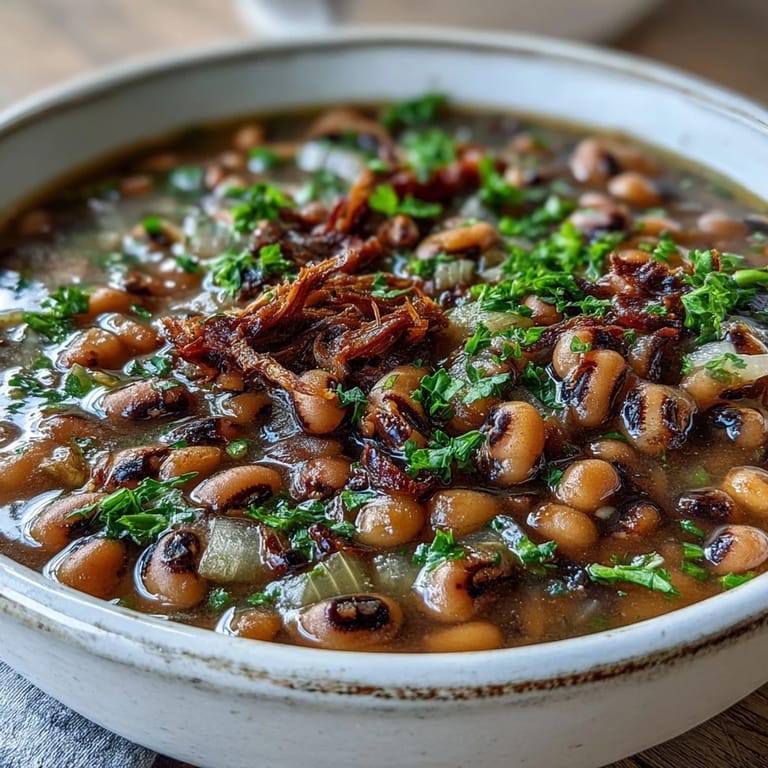
Leftovers actually taste better the next day once all the flavors have had time to settle and deepen. Store them in an airtight container in the fridge for up to four days, or freeze them for up to three months—just thaw overnight before reheating gently on the stove. Serve it with cornbread to soak up every last bit of broth, alongside collard greens for a traditional Southern plate, or even over rice if you want to make it stretch further and feel even more filling.
- Reheat gently on the stove rather than in the microwave to keep the peas from getting mushy.
- Double or triple the recipe and freeze portions in smaller containers for quick weeknight dinners throughout January and beyond.
- Let it come to room temperature before freezing so it doesn't shock your freezer.
 Pin It
 Make this dish with intention, whether it's New Year's Day or just a random Tuesday when you want something that tastes like belonging. That's really what it's all about.
Recipe FAQs
- → Why are black-eyed peas eaten on New Years?
Black-eyed peas are traditionally eaten on New Year's Day in the Southern United States because they symbolize good luck and prosperity for the coming year. The peas represent coins, and when paired with greens (representing money) and cornbread (representing gold), they make a complete lucky meal.
- → Do I need to soak black-eyed peas before cooking?
Yes, soaking dried black-eyed peas overnight helps them cook more evenly and reduces cooking time. You can also do a quick soak method by covering them with boiling water for one hour. Rinse and drain well before adding to your pot.
- → What cut of smoked pork works best?
Smoked pork neck bones or ham hocks both provide excellent flavor. The bones release collagen during cooking, creating a rich, savory broth while the meat becomes tender and shreddable. Both cuts are traditional in Southern cooking.
- → Can I make this vegetarian?
Simply omit the smoked pork bones and enhance the smoky flavor with additional smoked paprika and a splash of liquid smoke. You can also add vegetable broth instead of chicken broth for a completely plant-based version.
- → What should I serve with black-eyed peas?
Traditionally, this dish is served over fluffy white rice with a side of cornbread and collard greens for a complete New Year's meal. Hot sauce and fresh parsley make perfect garnishes to add brightness and heat.
- → How long do leftovers keep?
Cooked black-eyed peas freeze beautifully for up to 3 months. Store in airtight containers or freezer bags. Thaw overnight in the refrigerator and reheat gently on the stove, adding a splash of water or broth if needed.