 Pin It
 One humid July afternoon, I stood in my kitchen with a friend who'd just moved to the city, and we were both wilting from the heat. She pulled out these noodles she'd had at a market somewhere, and I realized I'd been overthinking lunch for weeks—sometimes the best meals are the ones that cool you down while filling you up. That's when cold sesame noodles became my go-to, the kind of dish that makes you feel clever for putting it together, even though it's genuinely simple.
I made this for a group of friends at a rooftop dinner last summer, and watching people twirl their forks and actually smile between bites told me everything I needed to know. One person went back for seconds and asked if the sauce had some secret ingredient—it didn't, just good technique and not skipping the toasted sesame oil. That moment, hearing the satisfying clink of empty bowls, made me realize this dish does something special: it feels indulgent but actually nourishes you.
Ingredients
- Wheat noodles or spaghetti (350g): Use something with a bit of bite—overly soft noodles will turn mushy once dressed, so don't overcook them even slightly.
- Sesame oil (1 tbsp for noodles, 1 tbsp toasted for sauce): The regular oil tossed with hot noodles keeps them from clumping, while the toasted version is the soul of the sauce—don't skip it or substitute.
- Tahini or Chinese sesame paste (4 tbsp): This is your base; tahini is easier to find, but Chinese sesame paste is nuttier and worth hunting for if you love deeper flavor.
- Smooth peanut butter (2 tbsp): It adds richness and helps create that silky texture; creamy, not natural oil-separated kinds, work best here.
- Low-sodium soy sauce (3 tbsp): Low-sodium matters because you're controlling the salt balance—regular soy can make the whole thing too harsh.
- Rice vinegar (2 tbsp): The gentle acid that brightens everything without the sharp bite of other vinegars.
- Honey (1 tbsp): A touch of sweetness balances the salty and tangy notes; maple syrup works if you're vegan, though it shifts the flavor slightly.
- Fresh garlic and ginger (2 cloves and 1 tbsp grated): Grate them finely so they dissolve into the sauce rather than leaving chunks—this makes all the difference in texture and distribution.
- Chili oil (1–2 tsp optional): Add heat gradually; you can always stir in more, but you can't take it back.
- Cold water (3–5 tbsp): This adjusts your sauce from thick paste to pourable cream, so add slowly and taste as you go.
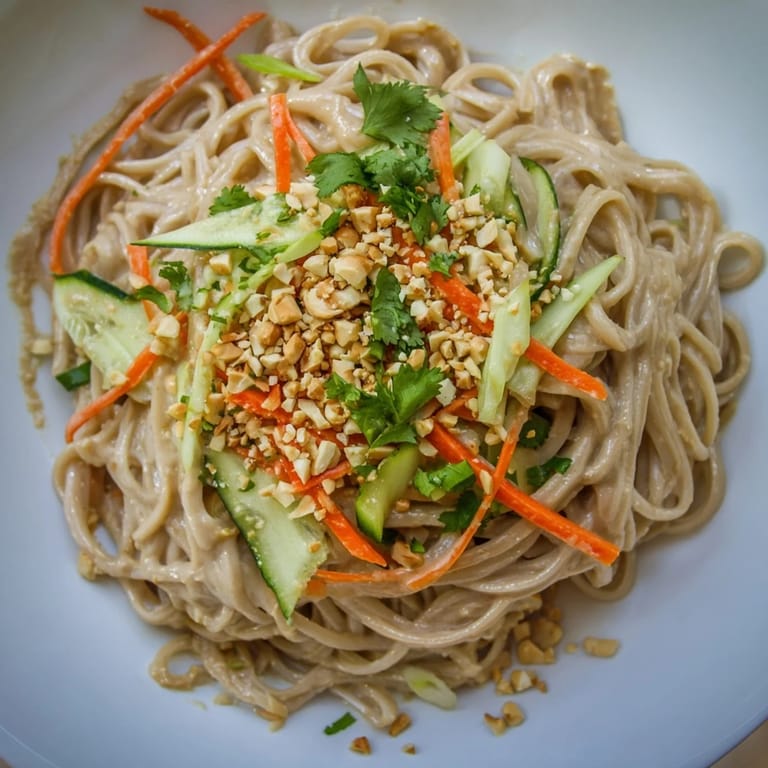
- Cucumber, carrots, spring onions: Julienne them thin so they stay crisp and catch the sauce beautifully.
- Toasted sesame seeds and fresh cilantro: These are your textural finishes and aromatic wake-up calls in every bite.
Tired of Takeout? 🥡
Get 10 meals you can make faster than delivery arrives. Seriously.
One email. No spam. Unsubscribe anytime.
Instructions
- Cook and chill your noodles:
- Bring a large pot of water to a rolling boil and cook the noodles until just tender, then drain them immediately. The key here is running them under cold water until they're genuinely cool to the touch, stirring occasionally so they don't stick together. Toss them with that tablespoon of sesame oil while they're still slightly warm—the oil coats each strand and prevents that clumpy mess that ruins everything later.
- Build your sauce:
- In a bowl, whisk together the tahini and peanut butter first, breaking up any lumps, then add the soy sauce, rice vinegar, honey, toasted sesame oil, and your grated garlic and ginger. The ginger and garlic should dissolve completely; if you see chunks, press them against the side of the bowl with your whisk. Add the chili oil if you want heat, then gradually pour in cold water while whisking until the sauce is smooth and flows easily from a spoon—it should coat the noodles, not pool at the bottom.
- Bring it together:
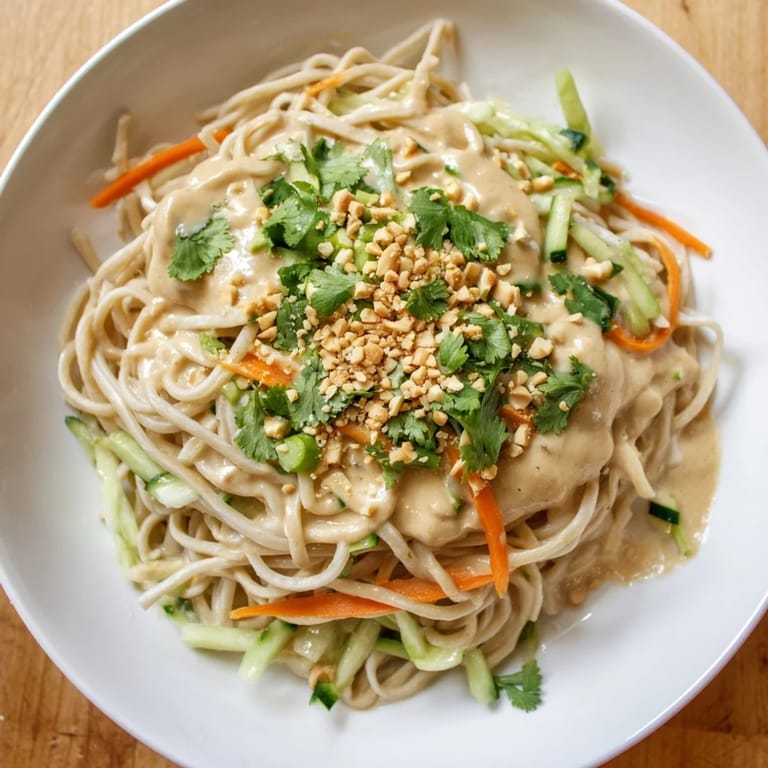
- Put your cooled noodles in a large mixing bowl and pour the sauce over top, then toss gently but thoroughly so every strand gets coated. You'll see the noodles go from pale to a beautiful amber color as the sauce clings to them; that's your signal that you've done it right.
- Plate and top:
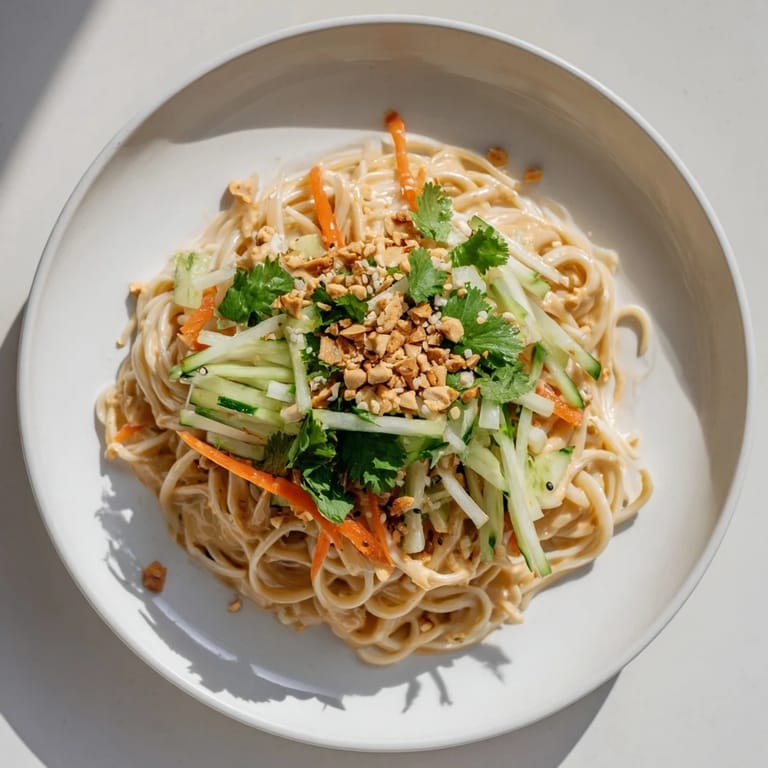
- Divide the noodles into serving bowls and scatter your crisp vegetables, sesame seeds, cilantro, and peanuts across the top. The toppings should sit on top, not mixed in, so they stay crunchy and bright against the creamy sauce. A lime wedge on the side lets people add their own brightness at the last second.
- Let it rest and serve:
- If you have 10 to 15 minutes, pop it in the fridge so the flavors meld and everything gets properly cold—this is worth the wait. If you're hungry now, serve it immediately; either way, you're winning.
 Pin It
 I remember my neighbor tasting this and asking if I'd somehow made it taste better than the restaurants she usually orders from. We laughed because it's not fancy technique, just respecting simple ingredients and not overthinking it. That's when food becomes something more than fuel—it becomes a quiet kind of generosity on a hot day.
Making It Your Own
The beauty of this recipe is how forgiving and adaptable it is once you understand the core sauce. I've made it with half tahini and half almond butter when someone had a sesame sensitivity, and it was creamy and delicious in a different way. I've also stirred in shredded rotisserie chicken on days when I wanted more protein, and the warm chicken against the cold noodles creates this interesting temperature contrast that somehow works. The sauce base stays consistent, but everything else—the vegetables, the proteins, the heat level—bends to what you have or what you're craving.
Storing and Reheating
This dish actually improves overnight in the fridge as the sauce settles into the noodles, making it perfect for batch cooking or meal prep. I store the dressed noodles in an airtight container and keep the toppings separate in small bowls so the vegetables stay crisp. When you're ready to eat, just give everything a gentle stir, add those fresh toppings, and you've got a lunch that tastes like you made it minutes ago, not yesterday.
Flavor Adjustments and Variations
Over time, I've learned that this sauce is really a framework, not a fixed formula. A splash more rice vinegar makes it tang; honey or a drizzle of maple syrup makes it rounded and sweet; chili oil makes it heat-forward and alive. Some versions get a squeeze of fresh lime juice to brighten everything up, while others get a pinch more garlic if you're in a bold mood. The noodles are just the canvas—the sauce is where your personality shows up.
- For a protein-forward version, add shredded cooked chicken, crispy tofu, or chilled shrimp before plating.
- Try it with soba or ramen noodles for different textures, or use rice noodles if you want something even lighter.
- Swap the peanut butter for sunflower seed butter or tahini alone if allergies or preferences call for it.
 Pin It
 This dish has become my answer to the question 'What's for dinner?' on days when the answer needs to be nourishing, quick, and actually exciting. It's the kind of recipe that quietly becomes a part of your cooking life without fanfare, but with the kind of staying power that matters.
Recipe FAQs
- → What type of noodles work best?
Wheat noodles or spaghetti are ideal as they absorb the sauce well and maintain a good texture when cooled.
- → Can I make the sauce less thick?
Yes, add cold water gradually to adjust the sauce to a smooth, pourable consistency.
- → How to add more heat to the dish?
Incorporate 1–2 teaspoons of chili oil into the sauce according to your preferred spice level.
- → What vegetables enhance this dish?
Julienned cucumber, carrots, and thinly sliced spring onions provide fresh crunch and balance the creamy sauce.
- → Are there gluten-free alternatives?
Use gluten-free noodles and tamari sauce instead of soy sauce for a gluten-free adaptation.
- → Can I add protein to this dish?
Yes, shredded chicken, tofu, or shrimp complement the flavors and add protein.