 Pin It
 My stovetop was a mess of olive oil splatters and garlic peels when I finally nailed this dish. I'd been craving something creamy but didn't want the heaviness of a traditional alfredo, so I started throwing things together one rainy Wednesday. The chickpeas were a last-minute addition because I had a can sitting in the pantry, and somehow they turned this into the kind of meal that makes you scrape the pan clean. Now it's my go-to when I want comfort without the food coma.
I made this for my sister after she moved into her first apartment, and she called me the next day asking for the recipe. She said it reminded her of the pasta we used to eat on family trips to Italy, but easier and less pretentious. Watching her twirl the fusilli around her fork with that same look of contentment made me realize how a simple plate of pasta can anchor a memory. She still texts me photos every time she makes it, usually with some creative twist I never would have thought of.
Ingredients
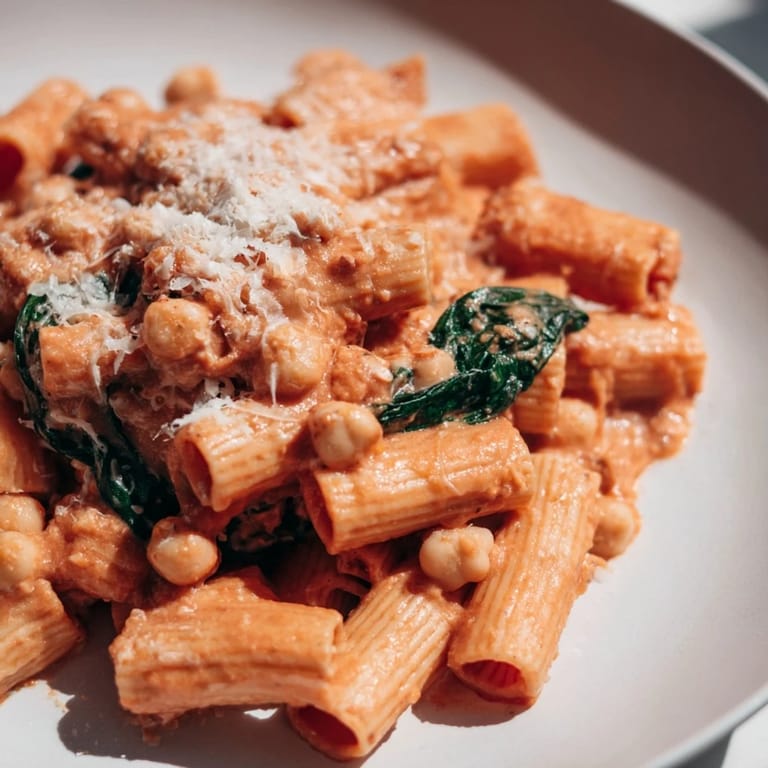
- Short pasta (350 g): Penne or rigatoni work best here because their ridges catch the creamy sauce beautifully, but fusilli adds a fun twist if you want more surface area for flavor.
- Olive oil (2 tbsp): Use a good quality one since it's the base of your flavor, and don't be shy with it or your onions will stick and burn.
- Yellow onion (1 medium): Finely chopped onion melts into the sauce and adds a subtle sweetness that balances the acidity of the tomatoes.
- Garlic (3 cloves): Fresh garlic is non-negotiable here, the jarred stuff just doesn't give you that punchy, aromatic hit you need.
- Chickpeas (400 g can): Rinse them well to remove the canning liquid, which can make the sauce taste metallic if you skip this step.
- Diced tomatoes (400 g can): San Marzano tomatoes are worth the extra dollar if you can find them, they're sweeter and less acidic.
- Vegetable broth (100 ml): This thins the sauce just enough to coat the pasta without making it soupy, and adds a savory depth.
- Dried oregano (1 tsp): Crush it between your fingers before adding to release the oils, it makes a noticeable difference.
- Dried thyme (1/2 tsp): A little thyme goes a long way, too much and it overpowers the tomato.
- Crushed red pepper flakes (1/2 tsp, optional): I always add these because I love a gentle heat that sneaks up on you, but leave them out if you're feeding kids.
- Heavy cream (120 ml): This is what makes the sauce luscious and silky, and coconut cream works beautifully if you're going dairy-free.
- Parmesan cheese (40 g): Freshly grated melts smoother and tastes sharper than the pre-shredded stuff, which often has anti-caking agents.
- Baby spinach (120 g): It wilts down to almost nothing, so don't worry if it looks like too much at first.
- Fresh basil leaves (optional): Torn basil on top adds a burst of freshness that cuts through the richness beautifully.
Tired of Takeout? 🥡
Get 10 meals you can make faster than delivery arrives. Seriously.
One email. No spam. Unsubscribe anytime.
Instructions
- Boil the pasta:
- Bring a large pot of salted water to a rolling boil and cook your pasta until it still has a slight bite, usually a minute less than the package says. Always save some pasta water before draining, it's starchy and salty and will help the sauce cling to every piece.
- Sauté the aromatics:
- Heat olive oil in a large skillet over medium heat, then add the onion and let it cook until it's soft and translucent, stirring occasionally so it doesn't brown. Toss in the garlic and stir constantly for about a minute until your kitchen smells incredible, but don't let it burn or it'll turn bitter.
- Build the sauce:
- Add the chickpeas, diced tomatoes, vegetable broth, oregano, thyme, and red pepper flakes, then season generously with salt and pepper. Let it simmer uncovered for about 10 minutes, stirring now and then, until the sauce thickens slightly and the flavors meld together.
- Make it creamy:
- Lower the heat and stir in the cream and Parmesan, mixing gently until the sauce turns glossy and smooth. This is the moment it transforms from a basic tomato sauce into something you'll crave all week.
- Wilt the spinach:
- Toss in the spinach and stir it around until it wilts down into the sauce, which should only take a couple of minutes. It adds color and a slight earthiness that rounds out the dish.
- Toss and serve:
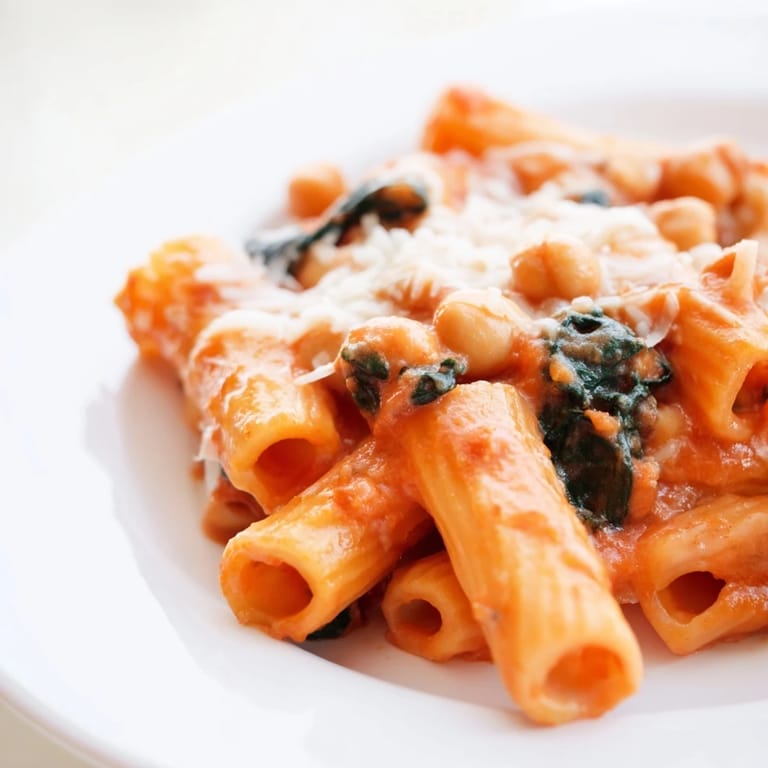
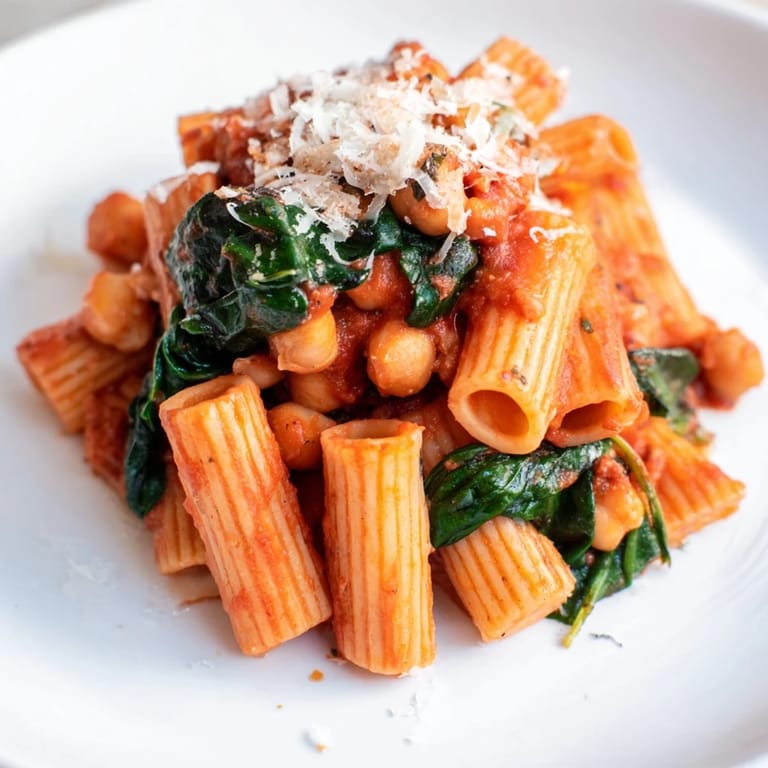
- Add the drained pasta directly to the skillet and toss everything together, adding splashes of reserved pasta water until the sauce coats every piece without pooling at the bottom. Serve it hot, topped with torn basil and extra Parmesan if you're feeling generous.
 Pin It
 There was a night last spring when I made this for a friend going through a breakup, and we ate it straight from the skillet on my couch. She didn't say much, but she had three helpings and texted me the next morning saying it was the first thing that made her feel normal again. That's when I realized food doesn't have to be fancy to be meaningful, it just has to show up when it's needed. This pasta has a quiet way of doing that.
Customizing Your Pasta
I've played around with this recipe more times than I can count, and it's incredibly forgiving. Swap the spinach for kale if you want something heartier that holds up longer in the sauce, or toss in sun-dried tomatoes for a tangy, chewy contrast. Roasted red peppers add a smoky sweetness that's perfect if you're in the mood for something a little different. If you want more protein, shredded rotisserie chicken or Italian sausage fold in beautifully without changing the soul of the dish.
Wine Pairing and Serving Ideas
This pairs beautifully with a crisp Pinot Grigio or a light Vermentino, something that cuts through the creaminess without overpowering the tomatoes. I've also served it with a simple arugula salad dressed in lemon and olive oil, which adds a peppery brightness that balances the richness. Garlic bread is always a crowd-pleaser, but honestly, this dish is hearty enough to stand on its own. If you're feeding a crowd, double the recipe and serve it family-style straight from the skillet.
Storage and Reheating
Leftovers keep well in an airtight container in the fridge for up to three days, though the pasta will soak up some of the sauce as it sits. When you reheat it, add a splash of broth or water to bring the creaminess back, and warm it gently on the stovetop rather than the microwave for the best texture. I've also frozen portions in individual containers, and they thaw beautifully for quick lunches when I don't feel like cooking. Just be aware that the spinach can get a bit softer after freezing, but the flavor stays intact.
- Store in airtight containers and refrigerate within two hours of cooking.
- Reheat gently with a little extra liquid to revive the sauce.
- Freeze for up to two months, but let it thaw in the fridge overnight before reheating.
 Pin It
 This dish has become one of those recipes I turn to when I need something reliable, something that feels like a hug in a bowl. I hope it finds a spot in your regular rotation, too.
Recipe FAQs
- → Can I make this dish vegan?
Yes, absolutely. Simply substitute the heavy cream with plant-based alternatives like coconut cream or oat cream, and use vegan Parmesan or nutritional yeast for the cheese. The dish remains creamy and delicious while accommodating dietary preferences.
- → What pasta shapes work best?
Short pasta varieties like penne, rigatoni, or fusilli are ideal because they trap the creamy sauce beautifully. You can also use fettuccine or linguine for a different texture. Gluten-free pasta works equally well if needed.
- → How do I achieve the perfect sauce consistency?
The reserved pasta water is your secret tool. Add it gradually while tossing to reach your desired consistency. Start with small amounts and build up—the sauce will continue to coat the pasta as it settles. This technique prevents an overly thick or watery finish.
- → Can I prepare this ahead of time?
Prepare the chickpea and tomato base up to 24 hours in advance and refrigerate. When ready to serve, reheat gently, add the cream and cheese, fold in fresh spinach, then toss with freshly cooked pasta for optimal texture and flavor.
- → What vegetables can I add or substitute?
Kale, arugula, or Swiss chard work beautifully instead of spinach. Roasted red peppers, sun-dried tomatoes, mushrooms, or zucchini add wonderful depth. Fresh asparagus or artichoke hearts also complement the Tuscan flavors perfectly.
- → Which wine pairs well with this dish?
A crisp Pinot Grigio is recommended, as its acidity cuts through the creamy sauce while its subtle fruit notes complement the tomatoes and herbs. Alternatively, try a light Sauvignon Blanc or Italian Vermentino for a refreshing pairing.