 Pin It
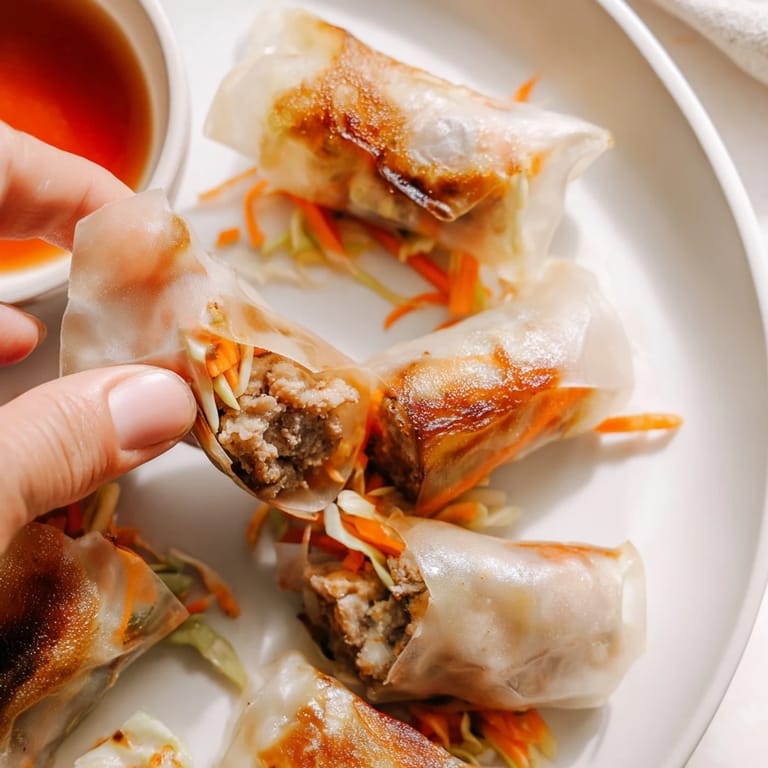
 My neighbor brought over a plate of these dumplings one evening, still steaming from her kitchen, and I watched my kids devour them in seconds. That's when I realized how satisfying it is to create something so crispy and golden at home, without the delivery fees or soggy boxes. There's something magical about the moment when the rice paper hits the hot oil and transforms into this delicate, shatteringly crisp shell that somehow stays tender inside. Once I mastered the technique, I started making them for friends, and they became my secret weapon for impressing people with minimal fuss.
I made these for a casual game night, and something shifted when my usually picky brother-in-law asked for thirds. He'd been skeptical about cooking at home, but watching him reach for another dumpling while completely absorbed in conversation made me realize these aren't just appetizers, they're conversation starters. That night, the dumplings sat at the center of the table untouched for longer than usual because people were too busy talking and enjoying them simultaneously.
Ingredients
- Ground chicken or pork (200 g): Choose whichever your family gravitates toward, but don't skip the meat if you want that savory depth that makes people ask for the recipe.
- Firm tofu, crumbled (200 g alternative): The key is pressing it well beforehand so it doesn't release excess moisture into your filling during cooking.
- Carrot, julienned: This adds subtle sweetness and texture without overwhelming the filling with moisture.
- Cabbage, finely shredded (1 cup): It's your volume filler and brings natural sweetness when cooked, but shred it thin so it softens properly.
- Spring onions, thinly sliced: Add these at the very end of mixing so their fresh bite doesn't get lost among the other flavors.
- Garlic and ginger (2 cloves and 1 tbsp respectively): These two create the aromatic base that makes your kitchen smell incredible while cooking.
- Soy sauce (2 tbsp): Use tamari if anyone at your table needs gluten-free, and don't skimp because this is your seasoning anchor.
- Sesame oil (1 tbsp): This adds nuttiness that elevates the whole filling, but don't use more or it becomes overpowering and separates from everything else.
- Sugar and black pepper: The sugar rounds out the salty-savory notes, while pepper adds warmth without heat.
- Rice paper wrappers (16 pieces, 22 cm): Store them in a dry place and check the expiration date because old wrappers crack and tear when softened.
- Vegetable oil (2 tbsp): Use neutral oil with a high smoke point so it doesn't burn during the crispy pan-searing stage.
- Warm water: This is crucial for the softening bath, so keep it genuinely warm but not boiling.
Tired of Takeout? 🥡
Get 10 meals you can make faster than delivery arrives. Seriously.
One email. No spam. Unsubscribe anytime.
Instructions
- Mix Your Filling:
- Combine the meat or tofu with carrot, cabbage, spring onions, garlic, ginger, soy sauce, sesame oil, sugar, and black pepper in a large bowl. The mixture should come together with everything evenly distributed, creating a fragrant paste-like consistency that holds together without being wet.
- Prepare Your Softening Station:
- Fill a shallow dish with warm water and place a damp kitchen towel nearby as your dumpling workspace. Having everything prepped keeps the folding process smooth because once you start softening wrappers, you're in a rhythm and moving forward.
- Soften and Fill Each Wrapper:
- Dip one rice paper wrapper into the warm water for 6 to 8 seconds, watching it transform from stiff to pliable but still holding its shape. Lay it on your damp towel, place 2 tablespoons of filling slightly off-center, fold the bottom edge up over the filling, fold in both sides, and roll tightly away from you until sealed.
- Pan-Sear to Crispiness:
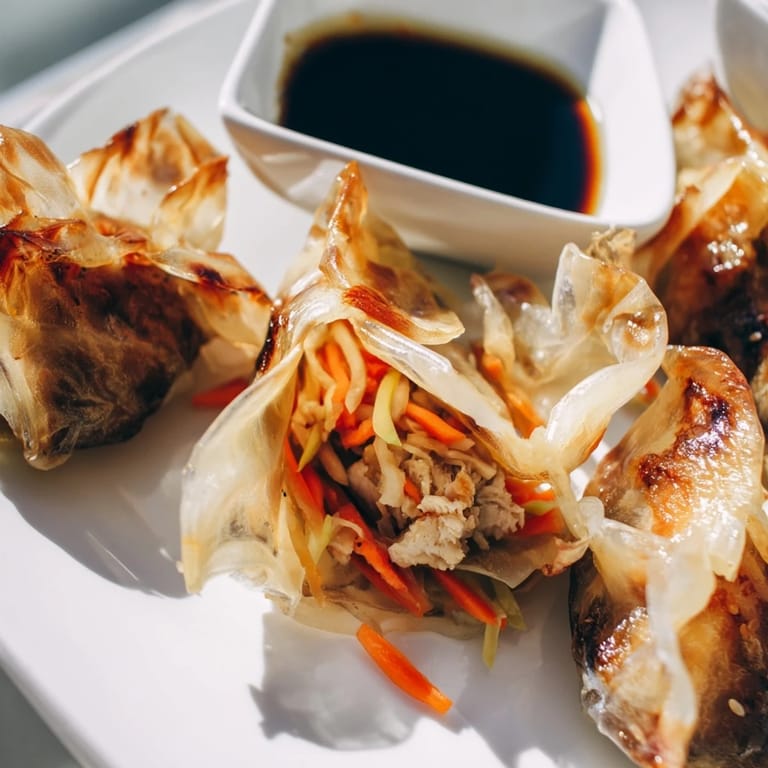
- Heat oil in your non-stick skillet over medium heat until shimmering, then place dumplings seam-side down and cook for 2 to 3 minutes without moving them, letting that beautiful golden crust form. Flip carefully with tongs and cook the other side for another 2 to 3 minutes, then transfer to a plate lined with paper towels.
- Make Your Dipping Sauce:
- Whisk together soy sauce, rice vinegar, sesame oil, honey or maple syrup, grated garlic, and chili flakes in a small bowl until the honey dissolves completely. Taste it and adjust the acidity or sweetness to match your preference.
- Serve Immediately:
- Arrange your crispy dumplings on a platter with the dipping sauce in a small bowl on the side, and watch them disappear.
 Pin It
 There was a moment when my daughter asked if she could help me make them, and we stood at the kitchen counter together, her small hands mirroring mine as she folded each dumpling. Suddenly this recipe became something we were creating together, and the dumplings on the plate represented something beyond food, they were a moment we'd shared. Now whenever she sees them, she remembers being there, and that's when I understood why people hold onto certain recipes across lifetimes.
The Art of the Perfect Fold
Getting the fold right takes maybe five dumplings of practice before your hands understand the motion and your intuition kicks in. I used to overthink it until someone showed me that the folder should be tight enough to seal but relaxed enough that you're not squeezing all the filling toward the edges. Once you accept that the first few won't be perfect, they suddenly start looking restaurant-quality, and your confidence jumps noticeably.
Why Rice Paper Matters
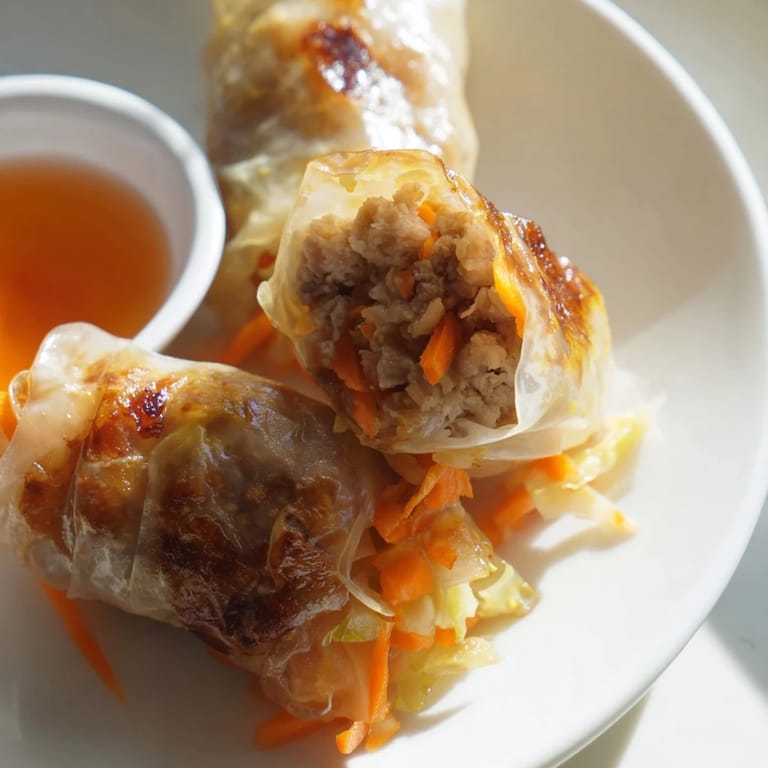
The difference between a regular dumpling wrapper and rice paper is texture and mouthfeel, something that becomes immediately obvious on your first bite. Rice paper creates this delicate, almost lacy crispiness when pan-seared that wheat wrappers simply cannot replicate, making the entire eating experience feel lighter and more refined. I've tried substituting them, and every time I end up frustrated because the result is never quite right, so I always return to proper rice paper wrappers.
Storage and Make-Ahead Strategies
You can assemble these dumplings up to a few hours ahead and refrigerate them on a parchment-lined tray covered loosely with plastic wrap, which eliminates stress when guests arrive. The filling can also be made a full day before, leaving you with only the assembly and quick pan-searing on serving day. If you want to get ahead even further, fully cooked dumplings reheat beautifully in a 375-degree oven for about 5 minutes, restoring much of their original crispiness.
- Assemble and refrigerate up to 3 hours before cooking for the best texture.
- Prepare filling the day before and store it in an airtight container.
- Reheated dumplings taste best served within 2 hours of cooking.
 Pin It
 These dumplings have quietly become the thing I make when I want to feel like I've accomplished something delicious without spending hours in the kitchen. Every time I fold one, I'm grateful for the simplicity of something that looks complicated but rewards you generously for your effort.
Recipe FAQs
- → How do I prevent rice paper wrappers from tearing?
Dip the wrappers briefly in warm water for 6-8 seconds until just softened. If they're too wet, they'll become fragile. Work quickly and lay them on a damp towel to prevent sticking while you fill and roll.
- → Can I make these ahead of time?
Yes, you can assemble the dumplings several hours ahead and refrigerate them on a parchment-lined tray covered with plastic wrap. Pan-fry them just before serving for maximum crispiness, though they'll still be delicious if cooked from cold.
- → What's the best way to achieve crispy exteriors?
Use a non-stick skillet over medium heat and ensure the oil is hot before adding dumplings seam-side down. Cook 2-3 minutes per side without moving them around, allowing the rice paper to develop a golden, crispy crust.
- → Can I customize the filling?
Absolutely. Add chopped mushrooms, bell peppers, or water chestnuts for extra flavor and texture. You can also adjust the soy sauce ratio or add more ginger for a spicier kick depending on your preferences.
- → How do I adapt this for dietary restrictions?
For vegetarian or vegan versions, substitute crumbled firm tofu for meat and use maple syrup instead of honey in the dipping sauce. Use tamari instead of regular soy sauce for a gluten-free version, and double-check all ingredients for allergens.
- → What's the ideal dipping sauce consistency?
The sauce should be slightly thick and pourable. If it's too thin, reduce it gently over low heat for a minute. For a smoother blend, grate the garlic finely so it distributes evenly throughout the sauce.