 Pin It
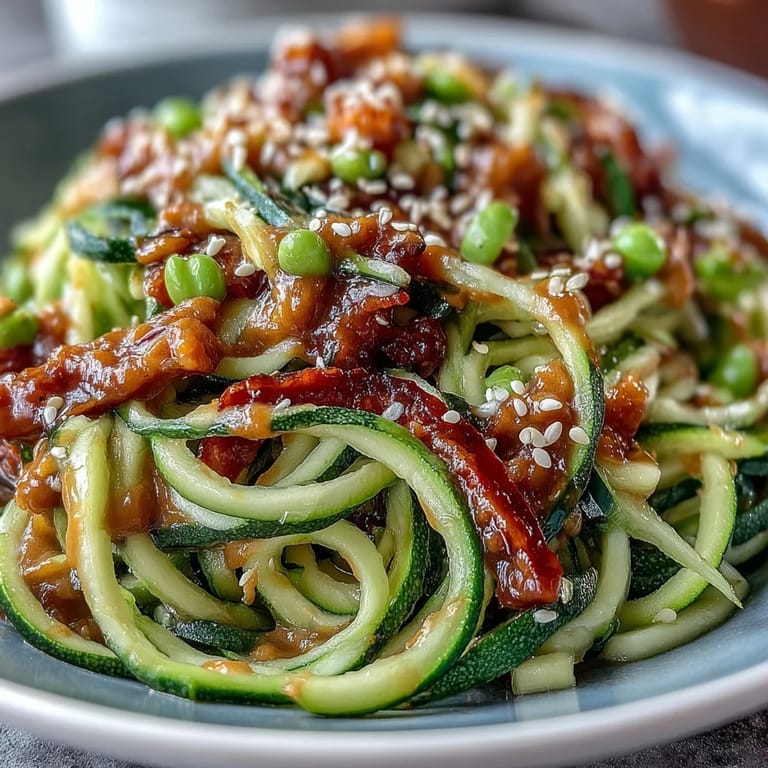
 My neighbor knocked on my door one afternoon with a spiralizer she'd just bought, completely overwhelmed by the contraption sitting on her counter. I suggested we make something together, and that's when I remembered this zucchini noodle stir-fry—the dish that convinced me vegetables could actually be exciting rather than just something you endure. We spiralized those zucchinis right then, and the kitchen filled with that bright, grassy smell that somehow made everything feel fresher. Twenty-five minutes later, we were both sitting on her porch with bowls of creamy, tangy noodles, and she asked if this was really just vegetables.
I made this for a friend who'd just started eating more plant-based, and she was nervous about giving up the hearty, saucy meals she loved. When she took that first bite and the peanut sauce coated those tender noodles, her whole face changed—she actually put her fork down and just looked at her bowl like she'd discovered something. That moment taught me that healthy eating isn't about restriction; it's about finding dishes so genuinely delicious that you don't miss anything.
Ingredients
- Zucchini (4 medium, spiralized): The secret is not to pre-spiralize too far ahead—they release water and get sad and soggy, so do this right before cooking.
- Red bell pepper (1 large, thinly sliced): The sweetness balances the tang of the sauce, and it stays crisp if you don't overcook it.
- Carrot (1 large, julienned): Adds natural sweetness and a satisfying crunch that keeps everything interesting.
- Snap peas (1 cup, halved): They're like little pops of freshness and stay crunchy even after cooking.
- Green onions (2, thinly sliced): Use these as garnish mostly; they add brightness and a gentle onion bite at the end.
- Fresh cilantro (2 tablespoons, optional): I use it because cilantro tastes like sunshine, but skip it entirely if you're in the cilantro-tastes-like-soap camp.
- Natural peanut butter (1/3 cup): Choose one with no added sugar if possible—the real stuff that separates naturally is best here.
- Low-sodium soy sauce or tamari (2 tablespoons): Tamari keeps this gluten-free, and low-sodium means you control the saltiness.
- Rice vinegar (1 tablespoon): This adds a gentle tang without overwhelming—it's mellower than regular vinegar.
- Lime juice (1 tablespoon): Fresh lime is non-negotiable; bottled tastes tinny and changes the whole flavor balance.
- Maple syrup or honey (1 tablespoon): Just enough sweetness to round out the sauce without making it dessert.
- Toasted sesame oil (2 teaspoons): This is the ingredient that makes people ask what your secret is—don't skip it and don't use regular sesame oil.
- Garlic and ginger (2 cloves garlic, 1 teaspoon ginger): Mince these fresh; they're what give the sauce its soul.
- Warm water (2-4 tablespoons): Add this slowly to get the sauce exactly as thick or thin as you like it.
- Red pepper flakes (1/2 teaspoon, optional): For heat—I use it but keep it light so the sauce stays approachable.
- Roasted peanuts (2 tablespoons, chopped): The garnish that adds crunch and reminds you why peanuts matter.
Tired of Takeout? 🥡
Get 10 meals you can make faster than delivery arrives. Seriously.
One email. No spam. Unsubscribe anytime.
Instructions
- Prep everything first:
- Spiralize your zucchini and carrot, slice the bell pepper and snap peas, and mince your garlic and ginger. Having everything ready means you can move fast once the pan gets hot, which is exactly when you want to be moving fast.
- Make the sauce:
- Whisk together the peanut butter, soy sauce, rice vinegar, lime juice, maple syrup, sesame oil, garlic, and ginger in a bowl. Add the warm water slowly—I usually start with 2 tablespoons and add more until the sauce is silky and pourable, not thick like paste.
- Heat your pan:
- Get a large nonstick skillet or wok smoking hot over medium-high heat. A splash of sesame oil here is optional but adds another layer of flavor that makes everything taste more intentional.
- Cook the firm vegetables first:
- Toss in the bell pepper, carrot, and snap peas and stir constantly for 2 to 3 minutes. You want them just tender but still with some snap—this is where timing matters because mushy vegetables are nobody's friend.
- Add the zucchini noodles:
- Gently add the spiralized zucchini and toss for 2 to 3 minutes until they're just heated through and still have a slight firmness. This is the critical moment where patience pays off—overcook by even a minute and they'll weep water and turn into disappointment.
- Sauce and finish:
- Pour the peanut sauce over everything and toss to coat evenly, cooking for another minute until everything is warm and glossy. Take it off the heat right away and serve immediately.
- Plate and garnish:
- Divide among bowls and top with chopped roasted peanuts, extra green onions, and cilantro if you're using it. Eat right away while everything is still warm and the noodles haven't started giving up their water.
 Pin It
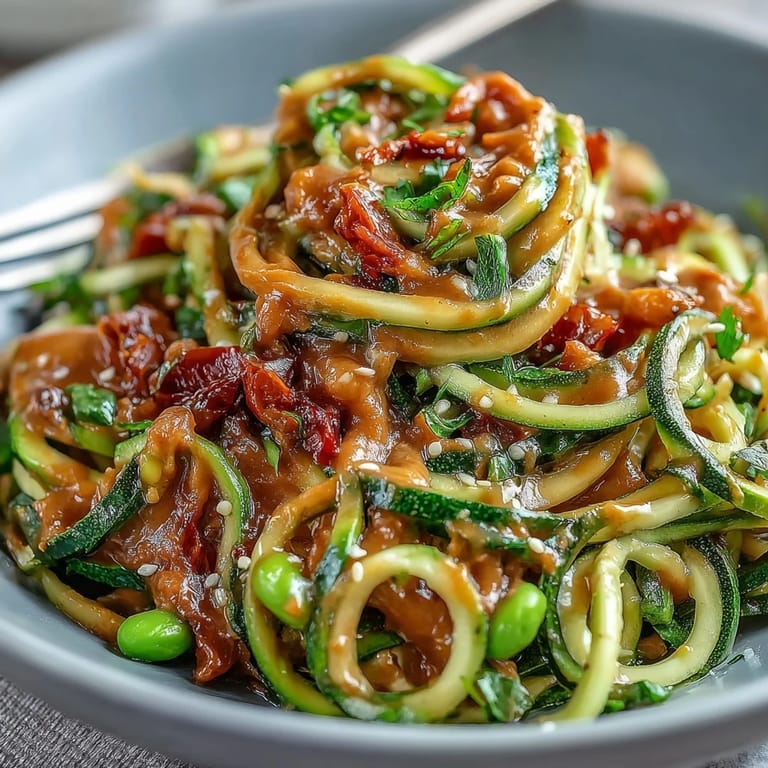
 There was a moment during that first cook with my neighbor when she questioned whether zucchini noodles were "real food," and then the peanut sauce hit the pan and the smell changed everything. She actually said, "Oh, I see," the way people do when something suddenly makes sense, and that's when I understood that this dish isn't about substitution or compromise—it's about a completely different kind of delicious.
Variations and Add-Ins
The beauty of this stir-fry is that it's a canvas for whatever you have on hand or whatever sounds good that day. I've added shredded cabbage for more crunch, sliced mushrooms for earthiness, or broccoli florets for something more substantial, and the sauce carries everything beautifully. Sometimes I'll toss in some diced cashews or almonds if I'm making it for someone who needs more protein, and once I added a handful of shredded carrots instead of sliced just to see what would happen—it created more sauce coverage somehow. The vegetables are flexible; the sauce is what matters, and the sauce is always the star.
Making It More Substantial
While this is genuinely satisfying as is, there are moments when you want it to feel like more of a main event. Grilled tofu cubes or sliced chicken breast turn it into something you'd serve for dinner without apology, and shrimp works beautifully if you cook it separately for 2 to 3 minutes first and then toss it in at the end. I've also made it with a soft-boiled egg on top for extra richness, and once I scattered crispy chickpeas on mine because I was in the mood for crunch and protein at the same time. The point is that this foundation is sturdy enough to handle whatever additions make you feel satisfied.
The Sauce Is Everything
I learned this the hard way when I tried to make a version with almond butter because that's what I had, and it was good but different in a way that made me appreciate the specific flavor of peanut butter in this context. The combination of peanut butter with the tang of rice vinegar and lime, the warmth of ginger and garlic, and the nutty richness of sesame oil creates something that's balanced and complex without being fussy. One time I got ambitious and added a tablespoon of soy sauce more than called for, thinking it would deepen everything, and I ended up with a sauce that was aggressively salty and couldn't be fixed except by making the whole thing again. The lesson here is that this sauce formula is worked out, and it works, and small changes can tip it into imbalance.
- Make the sauce before you start cooking the vegetables so it's ready exactly when you need it.
- Taste the sauce before you pour it—if it needs more sweetness, add a half-teaspoon of maple syrup; if it needs more tang, add a teaspoon of lime juice.
- Remember that the sauce will taste slightly less intense once it coats all the vegetables, so you want it to be just slightly bold when you taste it alone.
 Pin It
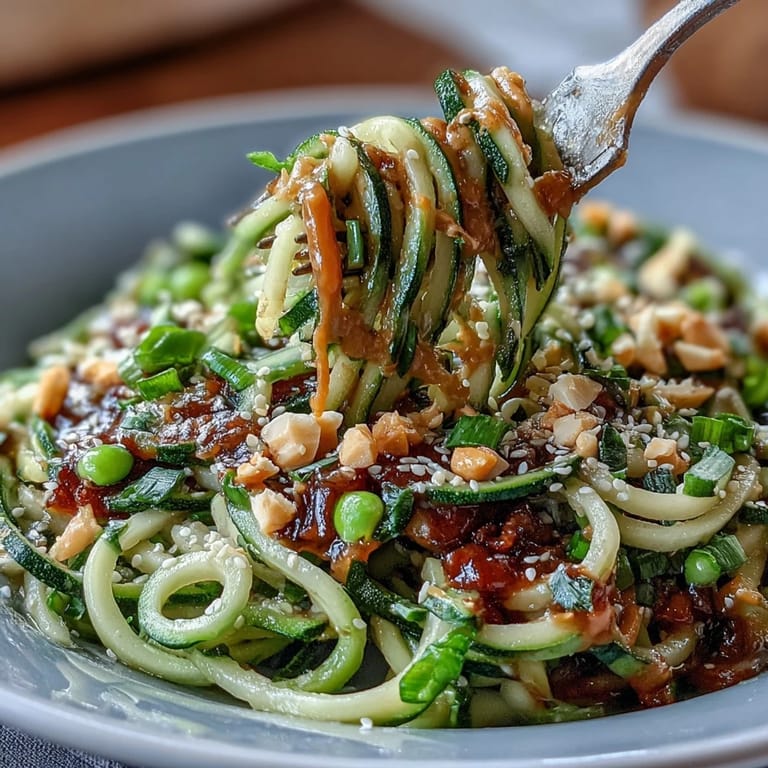
 This is the kind of recipe that makes you feel good about what you're eating without feeling like you're sacrificing anything, and that's the whole point. Make it on a Tuesday night when you need something fast, or make it when someone tells you they're trying to eat differently and you want to show them how good that can taste.
Recipe FAQs
- → What vegetables work best in this stir-fry?
Zucchini noodles, bell peppers, carrots, snap peas, and green onions create a fresh mix with varied textures and flavors.
- → How can I adjust the peanut sauce consistency?
Add warm water a tablespoon at a time while whisking until the sauce reaches a smooth, pourable consistency.
- → Can I make this dish nut-free?
Substitute peanut butter with sunflower seed or almond butter to accommodate nut-free diets.
- → What cooking method keeps the vegetables crisp?
Quick stir-frying over medium-high heat preserves the freshness and crunch of the vegetables.
- → Is this dish suitable for gluten-free diets?
Use tamari instead of regular soy sauce to keep the dish gluten-free without sacrificing flavor.