 Pin It
 My mother once whispered that the only dessert worth making was one that looked impossible but tasted like a cloud. She was talking about pavlova, though she never quite mastered it herself—something about the humidity always won. Years later, standing in my own kitchen on a crisp spring morning, I finally understood what she meant when my meringue peaked perfectly and baked into that magical crisp-yet-tender shell. This pavlova has become my love letter back to her, a dessert that's equal parts theatrical and genuinely delicious.
I made this for my mother's birthday last May, and I'll never forget how she laughed when I nervously opened the oven door to check on it—as if I was defusing a bomb rather than baking meringue. My sister caught the exact moment I transferred it to the serving platter, hands shaking slightly with the weight of wanting it to be perfect. When that first forkful went into her mouth and she just smiled without saying anything, I knew the wobbling anxiety had been worth it.
Ingredients
- Egg whites (4 large, room temperature): Cold eggs won't whip into clouds, so leave them on the counter for at least 30 minutes—this small patience game changes everything about the meringue's volume and stability.
- Superfine sugar (1 cup): The fine granules dissolve into the egg whites more completely than regular sugar, creating that glossy, ribbon-like texture you're after.
- Cornstarch (1 tsp): This magical pinch prevents the meringue from weeping or cracking as it cools, a trick I learned after one too many soggy attempts.
- White vinegar (1 tsp): It stabilizes the meringue and adds just enough acidity to keep the structure intact through baking and cooling.
- Pure vanilla extract (1 tsp for meringue, 1 tsp for cream): Skip the imitation stuff—real vanilla adds a subtle warmth that makes people wonder what your secret is.
- Salt (pinch for meringue, pinch for beating): A tiny bit in the egg whites when you start beating helps them whip faster and fuller.
- Heavy whipping cream (1 cup, chilled): Keep it cold and beat it just to soft peaks, or you'll end up with buttery clumps instead of clouds.
- Powdered sugar (2 tbsp for cream, 1 tbsp for dusting): It dissolves seamlessly into whipped cream without the graininess you'd get from superfine sugar.
- Mixed berries (strawberries, raspberries, blueberries, blackberries): Choose berries that are ripe but still firm—they'll look jewel-like on top and won't collapse into the cream.
- Fresh mint leaves (optional): A few leaves add a cool, garden-fresh note that makes the whole plate feel more intentional and beautiful.
Tired of Takeout? 🥡
Get 10 meals you can make faster than delivery arrives. Seriously.
One email. No spam. Unsubscribe anytime.
Instructions
- Set up your stage:
- Preheat your oven to 250°F and line a baking sheet with parchment paper, tracing a 9-inch circle lightly with pencil as your guide. This low temperature is the secret—it bakes the meringue slowly enough to stay pale and crispy rather than browning into something dense.
- Whip the eggs into clouds:
- In a completely clean, dry bowl (any grease will sabotage you), beat your room-temperature egg whites with a pinch of salt until soft peaks form—they should look like cumulus clouds. This takes about 2 minutes with a mixer.
- Add sugar gradually:
- Sprinkle in your superfine sugar one tablespoon at a time while beating, waiting a few seconds between additions so it dissolves completely. After about 5–6 minutes, the meringue will turn glossy, white, and thick, standing in stiff peaks when you lift the beaters.
- Fold in the final touches:
- Gently fold in the cornstarch, vinegar, and vanilla with a spatula, using a light hand so you don't deflate all that beautiful air you just whipped in. The mixture should stay thick and billowy.
- Shape your nest:
- Spoon the meringue onto your parchment circle, mounding it slightly higher around the edges to create natural shallow walls—this is where the cream and berries will nestle. It doesn't need to be perfect; homemade charm is part of the appeal.
- Bake low and slow:
- Bake for 1 hour 15 minutes until the meringue turns pale cream-colored and feels crispy on the outside. Turn off the oven and crack the door open slightly, letting it cool completely inside—this gradual temperature drop prevents shocking cracks.
- Whip the cream:
- While the pavlova cools, chill your bowl and beaters, then whip the heavy cream with powdered sugar and vanilla until soft peaks form, taking about 2–3 minutes. Overbeat even slightly and you'll have sweet butter, so watch it closely.
- Assemble with joy:
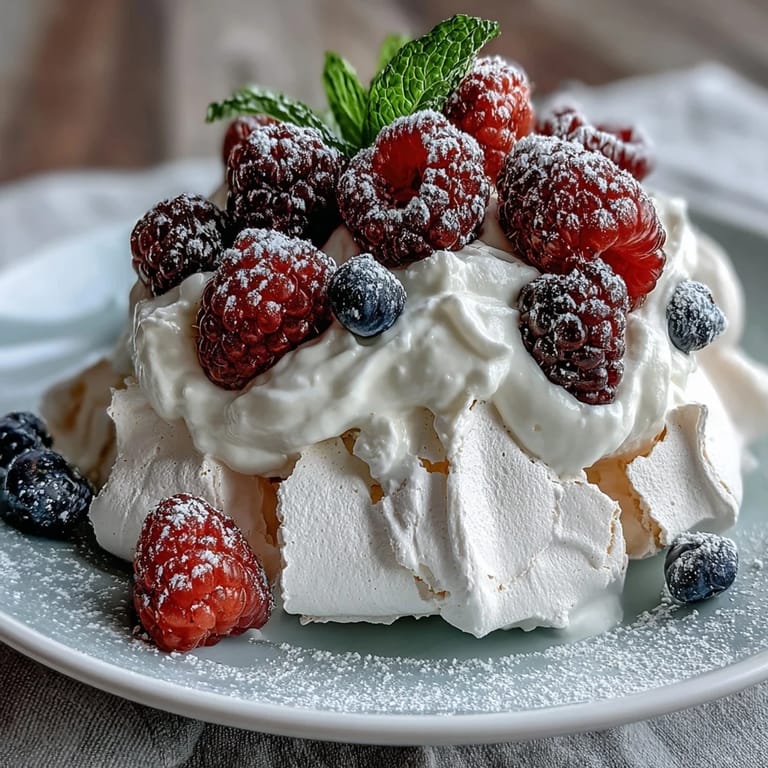
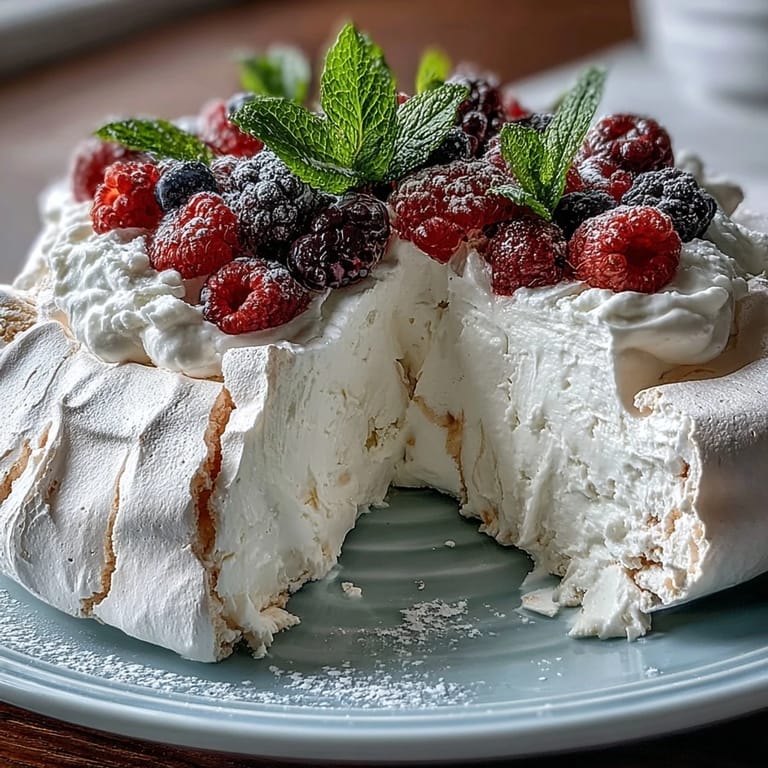
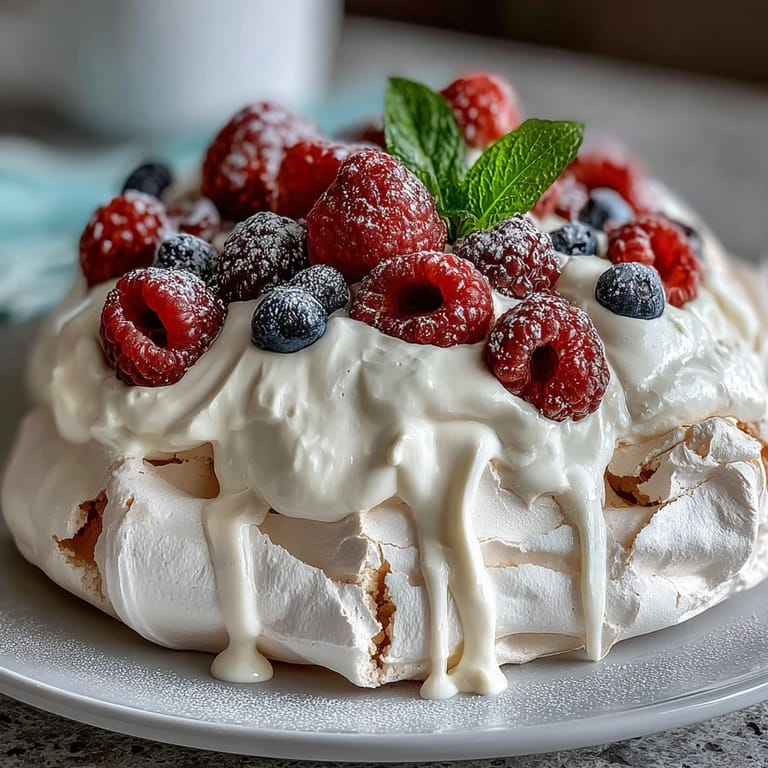
- Once the meringue is completely cool, transfer it carefully to your serving platter and spread the whipped cream generously over the top. Pile your fresh berries on top in whatever arrangement makes you happy, scatter mint if using, and dust lightly with powdered sugar just before serving.
 Pin It
 There's a moment right after you pull the pavlova from the oven when it still looks impossibly fragile, and you realize you've created something that's entirely edible but somehow feels like it belongs in an art gallery. My daughter once asked if it was real or made of spun sugar from a fairy tale, and I think that's exactly the magic this dessert carries.
Timing Your Pavlova Perfectly
The beautiful thing about pavlova is that you can bake it hours ahead, even the day before, which makes it perfect for celebrations when you're juggling a dozen other tasks. I usually bake mine in the morning, let it cool completely on the counter (the crackling sounds as it cools are oddly satisfying), and then assemble it just an hour or two before serving. This way you get the contrast of crispy meringue against soft cream without worrying about last-minute scrambling.
Playing with Seasonal Berries
While mixed berries are stunning, I've learned that pivoting with the seasons keeps this recipe feeling fresh and exciting year after year. Late spring strawberries are impossibly sweet, summer raspberries bring a slight tartness that balances the sweetness of the meringue, and fall berries like blackberries add an almost wine-like depth. Some years I've added thin slices of ripe peach or kiwi, and once I experimented with passion fruit pulp drizzled over the cream—each version tells a different story about when and where you made it.
Troubleshooting Moments and Creative Variations
Pavlova is forgiving in surprising ways, and some of my best versions came from happy accidents rather than perfect execution. A crack in the meringue becomes a rustic charm point that no one minds once the cream covers it, and if your pavlova domes instead of staying flat, you simply press a gentle indent into the center with the back of a spoon once it's cooled. For a chocolate lover's version, fold in 2 tablespoons of sifted cocoa powder before baking, which darkens the meringue beautifully and adds a subtle richness that plays wonderfully against tart berries.
- If you're making this for someone with dairy allergies, substitute the heavy cream with a chilled coconut cream whipped with a touch of vanilla and powdered sugar.
- Keep your assembled pavlova in a cool room for a few hours, but not in the refrigerator, as the cold can soften the crispy shell.
- If you have leftover meringue, spoon small dollops onto parchment and bake alongside the main pavlova for edible crispy gems to snack on later.
 Pin It
 Every time you make this pavlova, you're not just baking a dessert—you're creating a moment where something delicate becomes the centerpiece of a celebration. Hand it to the people you love and watch their faces light up when they taste the contrast between crispy and soft, and you'll understand why my mother was right all along.
Recipe FAQs
- → How do I achieve a crisp meringue shell with a soft center?
Bake the meringue slowly at a low temperature (around 120°C/250°F) and allow it to cool completely in the oven with the door slightly ajar to maintain moisture inside.
- → Can I substitute the mixed berries with other fruits?
Yes, seasonal fruits like kiwi, peaches, or passionfruit work beautifully to add different flavors and colors.
- → How do I ensure the egg whites form stiff peaks?
Use room temperature egg whites and beat them with a pinch of salt until soft peaks appear before gradually adding sugar while continuing to beat until glossy stiff peaks form.
- → Is it possible to add chocolate flavor to the base?
Yes, gently fold in sifted cocoa powder into the meringue before baking to create a chocolate variation.
- → What is the best way to whip cream for the topping?
Chill the heavy cream well, then beat it with powdered sugar and vanilla extract until soft peaks form to achieve a light, fluffy texture.