 Pin It
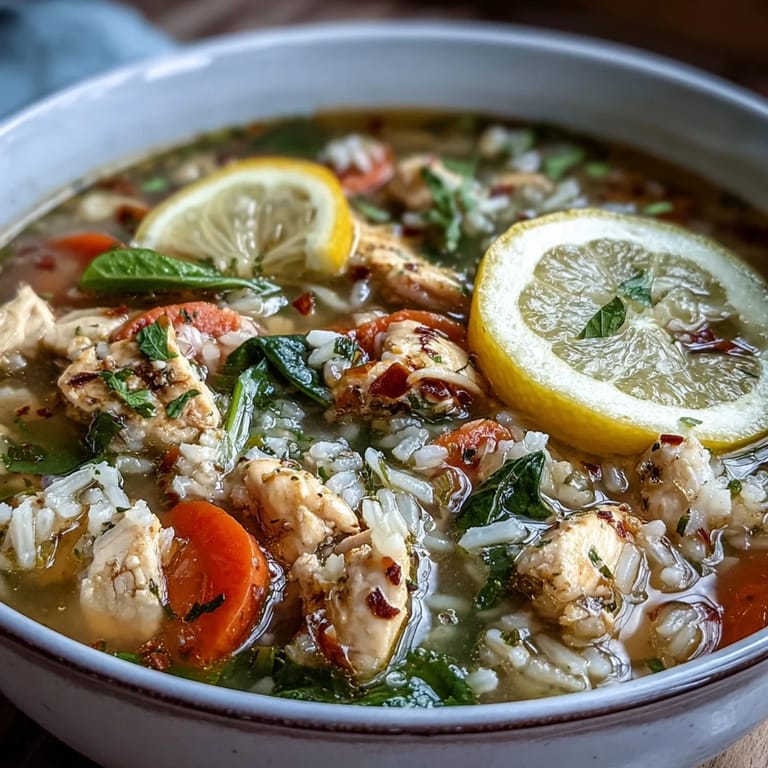
 There's something magical about the moment when a pot of broth transforms into something warm and alive. I discovered this lemon chicken rice soup on a gray Wednesday afternoon when I had nothing but basics in my kitchen and everything to prove about one-pot cooking. The way the lemon cuts through the richness, how the rice softens into pillowy comfort—it felt like a small victory. Now it's become my go-to when I need something that feels both nourishing and effortless, ready in less than an hour.
I made this for my sister when she was recovering from the flu, and watching her face light up as she tasted it reminded me why simple food matters. She asked for seconds before finishing her first bowl, and my brother joked that I'd finally discovered my calling. It became the recipe she requests whenever she needs comfort, which tells me everything about its honest, unpretentious appeal.
Ingredients
- Boneless, skinless chicken breasts (2, about 350 g, diced): Dicing them smaller helps them cook faster and distributes the protein evenly throughout the pot.
- Carrots (2 medium, peeled and sliced): They add natural sweetness and soften beautifully as the soup simmers, thickening the broth slightly.
- Celery stalks (2, sliced): The holy trinity wouldn't be complete without it—celery brings a subtle earthiness that anchors the whole dish.
- Yellow onion (1 small, diced): This is where flavor begins; sautéing onion first builds a foundation for everything else.
- Garlic (3 cloves, minced): Add it after the onion softens or it will burn and turn bitter; the timing matters more than you'd think.
- Baby spinach (100 g, about 2 cups packed): Stir it in at the very end so it wilts gently and retains its bright color and nutrients.
- Lemon zest and juice (from 1 large lemon): The zest gives concentrated lemon flavor without thinning the broth; the juice arrives at the finish line to brighten everything.
- Long-grain white rice (120 g or 2/3 cup, rinsed): Rinsing removes excess starch and prevents gumminess; measure carefully or the soup becomes porridge.
- Low-sodium chicken broth (1.3 liters or 5 1/2 cups): Using low-sodium lets you control the salt and taste the dish's true flavors.
- Water (500 ml or 2 cups): This dilutes the broth just enough so the rice doesn't overpower it.
- Bay leaf (1): It steeps in the background, adding subtle depth that you won't identify but absolutely notice if it's missing.
- Dried thyme (1/2 tsp) and dried oregano (1/2 tsp): These two herbs whisper Mediterranean notes without screaming; they're the quiet backbone of the seasoning.
- Salt and black pepper: Taste as you go and season at the end, after the lemon juice arrives, because acid changes how salt reads on your palate.
- Fresh parsley (2 tbsp chopped, plus extra for garnish): Fresh herbs at the end bring a moment of brightness that dried herbs simply cannot deliver.
- Olive oil (1 tbsp): Just enough to coat the pot and prevent sticking without making the soup feel heavy.
Tired of Takeout? 🥡
Get 10 meals you can make faster than delivery arrives. Seriously.
One email. No spam. Unsubscribe anytime.
Instructions
- Build your base with the holy trinity:
- Heat the olive oil in a large pot over medium heat, then add the diced onion, carrots, and celery. Sauté for 4 to 5 minutes, stirring occasionally, until the vegetables soften and the onion turns translucent; you want them tender but not caramelized at this stage.
- Wake up the pot with garlic:
- Stir in the minced garlic and cook for about 1 minute, just until the kitchen fills with that unmistakable aroma. Don't walk away or linger too long—garlic burns faster than you'd expect.
- Add the chicken and let it begin:
- Toss in the diced chicken pieces and stir occasionally for 3 to 4 minutes, until the outside turns lightly golden and opaque. It won't be fully cooked yet, and that's exactly right; it finishes in the broth.
- Layer in the grains and seasoning:
- Stir in the rinsed rice, bay leaf, thyme, and oregano, letting everything combine so the rice toasts slightly in the oil. This toasting step, though brief, adds a whisper of nuttiness to the final soup.
- Bring it all together with liquid:
- Pour in the chicken broth and water, stir, and let the mixture come to a rolling boil. Once boiling, reduce the heat to a gentle simmer, cover the pot, and cook for 18 to 20 minutes until the rice is tender and the chicken is cooked through.
- Finish with brightness and green:
- Fish out the bay leaf, then stir in the spinach, lemon zest, and lemon juice. Simmer for 2 to 3 minutes just until the spinach wilts and releases its earthiness into the broth.
- Taste and adjust:
- Season with salt and black pepper to your preference, then stir in the fresh parsley. The soup should taste bright, balanced, and alive in your mouth.
- Serve with intention:
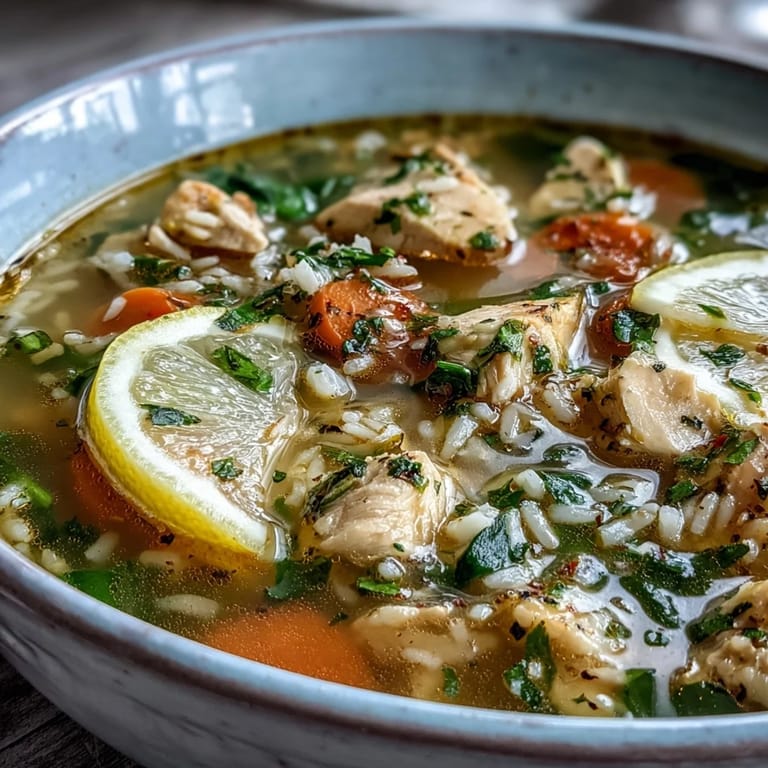
- Ladle the soup into bowls while it's hot, garnishing with extra parsley and lemon slices if you'd like. Each bowl should feel like a small gift to yourself or whoever is lucky enough to eat it.
 Pin It
 My neighbor once told me that this soup reminded her of her grandmother's kitchen, even though her grandmother never made it. That paradox stuck with me—sometimes food speaks a language older than recipes, reaching toward something familiar and safe in the heart. This soup does that for people, which is why I keep making it.
Why One Pot Matters More Than You Think
Cooking everything in a single pot isn't just about convenience, though that's certainly nice. It's about flavor building itself organically as you go: the onions soften into the oil, the garlic blooms into the softened onions, the chicken browns on that flavorful base, and then the rice toasts before the liquid arrives. Each layer depends on the one before it, creating a depth that tastes intentional and complete. When you finish with the lemon and spinach, you're not adding elements to a flat liquid—you're enriching something that's already become something greater than its parts.
Variations That Feel Like New Dishes
The beautiful thing about this soup's structure is how it welcomes change without losing its identity. I've made it with brown rice on mornings when I wanted earthier flavor and didn't mind the extra 10 to 15 minutes of cooking time. I've swapped the spinach for lacinato kale when I wanted something with more texture and a slightly peppery note. I've used vegetable broth and white beans instead of chicken for vegetarian friends, and honestly, it's just as satisfying and warming. The lemon and herbs hold everything together no matter what you substitute, so feel free to cook what your kitchen has and your cravings demand.
Making It Your Own, Every Single Time
This recipe is a starting point, not a prison. Taste constantly as you cook and trust your instincts more than the instructions. If your broth tastes particularly salty, add more water; if it tastes thin, let it simmer a few minutes longer before the spinach goes in. Some people like their soup brothier and lighter, while others prefer it closer to a rice bowl with generous amounts of liquid. If you want richness at the end, stir in a splash of cream or whisk in an egg yolk just before serving, watching it create silky ribbons through the hot broth.
- Crusty bread is not a side dish here—it's part of the experience: It gives you something to do with your hands while the flavors settle.
- Squeeze extra lemon at the table, not in the pot: Everyone's preference differs, and letting people brighten their own bowl respects how they like to eat.
- Make extra and freeze it without the lemon: The soup freezes beautifully for up to three months, and you can add fresh lemon juice when you reheat it.
 Pin It
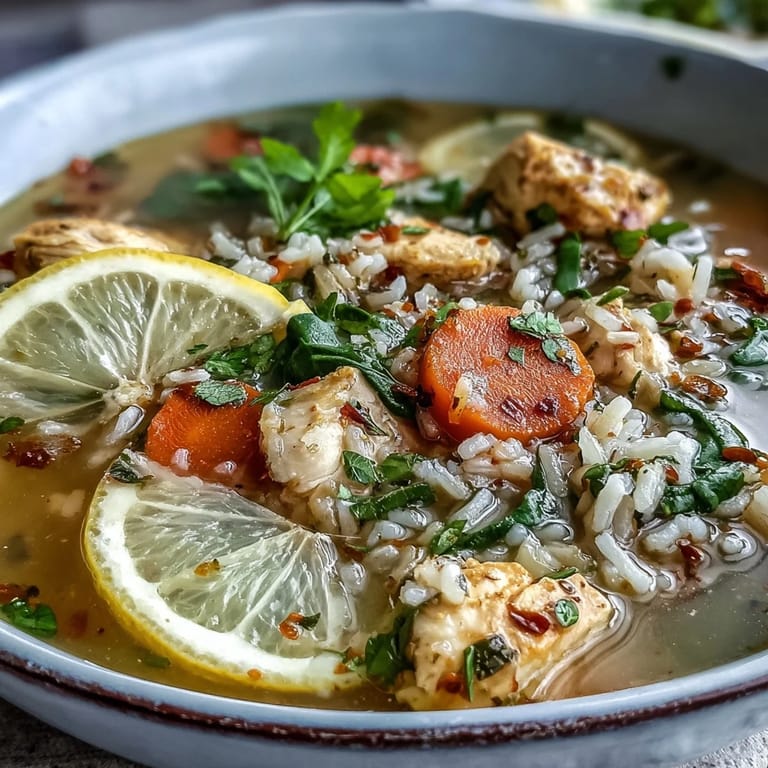
 This soup has become the recipe I reach for when I need to feed someone quickly, when I want to use up vegetables before they fade, or when I simply need the kitchen to smell like home. It's the kind of dish that asks very little and gives back generously.
Recipe FAQs
- → Can I use brown rice instead of white rice?
Yes, substituting brown rice is possible but will require increasing the cooking time by about 10 to 15 minutes to ensure the grains are tender.
- → What vegetables work well in this dish?
Carrots, celery, onion, garlic, and spinach are recommended for balanced flavors and textures, but kale or chard can be good alternatives.
- → How can I make this dish vegetarian?
Omit the chicken and replace the broth with vegetable stock. To add protein, try incorporating white beans.
- → Is this suitable for someone on a gluten-free diet?
Yes, this dish uses gluten-free ingredients; just ensure that any store-bought broth is certified gluten-free.
- → Can I enrich the broth for a creamier texture?
Adding 1-2 tablespoons of cream or a beaten egg yolk at the end of cooking will enrich the texture and add creamy richness.