 Pin It
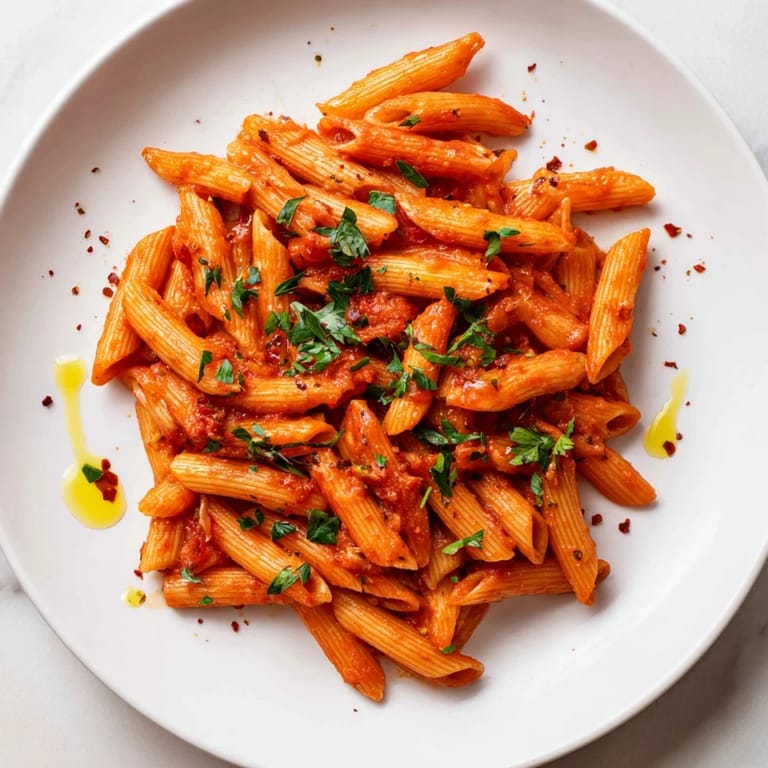
 I discovered penne all'arrabbiata by accident during a chaotic Tuesday night when my fridge held nothing but garlic, chili, tomatoes, and pasta. What emerged from that pantry scramble was something so simple yet so alive with flavor that I've returned to it countless times since, each batch tasting like I've cracked some ancient Roman secret.
My neighbor actually tasted this once when the aroma drifted through our open kitchen windows on a warm spring evening, and she knocked on my door asking what smelled so impossibly good. That moment taught me that sometimes the most impressive meals are the ones that require the least fuss.
Ingredients
- Penne rigate: The ridges catch the sauce better than smooth pasta, holding those peppery flecks exactly where they belong.
- Extra virgin olive oil: This is where the quality matters most since there's nowhere to hide—use one you actually enjoy tasting.
- Garlic cloves: Slice them thin and watch the heat, because burnt garlic turns bitter and ruins the whole thing.
- Red chili flakes: Start with less than you think and taste as you go; heat preferences vary wildly, and you can always add more.
- Whole peeled tomatoes: Canned is perfectly fine here—crush them by hand for that rustic texture that feels intentional, not lazy.
- Sea salt & black pepper: Final seasoning happens after the sauce simmers, so taste and adjust before serving.
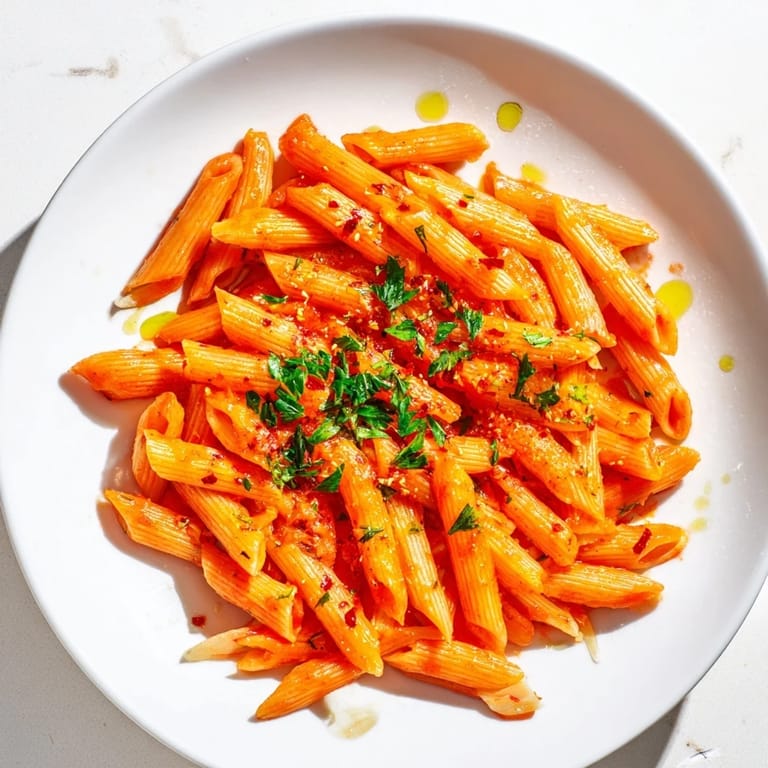
- Fresh flat-leaf parsley: The brightness at the end cuts through the heat and adds color that makes people lean in for another bite.
Tired of Takeout? 🥡
Get 10 meals you can make faster than delivery arrives. Seriously.
One email. No spam. Unsubscribe anytime.
Instructions
- Boil the pasta with intention:
- Salt your water generously—it should taste like the sea—and listen for that rolling boil before the penne goes in. Set a timer and start checking a minute before the package says it's done; you want the pasta to still have backbone when it hits the sauce.
- Coax out the garlic's sweetness:
- Warm the oil gently, then add your sliced garlic and chili flakes together. The magic happens in that first minute when the kitchen fills with a toasty, spicy fragrance that promises something delicious is coming.
- Build the sauce layer by layer:
- Pour in your crushed tomatoes with a pinch of salt and pepper, then let it bubble away uncovered, stirring occasionally. You'll notice the sauce darkening and thickening as the water evaporates, concentrating all that tomato essence into something bold.
- Marry pasta and sauce:
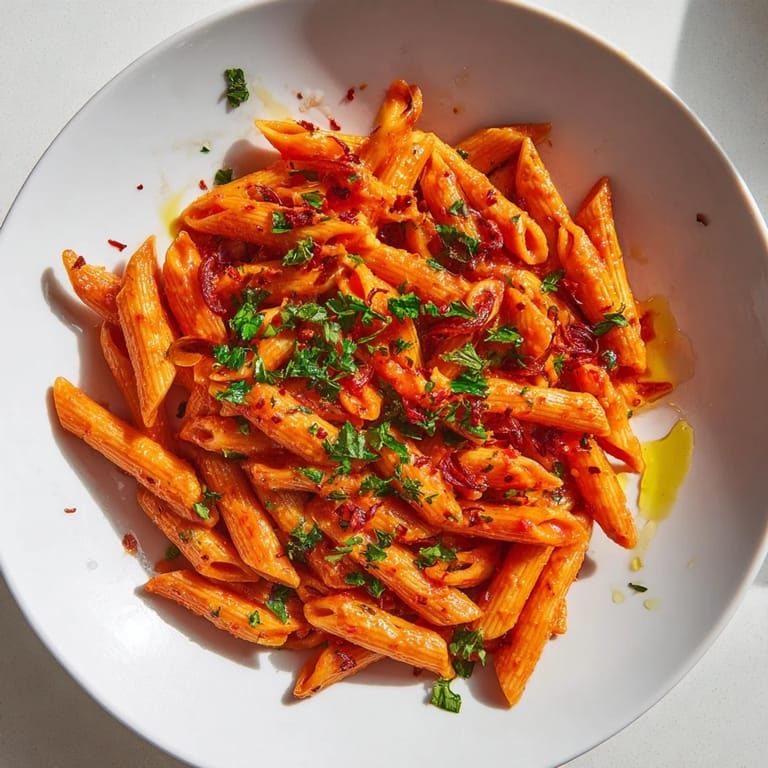
- Toss the drained penne directly into the skillet and keep moving it around for a minute or two so every piece gets coated. If it feels tight, splash in some of that reserved pasta water you saved—starch is your friend here, it helps everything cling together.
- Finish with a whisper of green:
- Off the heat, stir in your chopped parsley and a final drizzle of good olive oil. Taste one more time, adjust the seasoning if needed, and serve immediately while the sauce is still glossy and warm.
 Pin It
 There's a Sunday in my memory when I made this for someone who'd declared themselves a non-spicy-food person, and they went back for seconds, then thirds, discovering that heat and flavor aren't actually the same thing. That's when I realized arrabbiata isn't about being fiery—it's about being honest.
The Heat Question
The name arrabbiata literally means 'angry' in Italian, but don't let that intimidate you. The chili flakes add depth and warmth rather than a painful burn, especially when they're gently heated in oil rather than blasted over high flame. I've learned that starting with a teaspoon and tasting as you go gets you a dish that feels exciting, not punishing.
Why This Matters in Rome
This dish emerged from Roman working-class kitchens where ingredients were humble but their quality was uncompromised. There's something powerful about a recipe that refuses embellishment, where five simple ingredients become a complete experience. It's the kind of cooking that taught me that restraint and respect for ingredient quality often outshine complexity.
Making It Your Own
While tradition matters, your kitchen is yours, and this recipe is sturdy enough to accept small gestures. I've seen people add a whisper of anchovy paste for depth, or a dried red chili instead of flakes for a different kind of heat, or finish with toasted breadcrumbs for texture. The skeleton stays the same; the details can breathe with your preferences.
- Some cooks swear by San Marzano tomatoes specifically, and if you can find them, the difference is noticeable.
- Have extra parsley on hand—people always want more than you think.
- Leftovers are best enjoyed the same day, though the sauce keeps for a few days and can be reheated gently with a touch of olive oil.
 Pin It
 There's something deeply satisfying about a meal that takes thirty minutes but tastes like love anyway. This recipe taught me that simplicity, when done right, is actually the hardest form of cooking.
Recipe FAQs
- → How do I adjust the spiciness level?
Modify the amount of red chili flakes used in the sauce to suit your heat preference, reducing for milder flavors or increasing for extra kick.
- → What pasta is best for this dish?
Penne rigate works perfectly as its ridges hold the robust tomato sauce well, ensuring each bite is flavorful.
- → Can I use fresh tomatoes instead of canned?
Yes, fresh ripe tomatoes can be crushed and simmered similarly, though canned tomatoes offer consistent acidity and texture.
- → What is the role of reserved pasta water?
Adding reserved pasta water helps to loosen the sauce, allowing it to coat the pasta evenly with a smooth texture.
- → How important is the olive oil finish?
A drizzle of extra virgin olive oil at the end enhances richness and balances the spicy tomato base with fruity notes.