 Pin It
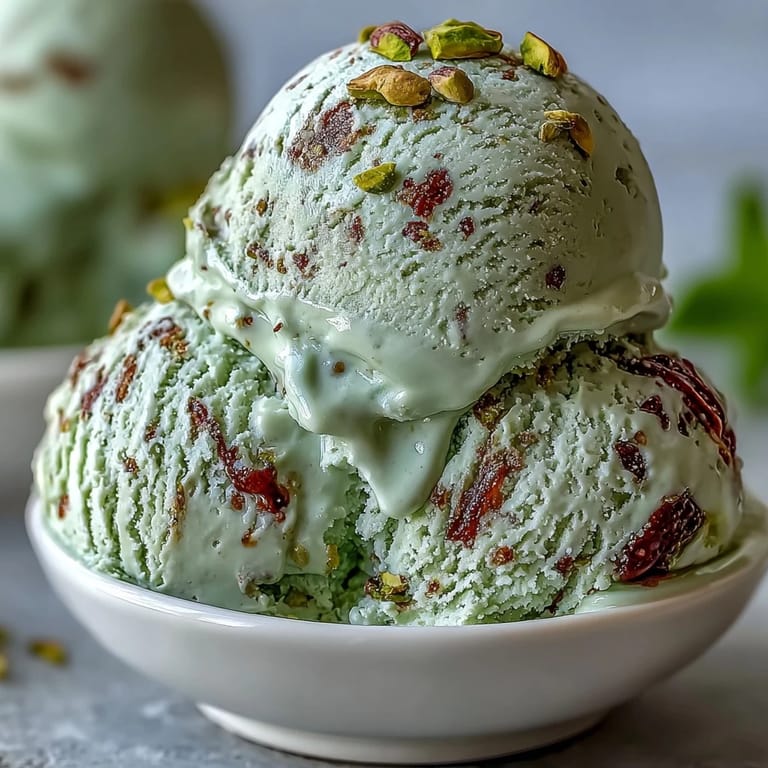
 There's a moment every summer when my neighbor brings over a pint of pistachio gelato from a small gelateria in the city, and I realize I've been missing something essential. That pale green, almost shy color shouldn't contain this much flavor, yet somehow it does—nutty, whisper-soft, nothing like the bright artificial versions from childhood. One afternoon while she described how it's made, I decided to stop buying it and start understanding it instead.
I made this for the first time on a Tuesday evening when my daughter asked if homemade ice cream was actually possible. We stood over the saucepan together, and she watched the milk transform from liquid to custard, which felt like witnessing something almost magical happen in our kitchen. When we finally churned it and she tasted it hours later, she went quiet—that kind of quiet that means something just became her favorite thing.
Ingredients
- Shelled unsalted pistachios (120 g): The foundation of everything—raw nuts don't have the depth you need, so roasting them first brings out a toasty richness that makes people ask what you did differently.
- Granulated sugar (2 tbsp for pistachios, 120 g for gelato): The smaller amount helps break down pistachio oils into a paste, while the larger amount sweetens without overwhelming the delicate nutty flavor.
- Whole milk (500 ml): Provides the body of gelato; don't skip it for extra cream or the texture becomes more frozen dessert than silky gelato.
- Heavy cream (200 ml): Just enough fat to make it luxurious without turning it heavy or icy.
- Large egg yolks (4): These create the custard base that gives gelato its signature creamy texture; room-temperature yolks temper more smoothly into hot milk.
- Pure vanilla extract (1 tsp): A whisper of vanilla doesn't compete with pistachio but adds complexity underneath.
- Fine sea salt (pinch): Enhances pistachio flavor in a way people rarely notice but always feel.
Tired of Takeout? 🥡
Get 10 meals you can make faster than delivery arrives. Seriously.
One email. No spam. Unsubscribe anytime.
Instructions
- Roast the pistachios until fragrant:
- Spread them on a tray and roast at 170°C for 8 to 10 minutes—you'll know they're ready when your kitchen fills with that warm, toasted pistachio smell. Cool slightly, then rub them vigorously in a clean towel to slip off the papery skins; this step matters more than it seems.
- Grind pistachios into a paste:
- Pulse roasted pistachios with 2 tbsp sugar in a food processor until the mixture looks like wet sand, then keep going until it begins releasing its oils and clumping together into something paste-like. This usually takes 4 to 5 minutes of patient pulsing.
- Heat milk and cream gently:
- Pour both into a saucepan and warm over medium heat until small bubbles form around the edges and steam rises—you're aiming for just below boiling, not boiling itself. Remove from heat immediately.
- Whisk yolks and sugar until pale:
- In a separate bowl, whisk 4 egg yolks with 120 g sugar and a pinch of salt for about 2 minutes until the mixture becomes pale yellow and falls in ribbons from your whisk. This aeration is what helps create that silky texture later.
- Temper the eggs carefully:
- Pour the hot milk mixture slowly into the yolk mixture while whisking constantly—this prevents the eggs from scrambling and creates a smooth custard. Take your time here; rushing creates scrambled bits you'll regret.
- Cook the custard to the right temperature:
- Return everything to the saucepan over low heat and stir constantly with a wooden spoon until the mixture coats the back of the spoon and reaches 77 to 80°C, which takes about 5 to 7 minutes. Use a thermometer if you have one; without one, you'll notice the custard thickens noticeably and stops looking watery.
- Fold in pistachio paste and vanilla:
- Remove from heat and stir in your pistachio paste and vanilla extract until completely combined and smooth with no streaks. The mixture should look uniformly pale green and smell unmistakably of pistachio.
- Strain for silkiness:
- Pour the mixture through a fine-mesh sieve into a clean bowl to catch any lumps or bits of cooked egg white. This step creates that restaurant-quality smoothness that makes people wonder if it's really homemade.
- Chill thoroughly:
- Cover the bowl and refrigerate for at least 4 hours, preferably overnight, until completely cold. Cold mixture churns more efficiently and freezes to the right consistency.
- Churn until thick and creamy:
- Follow your ice cream maker's instructions, which usually means churning for 20 to 30 minutes until the mixture looks thick like soft-serve. Transfer to a container and freeze for at least 2 hours before serving.
 Pin It
 Last spring, I brought a container of this to a neighborhood gathering, and someone's grandmother tasted it and asked where I bought it. When I said I made it, she looked at me with this expression that suggested I'd just revealed something impossible, and that moment became exactly why I keep making it.
What Makes Gelato Different From Ice Cream
Gelato contains less air and less fat than American ice cream, which means it tastes denser and creamier despite having fewer calories. The lower churning speed keeps air out, and the lower freezing temperature means it melts more slowly on your tongue, letting you actually taste the pistachio instead of just the cold. Once you understand this, you realize you've been eating frozen desserts your whole life without tasting them properly.
Troubleshooting Your Gelato
If your gelato comes out icy instead of creamy, either your mixture wasn't cold enough before churning or you didn't churn it long enough—aim for that soft-serve thickness where it barely holds a shape. If it tastes too sweet or the pistachio flavor disappears, you likely overcooked the custard or used too much sugar somewhere; next time reduce sugar by 10 grams and taste as you go. If the pistachio paste settles to the bottom, your blending wasn't thorough enough or your custard was too hot when you added it, causing the paste to separate rather than emulsify.
Storage and Serving Secrets
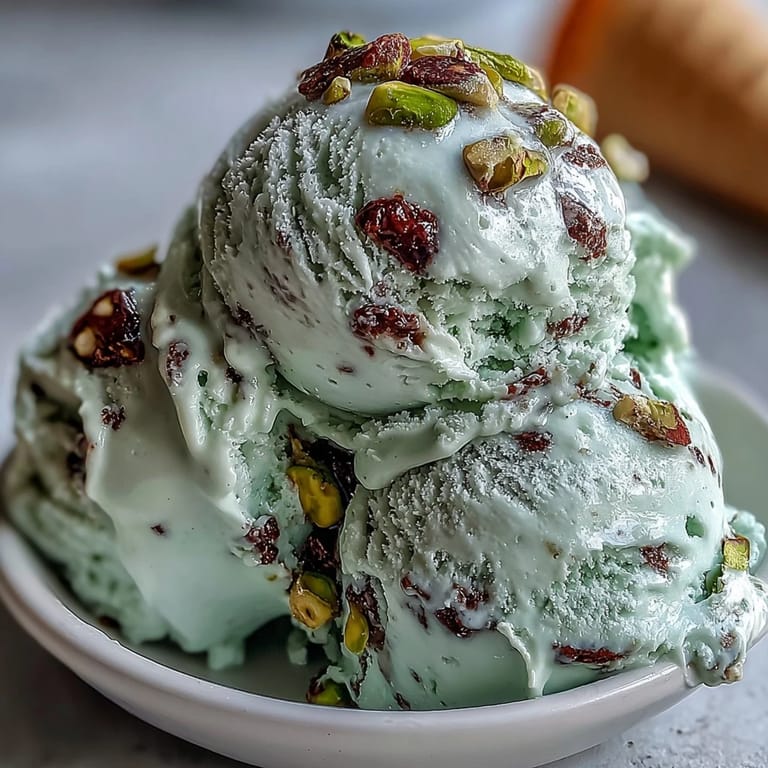
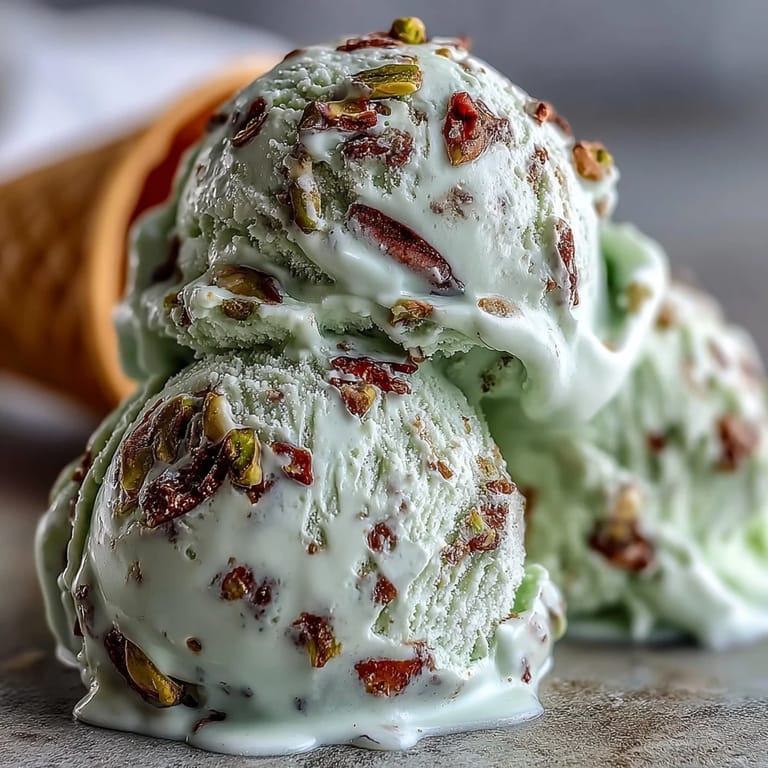
Gelato keeps well in the freezer for up to two weeks if stored in an airtight container, though the flavor is brightest within the first few days. Let it soften at room temperature for 5 minutes before scooping so you're not fighting with it, and always serve in a chilled bowl if you have the time. A garnish of chopped roasted pistachios on top does more than look pretty—it adds a moment of texture crunch that makes the whole experience feel intentional.
- If you don't have an ice cream maker, freeze the chilled mixture in a shallow tray and stir vigorously every 30 minutes for 3 to 4 hours, which requires patience but absolutely works.
- Never use artificial pistachio extract or green food coloring; the real thing tastes so much better that shortcuts feel like betraying the whole point.
- Make this recipe twice a year at minimum because once people taste it, they'll start requesting it like it's something only you can make.
 Pin It
 Making gelato taught me that good food doesn't require fancy equipment or restaurant training—just patience, respect for each ingredient, and the willingness to slow down. Every time someone tastes this and closes their eyes, I know exactly why I keep making it.
Recipe FAQs
- → How do pistachios affect the flavor?
Roasting pistachios enhances their nutty aroma and deepens the flavor, giving the dessert a rich and distinct taste.
- → Why is the custard cooked slowly?
Slow cooking thickens the custard gently, preventing curdling and ensuring a smooth, creamy texture.
- → Can I make this without an ice cream machine?
Yes, freeze the mixture in a shallow tray, stirring vigorously every 30 minutes for 3–4 hours to mimic churning.
- → What is the purpose of sieving the mixture?
Sieving removes any lumps or solids to ensure a silky smooth final texture.
- → How should it be stored after freezing?
Keep it in an airtight container in the freezer to maintain the creamy texture and prevent ice crystals.