 Pin It
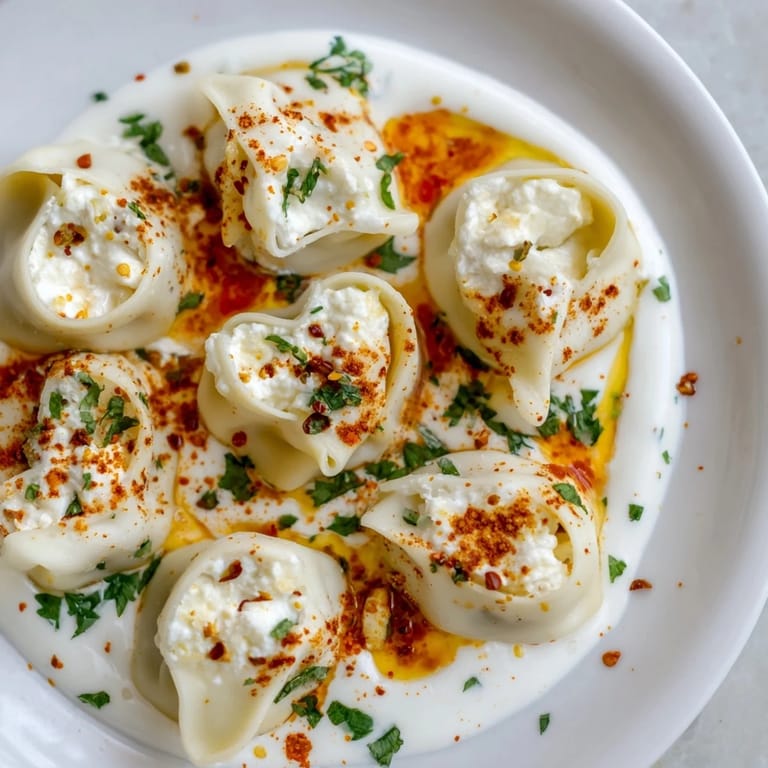
 The first time I made Turkish manti, my hands were too impatient. I'd watched my neighbor fold hers with the kind of practiced ease that comes from childhood kitchen memories, and I thought I could rush through it. Twenty minutes in, my fingers ached, my dough had dried out in patches, and I'd somehow pinched one dumpling so hard it burst open in the boiling water. But when that first batch hit the plate—golden, tender, topped with that cool garlicky yogurt and the most incredible spiced butter—I understood why she'd taken her time. These tiny dumplings demand respect, but they reward you with something genuinely magical.
I made these for a dinner party once, convinced I'd somehow mess it up in front of people. Instead, my friend asked for thirds and spent the next week texting me pictures of her own failed attempts. There's something about serving food you've folded by hand that shifts the whole evening—it becomes less about perfection and more about the fact that you cared enough to try.
Ingredients
- All-purpose flour (2 cups): The foundation for a dough that's tender but strong enough to hold the cheese without tearing—I learned this the hard way after using bread flour once.
- Salt (1/2 teaspoon for dough, 1/4 teaspoon for sauce): Seasoning happens in layers here, so don't skip either pinch.
- Large egg: The binder that brings everything together into an elastic dough that's actually pleasant to work with.
- Water (1/2 cup, more as needed): Add it slowly—humidity in your kitchen matters more than you'd think.
- Turkish white cheese or feta (1 cup, crumbled): The tangy, salty heart of these dumplings; don't use pre-shredded cheese because the coating makes it clump.
- Ricotta cheese (1/2 cup): This softens the intensity of the feta and creates a filling that actually stays creamy instead of drying out.
- Fresh parsley (2 tablespoons, finely chopped): A small amount does so much for brightness—dried parsley tastes like cardboard by comparison.
- Black pepper (1/4 teaspoon): Just enough to remind you it's there.
- Plain Greek yogurt (1 1/2 cups): The cool counterpoint to everything warm; make sure it's actually plain, not vanilla.
- Garlic clove (1, minced): One is gentler than you'd expect, letting the yogurt shine.
- Unsalted butter (3 tablespoons): The stage for the spices to perform; salted butter muddies the flavor here.
- Paprika and Aleppo pepper (1 teaspoon and 1/2 teaspoon): Toasted in butter, these become something completely different from their raw versions—warm, almost sweet, with a gentle heat.
Tired of Takeout? 🥡
Get 10 meals you can make faster than delivery arrives. Seriously.
One email. No spam. Unsubscribe anytime.
Instructions
- Mix the dough base:
- Combine your flour and salt in a bowl, then make a well in the center like you're creating a small crater. Crack your egg into it, add the water gradually, and start mixing from the center outward. Your dough will feel shaggy at first, then gradually transform into something smooth and slightly elastic as you knead it for about 8 minutes—you'll feel the difference in your hands.
- Let it rest:
- Cover your dough with a damp cloth and let it sit for 20 minutes; this isn't just tradition, it's actually necessary for the gluten to relax so your dough becomes elastic instead of stubborn.
- Prepare the filling:
- While the dough naps, crumble your cheeses into a bowl and fold in the parsley and pepper with a gentle hand—you want everything just combined, not overmixed.
- Make the yogurt sauce:
- Stir your minced garlic and salt into the yogurt until smooth; taste it and remember this is your seasoning moment, since yogurt gets whispered away under the other flavors once plated.
- Roll and cut:
- Dust your work surface lightly with flour and roll your dough thin—about the thickness of a coin. Cut it into squares roughly 1.5 inches across; if your dough starts shrinking back, let it rest for a minute and it'll cooperate.
- Fill and fold:
- Place about half a teaspoon of cheese filling in the center of each square, then pinch the four corners together above the filling to create a tiny sealed bundle. The key is not overthinking it—a quick pinch is all you need.
- Cook the manti:
- Bring a large pot of salted water to a rolling boil and add your dumplings in batches; they'll sink, then float, and about 2 minutes after floating they're done. Use a slotted spoon to fish them out gently so they don't break.
- Toast the spiced butter:
- Melt your butter in a small pan and immediately add the paprika and Aleppo pepper, stirring for just 30 seconds until the whole kitchen smells like warmth and spice. Don't let it burn.
- Plate and serve:
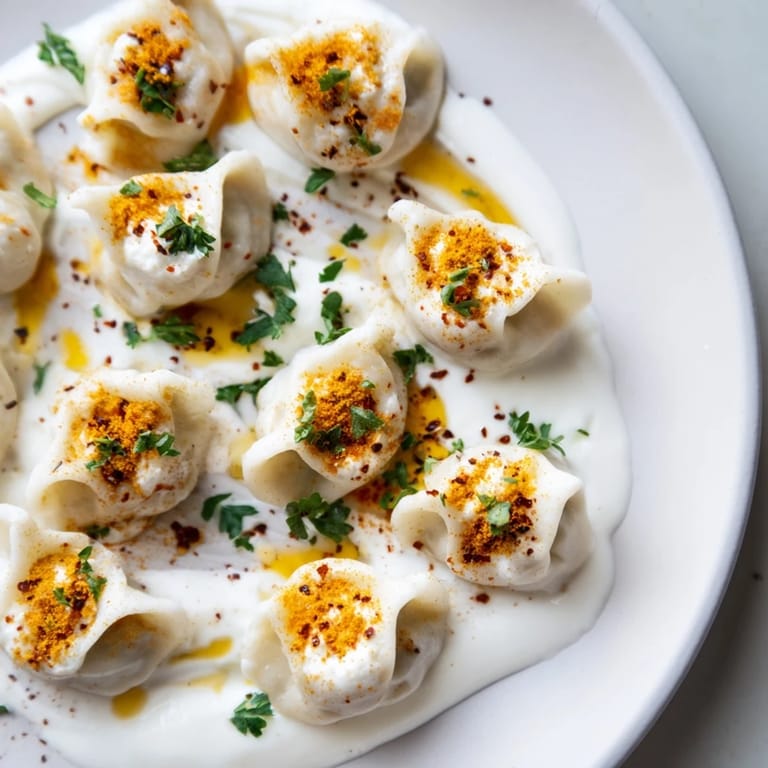
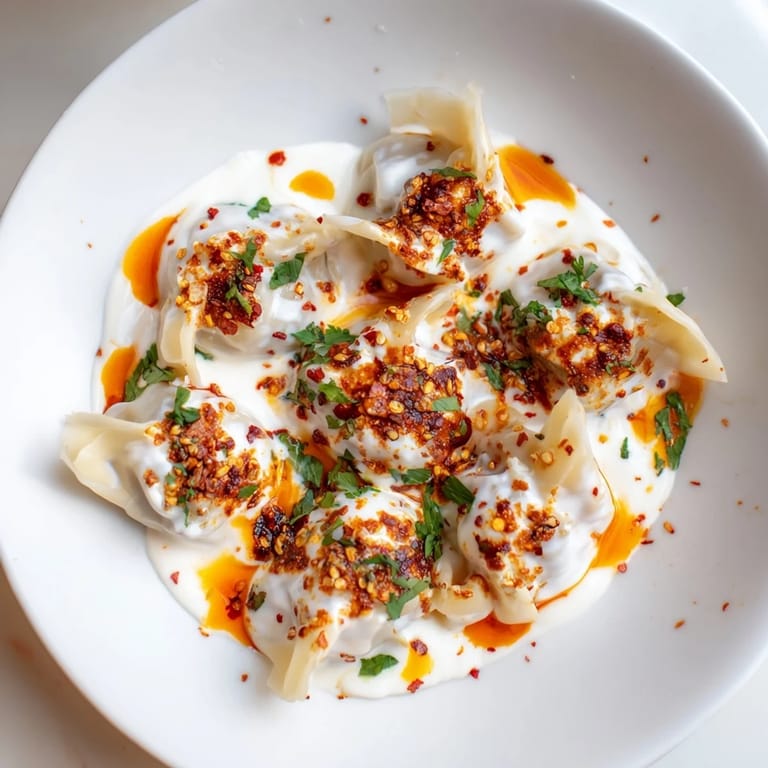
- Arrange your manti on plates, spoon yogurt sauce generously over the top, then drizzle with that spiced butter and watch it pool into the sauce in the most beautiful way.
 Pin It
 There's a quiet satisfaction in plating something you've made with your hands, especially when it looks restaurant-quality and tastes even better. These dumplings taught me that some recipes are worth the small effort because the payoff is genuine—not because anyone's making you prove something, but because the food actually sings when you care about the details.
The Story Behind Turkish Manti
Manti exists in different forms across Turkey, Central Asia, and the Middle East, which means everyone has a slightly different opinion on how it should be made. What they agree on is that it's a celebration dish, the kind of dumpling that appears when you want to feed people something that feels like love on a plate. The folding itself is meditative—repetitive enough that your hands learn the rhythm, but never boring because each dumpling is slightly different from the one before.
Why Cheese Filling Works Here
I've experimented with meat fillings, potato fillings, and even spinach fillings, but the cheese version remains the most elegant. It's creamy without being heavy, tangy without being aggressive, and it doesn't overpower the delicate dough or compete with the yogurt sauce. The combination of feta and ricotta is the secret—feta brings character and salt, ricotta brings texture and softness, and parsley brings green brightness that ties everything together.
Making Them Your Own
Once you've made these once, you'll start seeing them as a template rather than a rigid recipe. Some cooks finish with a sprinkle of sumac for brightness, others dust with dried mint for earthiness, and I've seen both done beautifully. The core method stays the same, but the personality can shift slightly depending on what your kitchen has on hand.
- If you want extra color and tartness, finish with a pinch of sumac or dried mint instead of more parsley.
- For a richer version, brown your butter before toasting the spices into it.
- You can make these an hour ahead and reheat them gently in a warm oven without losing much quality.
 Pin It
 These tiny dumplings are proof that food doesn't need to be complicated to be memorable. Serve them immediately while the contrast between warm filling, cool yogurt, and hot spiced butter is still sharp and perfect.
Recipe FAQs
- → What type of cheese works best for the filling?
Turkish white cheese or feta combined with ricotta creates a creamy, slightly tangy filling that balances well with the yogurt sauce.
- → How thin should the dough be rolled?
Roll the dough very thin, about 2 millimeters, to achieve tender dumplings that cook evenly and hold the filling well.
- → Can I make the dish vegetarian?
Yes, this preparation is naturally vegetarian, using dairy-based cheeses and no meat ingredients.
- → What gives the butter its unique spiced flavor?
Butter is infused with paprika and Aleppo pepper (or chili flakes), adding warmth and a gentle smoky heat to the dish.
- → How is the yogurt sauce prepared?
The sauce blends plain Greek yogurt with minced garlic and a pinch of salt, creating a smooth, tangy complement to the dumplings.
- → Are there suggested garnishes for extra flavor?
You can add a sprinkle of sumac or dried mint on top for additional aroma and a slight tartness.