 Pin It
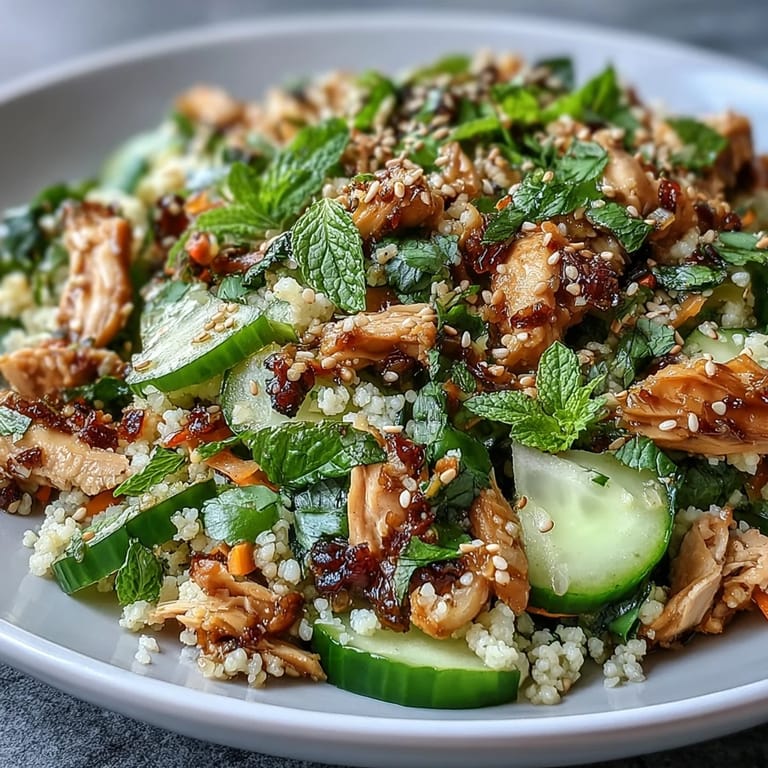
 One Tuesday afternoon, I was rushing to prepare lunch for a friend who'd just finished her morning run, and I realized I had exactly thirty minutes to create something that felt fresh, substantial, and exciting. I grabbed a rotisserie chicken from the grocery store, remembered a sesame dressing I'd been meaning to try, and discovered that pearl couscous—those little jewel-like grains—could absorb all that umami-forward flavor without disappearing into mush. What started as a quiet moment of kitchen improvisation became the dish I now make whenever I need something that tastes impressive but doesn't demand my full attention.
I made this for my neighbor's casual dinner party last summer, and what surprised me most was watching people go back for seconds without even asking what was in the dressing. Someone's nine-year-old asked for the recipe, which felt like the highest compliment a home cook could receive. That night reminded me that the best meals are the ones that taste like someone actually cared, not the ones that look like they came from a magazine.
Ingredients
- Pearl (Israeli) couscous: These tender, chewy grains have more personality than regular couscous and won't turn mushy even when dressed generously.
- Toasted sesame oil: This is the secret weapon that makes the entire salad taste authentically Asian—just drizzle it like perfume, not like cooking oil.
- Fresh ginger and garlic: Minced fresh, they carry that bright, alive quality that bottled versions simply cannot match.
- Soy sauce: Choose a good quality soy sauce or tamari if you need it gluten-free, and notice how it deepens the entire flavor profile.
- Rice vinegar: Milder and more delicate than other vinegars, it balances the richness of the sesame oil without overpowering the greens.
- Rotisserie chicken: Buy it fully cooked and shredded so you're not starting from scratch, which means more time to focus on building layers of flavor.
- Fresh cucumber: Choose one that's firm and crisp, and slice it just before serving so it stays cool and refreshing.
- Cilantro and mint: Fresh herbs are what transform this from a side dish into something that feels vibrant and alive on your palate.
- Toasted sesame seeds: These belong on top as a final flourish, adding crunch and a warm, roasted dimension you wouldn't get without them.
Tired of Takeout? 🥡
Get 10 meals you can make faster than delivery arrives. Seriously.
One email. No spam. Unsubscribe anytime.
Instructions
- Bring the water to a rolling boil:
- Use a medium saucepan and watch for those vigorous bubbles breaking the surface. You'll hear it before you see it.
- Cook the pearl couscous until tender:
- Add the couscous and salt to boiling water, then reduce the heat and let it simmer for eight to ten minutes, stirring now and then so the grains don't stick together. The couscous will soften but keep its chew, and any excess water should be drained away.
- Make the dressing while the couscous cooks:
- In a small bowl, whisk together soy sauce, sesame oil, rice vinegar, honey, lime juice, ginger, garlic, and Sriracha if you like heat. This is where you taste and adjust—add more lime if you want brightness, more honey if you want sweetness to balance the salt.
- Let the couscous cool just slightly:
- Warm couscous will absorb the dressing more effectively than cold couscous, so give it a few minutes but don't wait until it's completely cooled.
- Combine everything in a large bowl:
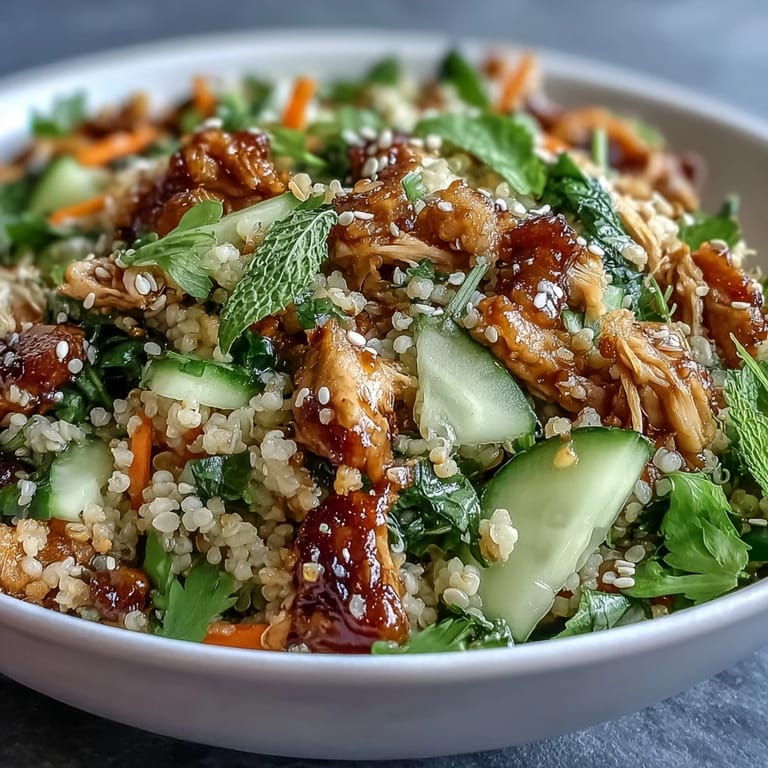
- Add the cooked couscous, shredded chicken, diced cucumber, shredded carrots, sliced scallions, and fresh cilantro and mint. This is where you're building the salad's architecture.
- Pour the dressing over and toss gently but thoroughly:
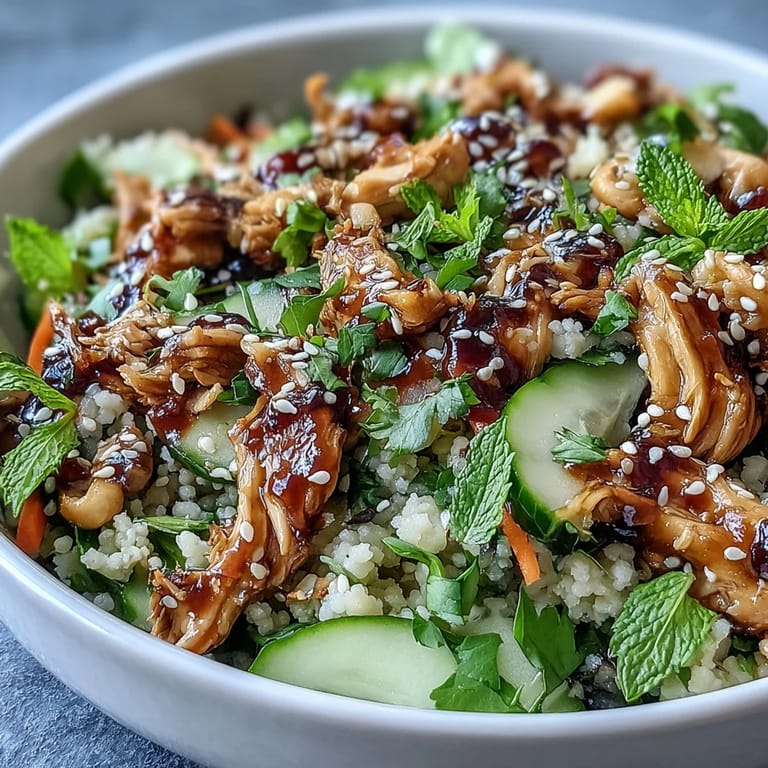
- Make sure every element gets coated with that golden sesame dressing. Use tongs or a large spoon and fold everything together until it looks evenly dressed.
- Transfer to bowls and garnish:
- Sprinkle the toasted sesame seeds over the top and serve with lime wedges on the side so people can adjust the acidity to their preference.
 Pin It
 There's something almost meditative about whisking together a dressing and watching it transform from separate ingredients into something cohesive and golden. I remember standing in my kitchen one rainy afternoon, the smell of toasted sesame oil filling the air, and realizing that this simple salad had become my answer to the question I used to ask myself: what do I make when I want to feel nourished but not overwhelmed?
Building Layers of Flavor
The secret to making this salad taste restaurant-quality is understanding that each ingredient serves a purpose beyond just filling your bowl. The sesame oil provides richness, the lime juice brings brightness, the ginger and garlic add complexity, and the fresh herbs tie everything together with a sense of vitality. This is why you can't just throw things together—you're composing a dish the way a musician composes a song, with each note meant to harmonize with the others.
Making It Your Own
The beauty of this salad is that it welcomes improvisation without losing its identity. I've added shredded red cabbage for extra color and crunch, tossed in edamame for additional protein, and even experimented with roasted chickpeas as a vegetarian swap for the chicken. The dressing is flexible enough to carry different proteins, different vegetables, and different seasonal produce, so don't feel locked into exactly what I've written here.
Storage and Serving Ideas
This salad lives in the middle ground between a warm dish and a cold dish—you can serve it at room temperature right after assembly, or refrigerate it for a couple of hours if you prefer it chilled on a warm day. If you're meal-prepping for the week, keep the couscous and vegetables separate from the dressing until you're ready to eat, so nothing becomes waterlogged or mushy.
- Pack the dressing in a separate container if you're taking this to work, and dress it just before eating for the best texture.
- Leftover salad will keep refrigerated for up to two days, though the couscous will continue absorbing the dressing and become softer as time passes.
- If you want to serve this warm, dress it while the couscous is still warm and taste it immediately before the flavors settle into their final form.
 Pin It
 This is the kind of salad that makes you feel good while you're eating it and even better afterward, which might be the truest test of whether a recipe is worth keeping. Make it for yourself on a busy weeknight, and you'll understand why it's become a permanent fixture in my kitchen rotation.
Recipe FAQs
- → Can I make this salad ahead of time?
Yes, you can prepare the couscous and dressing up to 2 days in advance. Store them separately in the refrigerator. Toss everything together just before serving to maintain the best texture and freshness.
- → What can I substitute for the rotisserie chicken?
Cubed baked tofu, edamame, or grilled shrimp work beautifully as vegetarian or seafood alternatives. For a different protein, try shredded poached chicken breast or pan-seared tofu cubes.
- → Is pearl couscous the same as regular couscous?
No, pearl couscous (also called Israeli couscous) consists of larger, spherical pasta-like grains that require boiling, unlike traditional tiny couscous that steams. Pearl couscous has a chewier texture and holds up well in salads.
- → Can I make this gluten-free?
Use tamari instead of soy sauce and swap pearl couscous for gluten-free pearl couscous or quinoa. The flavors and textures remain delicious while accommodating gluten-free dietary needs.
- → How long does the dressing keep?
The sesame-soy dressing stays fresh in an airtight container in the refrigerator for up to one week. The flavors actually develop and meld over time, making it great for meal prep.