 Pin It
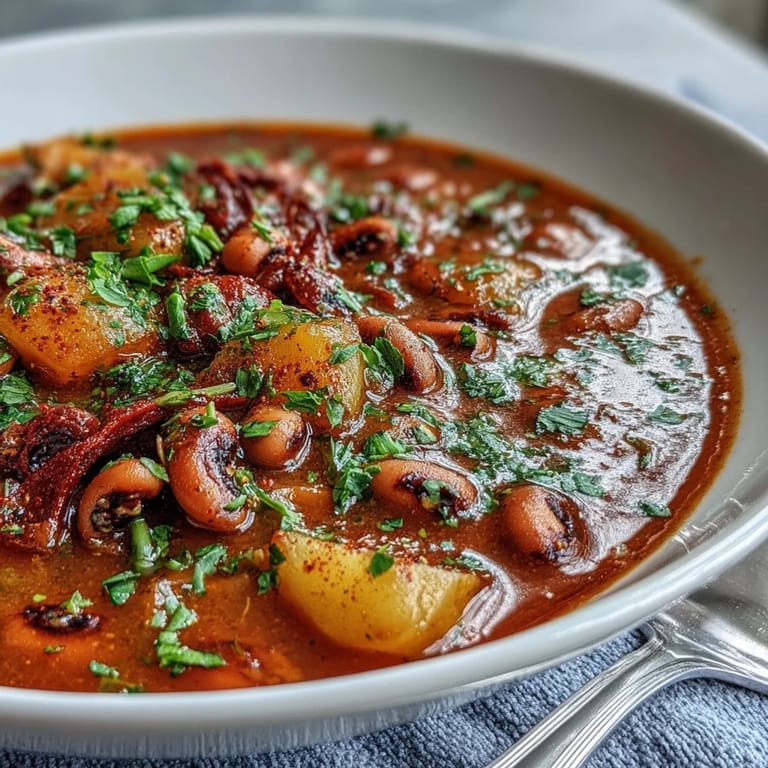
 There's something about the smell of onions hitting hot oil that makes you feel like you're doing something right in the kitchen. One Tuesday evening, I had a craving for something warm and honest—no fuss, just real food—and I started with black-eyed peas because they felt lucky and kind. This stew came together almost by accident, each vegetable adding its own voice to a conversation happening in the pot, and by the time I tasted it, I knew I'd stumbled onto something worth making again and again.
I made this for my neighbor who'd just moved in, and she brought over her own bread to pair with it because she wanted to be part of the moment. Watching her face light up when she tasted how the tomato and black-eyed peas created this unexpected sweetness reminded me that food becomes its truest self when it's shared with someone who actually shows up.
Ingredients
- Extra virgin olive oil (2 tablespoons): This is your foundation—use the good stuff because you'll taste it in those first moments when the onions start to sing.
- Sweet onion (1 large, diced small): The size of your dice matters here; small pieces mean they soften faster and distribute flavor more evenly.
- Carrots (2 medium, peeled and diced): They add natural sweetness and a subtle earthiness that rounds out the whole bowl.
- Celery stalks (2, diced): People skip this, but it's what gives the broth backbone and keeps everything from tasting one-dimensional.
- Potatoes (2 medium, peeled and diced): These create the creamy texture you get from simmering without needing cream or butter.
- Diced tomatoes (1 can, 14.5 oz with juices, or 2 cups fresh): The acidity brightens everything, so don't leave this out or swap it for something else.
- Garlic cloves (3, minced): Mince them fine and wait for that moment when the smell changes—that's when you know they're ready.
- Black-eyed peas (2 cups cooked or 1 drained can): If you're using canned, rinsing them matters because the sodium liquid can overpower the broth.
- Vegetable broth (4 cups): The quality here makes a real difference; a good broth tastes like someone cared when they made it.
- Bay leaf (1): Remove it before serving—I've learned this the hard way more than once.
- Dried thyme (1 teaspoon): It's subtle but essential; it whispers rather than shouts.
- Smoked paprika (1 teaspoon): This is the secret that makes people ask what's in your stew.
- Ground black pepper (1/2 teaspoon): Fresh cracked is better if you have it, and you can always add more.
- Salt (1 teaspoon, adjusted to taste): Taste as you go because every broth has different saltiness.
- Fresh parsley (2 tablespoons chopped, plus more for garnish): Don't add it until the very end—it keeps its brightness that way.
Tired of Takeout? 🥡
Get 10 meals you can make faster than delivery arrives. Seriously.
One email. No spam. Unsubscribe anytime.
Instructions
- Build your base with onions:
- Heat the olive oil in a large pot over medium heat until it shimmers slightly, then add the diced onion and let it soften for 3 to 4 minutes, stirring now and then. You're listening for the sizzle to become quieter and watching for those edges to turn golden—that's when you know they've released their sweetness.
- Add layers with carrots and celery:
- Toss in the carrots and celery and cook for about 4 minutes, stirring occasionally so they soften evenly. The pot will start to smell like dinner, and you'll feel the texture shift under your wooden spoon.
- Introduce potatoes and garlic:
- Add the diced potatoes and stir everything together for 2 minutes, then add the minced garlic and wait for about 1 minute until it becomes fragrant and the kitchen smells alive. Don't let the garlic brown; you want it golden and sweet.
- Combine liquids and seasonings:
- Pour in the tomatoes with all their juice and the vegetable broth, then add the bay leaf, thyme, smoked paprika, pepper, and salt. Stir it all together and watch the colors blend into something that looks like it belongs in a bowl.
- Simmer until vegetables soften:
- Bring everything to a gentle boil, then lower the heat and let it simmer uncovered for about 15 minutes, stirring occasionally. The potatoes and carrots should become nearly tender, and the broth will deepen in color.
- Fold in black-eyed peas and finish:
- Add the drained black-eyed peas and simmer for another 10 minutes until everything is soft and the flavors have found each other. The peas will start to break down slightly at the edges, which creates a natural richness.
- Final taste and garnish:
- Remove the bay leaf, taste your stew, and adjust the salt and pepper if it needs it—trust your palate. Stir in the fresh parsley right before serving, and ladle it into bowls with an extra sprinkle of parsley on top.
 Pin It
 One winter afternoon, my daughter asked why this stew made her so happy, and I realized it wasn't just the taste—it was watching her slow down and actually sit with a bowl instead of rushing through dinner. That's when a recipe becomes something bigger than ingredients.
The Gift of Black-Eyed Peas
Black-eyed peas have this reputation for being lucky, and whether or not you believe in that sort of thing, there's something generous about how they cook. They soften without falling apart, they absorb flavors without losing their own identity, and they turn a simple vegetable broth into something that feels nourishing. I started using them because they're inexpensive and reliable, but I keep using them because they never disappoint.
Why Smoked Paprika Changes Everything
The first time I made this stew without smoked paprika, thinking regular paprika would do the same job, the whole thing tasted flat and one-dimensional. Adding the smoked version on my second try taught me that sometimes a single ingredient carries the weight of making something memorable. It gives the impression of slow cooking over a fire, even though you're just simmering on the stove for forty minutes.
Ways to Make It Your Own
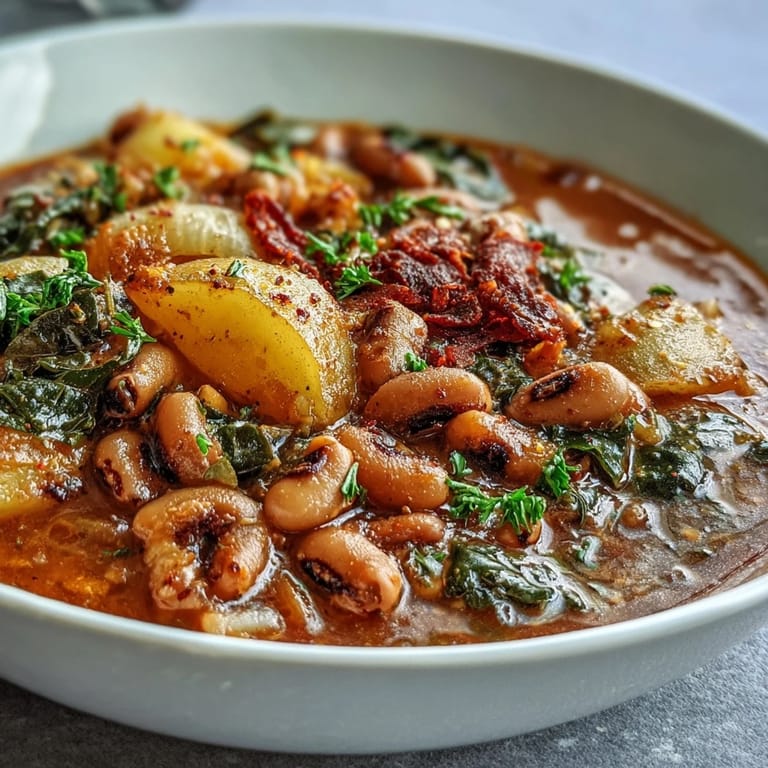
The beauty of this stew is how it invites you to leave your own fingerprints on it without losing its soul. I've added spinach at the end for color and iron, stirred in a touch of liquid smoke for depth, and even thrown in diced bell peppers because that's what I had on hand. Each time it shifts slightly but stays fundamentally itself, which is the mark of a truly good recipe.
- For a smoky edge, add a dash of liquid smoke or a chopped chipotle pepper during the final simmer.
- If you want more greens and protein, stir in chopped kale or spinach in the last 5 minutes—it wilts right in.
- Serve it with crusty bread, over rice, or even with cornbread if you're feeling indulgent.
 Pin It
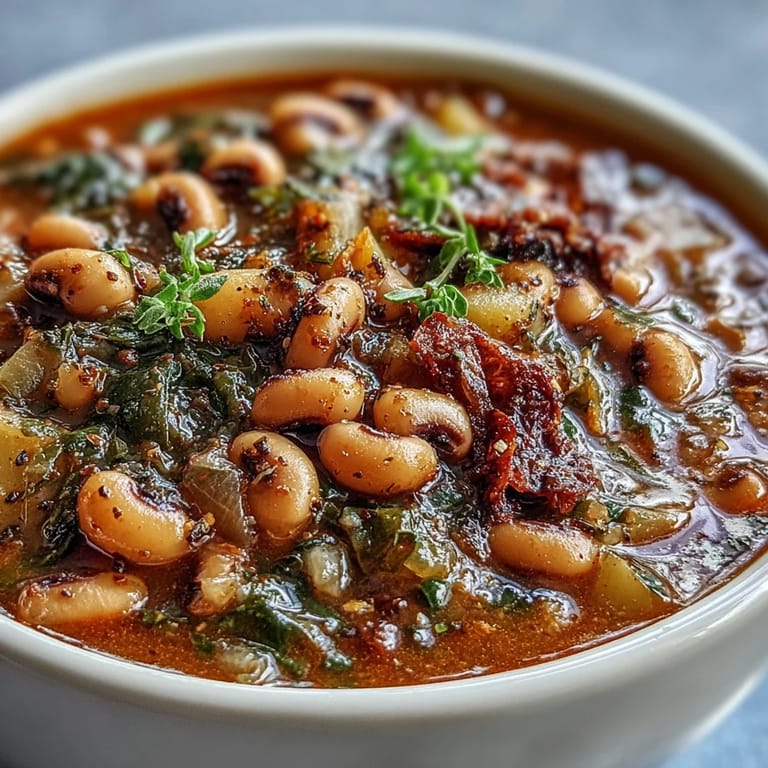
 This stew is honest food that asks very little of you but gives back generously in every bowl. Make it once and it becomes something you return to, the way you do with people and places that feel like home.
Recipe FAQs
- → Can I use dried black-eyed peas instead of canned?
Yes, soak dried black-eyed peas overnight and cook them separately before adding to the stew, or extend the simmering time significantly to ensure they become tender.
- → What makes this version special?
The combination of smoked paprika and fresh herbs adds depth, while the careful layering of vegetables builds complex flavors as they cook together in the tomato broth.
- → How should I store leftovers?
Keep refrigerated in an airtight container for up to four days. The flavors continue to develop, making it even better the next day.
- → Can I freeze this stew?
Absolutely. Portion into freezer-safe containers and freeze for up to three months. Thaw overnight in the refrigerator before reheating gently on the stovetop.
- → What sides complement this dish?
Crusty bread for dipping, over steamed rice, or with a simple green salad. The stew is substantial enough to stand alone as well.
- → How can I add more protein?
Stir in chopped kale or spinach during the last five minutes of cooking, or serve with a sprinkle of hemp seeds or nutritional yeast.