 Pin It
 My grandmother used to say that Hoppin John on New Year's Day wasn't just dinner—it was insurance. She'd stir that pot of black-eyed peas with such intention, like she was stirring in luck itself, and the whole kitchen would smell like bacon and possibility. Years later, I realized what she really meant was that this dish carries something deeper than superstition: it's the taste of resilience, of making something magnificent from humble ingredients, of feeding people you love with food that matters.
I made this for the first time when a friend was going through a rough patch, and I wanted to cook something that felt like a hug. She sat at my kitchen counter watching the peas soften, listening to the bacon crisp, and by the time we sat down to eat, something had shifted. She didn't say much, just kept eating and asking for more hot sauce, but that's when I understood why this dish has survived centuries—it doesn't apologize for being simple, and it doesn't need to.
Ingredients
- Thick-cut bacon, diced (6 oz): Don't skip the thickness here—thin bacon will disappear into nothing, and you want those smoky bits to anchor the whole dish.
- Onion, finely chopped (1 medium): The sweetness balances the earthiness of the peas, so don't rush the chopping or the cooking.
- Celery stalks, finely chopped (2): This is the unsung backbone of the dish, adding depth that keeps people guessing what makes it taste so good.
- Garlic, minced (2 cloves): Fresh garlic matters more than you'd think—it brings everything to life in that final minute of the sauté.
- Green bell pepper, diced (1, optional): I always include it because the slight sweetness rounds out the smokiness in a way that feels intentional.
- Dried black-eyed peas, soaked overnight (1 ½ cups): Soaking matters—it shortens cooking time and makes them tender rather than tough, though canned work fine if you're pressed for time.
- Chicken or vegetable broth (4 cups): Use low-sodium so you control the salt and taste the peas themselves, not just the seasoning.
- Bay leaf (1): It adds a subtle herbal whisper that makes people wonder what's in there.
- Dried thyme (½ teaspoon): A pinch of thyme is enough—too much and it tastes medicinal.
- Cayenne pepper (¼ teaspoon, optional): Start with less if you're unsure; you can always add heat but you can't take it back.
- Long-grain white rice (2 cups): The blank canvas that lets the peas shine without competing.
- Water for rice (4 cups): The ratio is crucial—stick to it and your rice will be fluffy every time.
- Unsalted butter or oil (1 tablespoon): Butter adds richness, but oil works if that's what you have.
- Scallions, thinly sliced (2): The fresh green cut through the richness and remind you that this is still a dish made from the earth.
- Hot sauce, to taste (optional): Some people don't touch it, others drown everything—have it ready and let people choose.
Tired of Takeout? 🥡
Get 10 meals you can make faster than delivery arrives. Seriously.
One email. No spam. Unsubscribe anytime.
Instructions
- Render the bacon until it's golden and crispy:
- Cut your bacon into small pieces and let them cook low and slow in a large pot or Dutch oven over medium heat—you're listening for the sizzle to calm down, watching for the color to go from pink to deep golden. This takes about 6 to 8 minutes, and yes, it's worth paying attention because burned bacon tastes bitter and defeated.
- Set aside half the bacon and build your flavor base:
- Scoop out half the crispy bits and let them cool on a paper towel—these are your secret weapon for garnish. Leave the rest in the pot with all those precious drippings.
- Sauté your aromatics until they soften:
- Add the chopped onion, celery, and bell pepper to that bacon fat and let them cook for about 5 minutes, stirring occasionally, until they lose their rawness and smell like something worth eating. The kitchen should smell warm and savory at this point.
- Bloom the garlic and spices:
- Stir in the minced garlic and let it cook for just one minute—any longer and it burns, any shorter and it doesn't release its magic. You'll know it's right when the smell hits you like a little flavor bomb.
- Add the peas and broth and let time do the work:
- Pour in your soaked black-eyed peas (or canned if you're using those), the bay leaf, thyme, cayenne if you're using it, and the broth. Bring it all to a boil, then lower the heat and let it simmer uncovered for 35 to 45 minutes, stirring now and then. With canned peas, you're looking at 20 to 25 minutes instead.
- Cook the rice while the peas simmer:
- In a separate saucepan, combine the rice, water, butter, and a pinch of salt and bring it to a boil. Once it boils, cover it, turn the heat down to low, and let it cook for 15 minutes without peeking. When the time is up, take it off the heat but keep it covered for another 5 minutes.
- Finish and taste before you serve:
- When the peas are tender but still whole, taste them and adjust the salt and pepper until it tastes like home. Remove the bay leaf and take a breath—you're almost there.
- Fluff the rice and plate it all together:
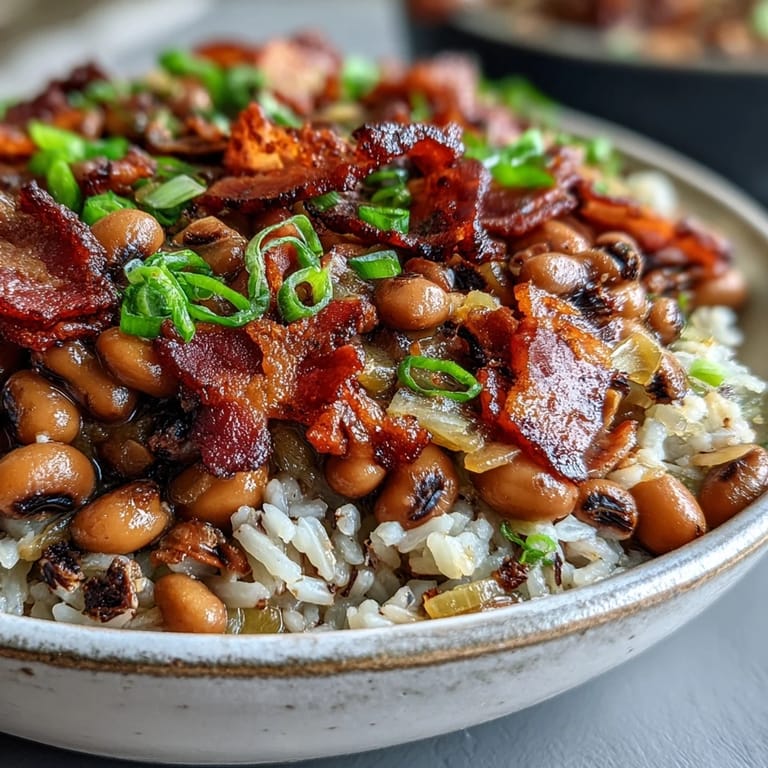
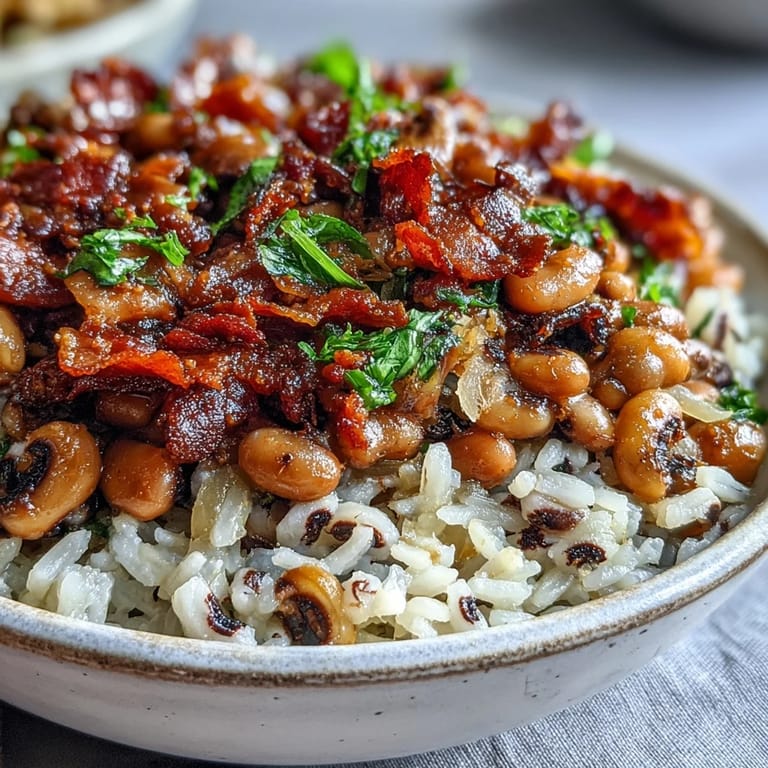
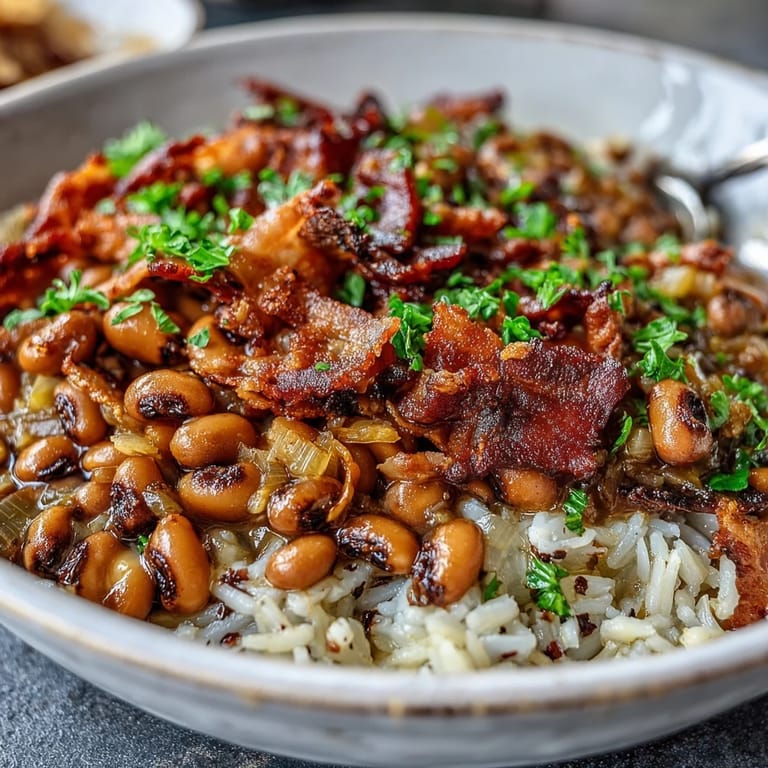
- Use a fork to gently fluff the rice so it's light and separate, then spoon the black-eyed peas over the top. Top with that reserved crispy bacon and the fresh scallions.
 Pin It
 I served this at a New Year's dinner where half the people didn't know the tradition, and by midnight everyone was asking if I believed in luck. I laughed and said no, but then I thought about how ritual and food are sometimes the same thing—both about gathering around what sustains us and saying yes to another year together.
The Story Behind This Dish
Hoppin John isn't just Southern comfort food; it's a story told in a bowl. Generations of people have made this dish on New Year's Day, believing the peas bring prosperity and the rice brings health, and while luck might be optional, the warmth is guaranteed. What I love most is that it belongs to everyone who cooks it—there's no gatekeeping, no secret version that's more authentic. Your version, made in your kitchen with what you have, is exactly as valid as any grandmother's.
Why This Works as a One-Pot Kind of Meal
This isn't a true one-pot because the rice cooks separately, but the peas do all their work without your constant attention, which is the whole point. You get that rich, built-up flavor from the bacon fat and the slow simmer, but you're not standing there stirring for an hour. It's one of those meals that respects your time while delivering flavors that taste like they took all day.
Making It Your Own
The beauty of Hoppin John is how personal it becomes once you make it once. Some families swear by adding a splash of vinegar at the end, others throw in diced tomatoes or collard greens for color. I've had versions with a ham hock instead of bacon, versions with brown rice, even one where someone added a pinch of smoked paprika for extra depth. The bones of the dish are sturdy enough to hold your own story.
- If you want it vegetarian, skip the bacon and use smoked paprika or a touch of liquid smoke to keep that savory, slightly charred depth.
- Leftover Hoppin John reheats beautifully on the stove with a splash of water, and it tastes even better the next day when the flavors have settled into each other.
- Serve it with cornbread and greens for the full experience, or just on its own if that's what the moment calls for.
 Pin It
 Make this dish, and you'll understand why it's lasted centuries. It's simple enough to cook on a regular Tuesday, but meaningful enough to anchor a celebration.
Recipe FAQs
- → Why is Hoppin John eaten on New Year's Day?
Hoppin John is a Southern tradition believed to bring prosperity and good luck in the coming year. The black-eyed peas represent coins, while the green collard greens often served alongside symbolize paper money. This custom dates back to the Civil War era and remains a beloved New Year's Day ritual across the American South.
- → Do I need to soak dried black-eyed peas overnight?
Yes, soaking dried black-eyed peas overnight helps them cook more evenly and reduces cooking time. If you're short on time, you can use the quick-soak method by boiling them for two minutes, then letting them sit for an hour off the heat. Alternatively, canned black-eyed peas work perfectly and reduce the simmering time to about 20-25 minutes.
- → Can I make Hoppin John vegetarian?
Absolutely. Simply omit the bacon and start with a tablespoon of oil in your pot. Add smoked paprika or liquid smoke to replicate that savory smoky flavor that bacon traditionally provides. Use vegetable broth instead of chicken broth, and you'll have a delicious vegetarian version that still captures the essence of this Southern classic.
- → What's the best type of rice to serve with Hoppin John?
Long-grain white rice is traditional because its fluffy texture and separate grains provide the perfect base for the seasoned black-eyed peas. However, you can use brown rice for extra nutrition—just adjust the cooking time accordingly. Basmati or jasmine rice also work well and add their own subtle aromatic qualities to the dish.
- → How should I store and reheat leftovers?
Store the black-eyed peas and rice separately in airtight containers in the refrigerator for up to four days. The flavors often improve after a day or two as the seasonings meld. Reheat gently on the stovetop with a splash of broth or water to loosen the mixture, adding more liquid if needed. Avoid freezing the rice, as it can become mushy when thawed.
- → What can I serve with Hoppin John?
Traditional Southern accompaniments include cornbread for soaking up the flavorful broth, collard greens or mustard greens braised with bacon or ham hock, and sliced tomatoes or cucumber salad for freshness. Hot sauce, pickled peppers, or chow-chow on the side add tangy contrast to the rich, savory flavors.