 Pin It
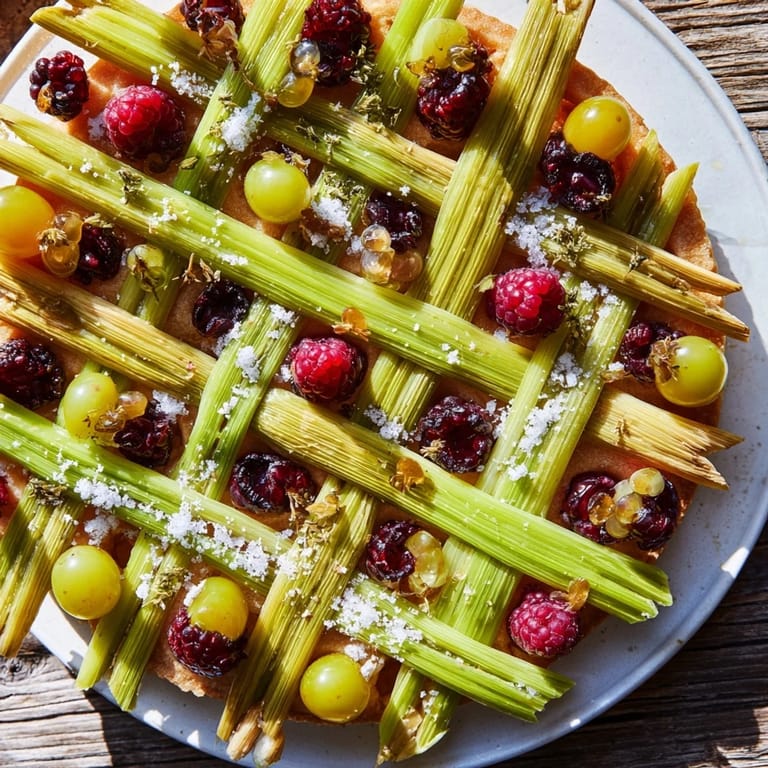
 I discovered this dish while wandering through a spring farmers market, mesmerized by a vendor's display of impossibly tall asparagus bundles next to fragrant chive bouquets. The image of weaving them together struck me immediately, and I spent the walk home imagining how fresh berries could nestle into the gaps like tiny jewels. When I finally assembled it in my kitchen, the whole thing came together with unexpected grace—it felt less like cooking and more like creating an edible tapestry.
I made this for a small gathering last spring, and watching my friend lean in close to examine the lattice before taking that first bite—she looked genuinely delighted, almost hesitant to disturb it. That moment reminded me that food doesn't always have to be complicated to feel like a gift worth receiving.
Ingredients
- Asparagus stalks: Choose medium thickness so they hold their shape during blanching; too thin and they'll snap when you weave, too thick and they'll stay woody in the center.
- Fresh chives: These are your edible twine—their mild onion flavor won't overpower, and the stems are flexible enough to tie without breaking if you soften them first.
- Mixed berries: Keep a blend going; blueberries add earthiness, raspberries bring tartness, strawberries give sweetness, and golden berries add unexpected floral notes.
- Extra virgin olive oil: This isn't just dressing; it adds a glossy finish that makes the whole platter glow under light.
- Flaky sea salt: Use the good stuff here—regular table salt disappears into the vegetables, but flaky crystals catch on your tongue and add texture.
Tired of Takeout? 🥡
Get 10 meals you can make faster than delivery arrives. Seriously.
One email. No spam. Unsubscribe anytime.
Instructions
- Blanch the asparagus until just tender:
- Drop them into boiling salted water and watch—you want that bright green color to deepen slightly, just 1-2 minutes. The ice bath stops the cooking instantly, locking in that perfect snap.
- Soften the chives so they bend without breaking:
- A quick dip in hot water makes them supple enough to handle, then ice water sets them firm again. Don't skip this step or they'll splinter when you try to tie them.
- Build the lattice with intention:
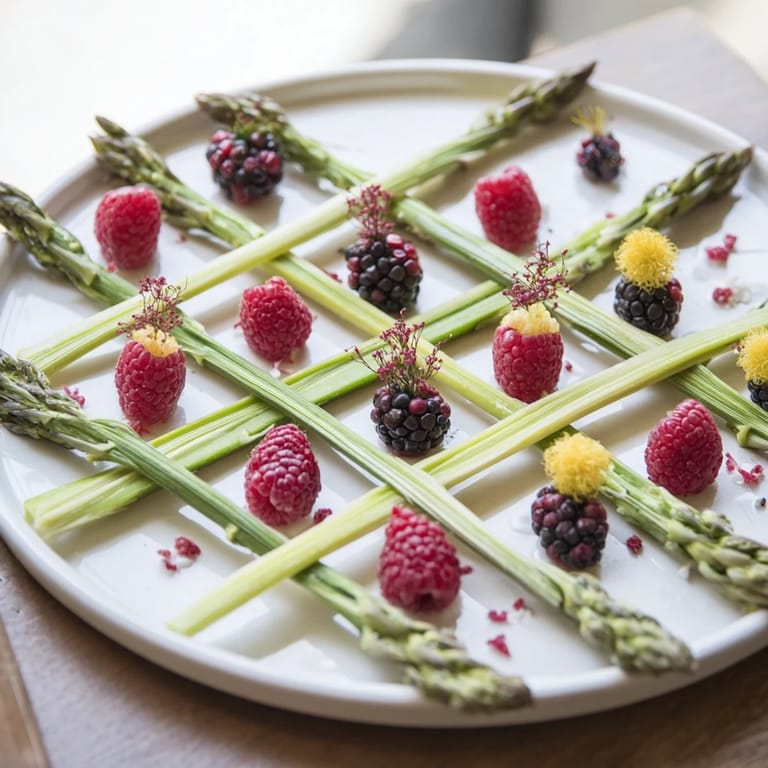
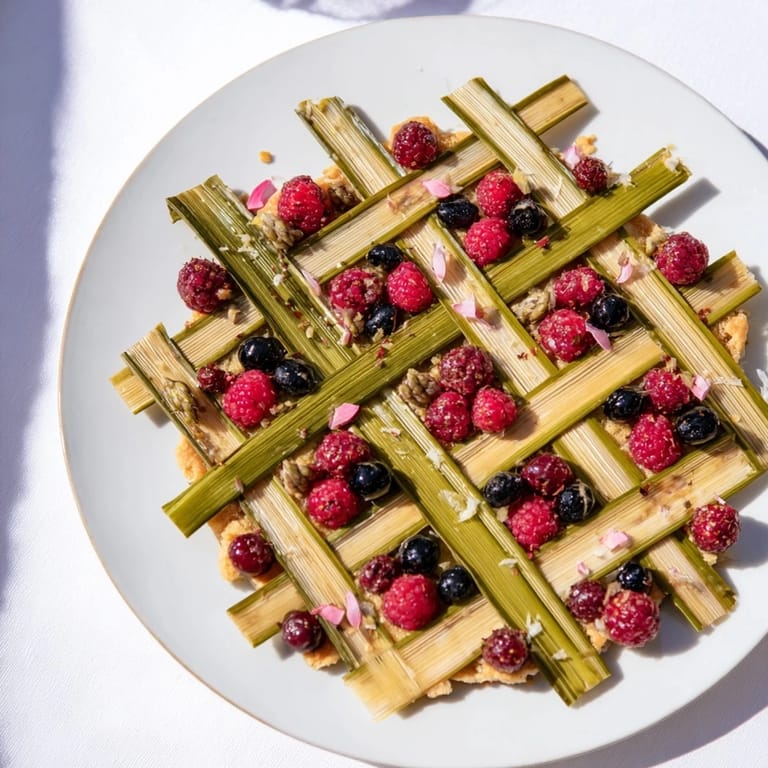
- Lay your first row of asparagus parallel and evenly spaced, then weave the perpendicular stalks with a gentle hand—over, under, over, under. It's meditative once you find the rhythm.
- Secure the grid with delicate knots:
- Tie each intersection gently; you're not looking for tight knots but rather soft loops that hold the structure without crushing anything.
- Tuck the berries into each opening:
- This is where it becomes art—mix colors and types so no two adjacent squares look identical, creating visual rhythm across the platter.
- Finish with oil, salt, and pepper moments before service:
- Any earlier and the salt draws moisture from the asparagus; any later and it won't distribute properly, so time this final touch as your guests arrive.
 Pin It
 There's something quietly magical about presenting food that's both beautiful enough to photograph and genuine enough to actually eat. This lattice sits in that space perfectly, and I love that moment when conversation pauses because everyone wants to admire it first.
The Geometry of Good Flavor
Weaving vegetables isn't just visual theater—it actually serves flavor. Each asparagus stalk brushes against its perpendicular neighbors, and the chives at each intersection create tiny pockets where flavors can mingle. The berries aren't just decoration; their acidity and sweetness answer the mild, vegetal notes of the asparagus and chives, creating a complete story on your palate rather than competing elements.
Why Spring Ingredients Matter Here
This dish works because it celebrates what's actually in season. Asparagus in spring is tender and sweet—nothing like the thick, fibrous stalks you see in winter. Fresh chives have that delicate green onion quality, not the harsh bite of older herbs. The berries, whether local or carefully selected, arrive when they're meant to shine. Respect the seasons, and they'll respect your cooking.
Making It Your Own
The beauty of this structure is how forgiving it is to personalization. Some cooks brush the asparagus with a whisper of garlic oil, others add fresh mint leaves tucked between berries, and I've seen versions finished with a subtle drizzle of aged balsamic. The lattice stays the same, but the story shifts based on what your kitchen holds.
- If you can't find golden berries, pomegranate seeds work beautifully and add a jewel-like pop of color.
- A tiny scatter of micro herbs or edible flowers transforms this from spring appetizer to something that feels almost otherworldly.
- Serve it chilled but not ice-cold; the flavors are more pronounced when they're not numb from cold.
 Pin It
 This is the kind of dish that reminds you why cooking is worth doing—it's playful, it's impressive, and it tastes like spring tastes if spring had a flavor. Make it once to learn it, then make it again to make it yours.
Recipe FAQs
- → How do I blanch asparagus for the lattice?
Boil salted water and cook asparagus for 1-2 minutes until tender and bright green. Immediately transfer to ice water to halt cooking and preserve color.
- → What is the best way to soften chives for weaving?
Dip chive stems in hot water for about 5 seconds, then cool in ice water and pat dry to make them flexible for tying.
- → Can I substitute different fruits in the lattice filling?
Yes, small firm fruits like blackberries, red currants, or pomegranate seeds work well and add unique flavors.
- → How should the lattice be assembled?
Lay asparagus stalks in parallel rows, weave perpendicular stalks over and under to form a grid, then secure intersections with tied chives.
- → What seasoning enhances the flavor without overpowering?
A simple drizzle of extra virgin olive oil, flaky sea salt, and freshly ground black pepper highlight the freshness and natural flavors.
- → Is this dish best served warm or chilled?
It is best served chilled or at room temperature, making it refreshing and perfect as a light appetizer or centerpiece.