 Pin It
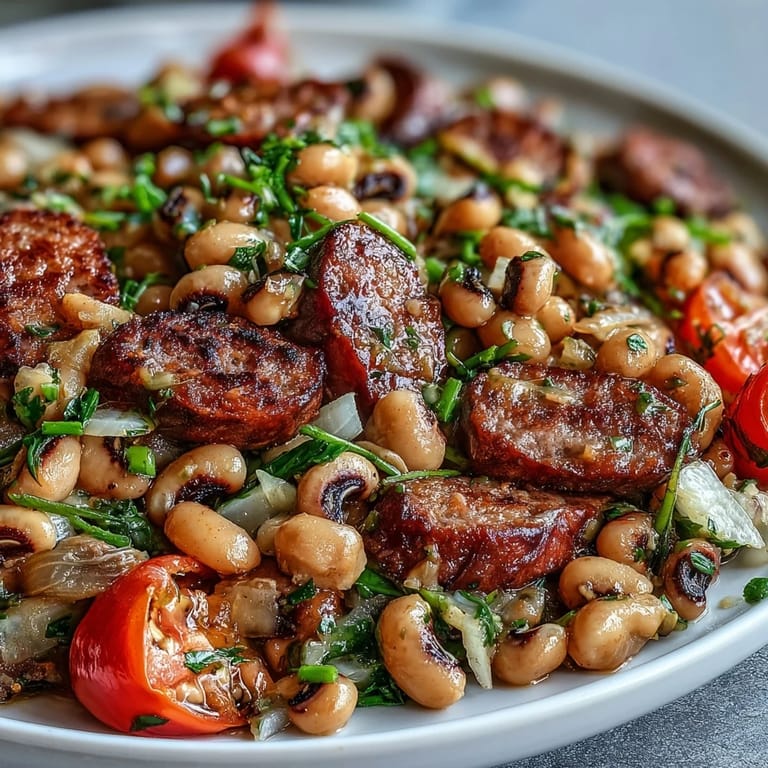
 My neighbor brought over a plate of her grandmother's Hoppin John one New Year's Day, and while I appreciated the tradition, I kept thinking about how to make it feel lighter and more elegant for weeknight dinners. That afternoon, I started playing with the classic flavors—the earthiness of black-eyed peas, the smokiness of sausage—but traded the heavy rice for fresh greens and swapped in a bright mustard-tarragon dressing that felt bright enough for spring. What emerged was something that honored the original without apologizing for being entirely its own thing.
I made this for my book club last month, and what surprised me wasn't that everyone loved it—it was that three people asked for the dressing recipe separately. One woman said it tasted like something she'd order at a restaurant, which felt like the highest compliment I could get for something so simple.
Ingredients
- Black-eyed peas (1 can, drained and rinsed): The heart of this dish—use canned if you're short on time, but give them a good rinse to remove excess starch and let them shine without that tinny flavor.
- Turkey sausage (2 fully cooked links, sliced): Buy the kind that's already fully cooked so you're just warming and browning it; it keeps the whole dish lean without sacrificing smokiness.
- Cherry tomatoes (1 cup, halved): The acidity here is non-negotiable—it balances the earthiness of the peas and the richness of the sausage, so don't skip them or substitute with regular tomatoes.
- Red bell pepper (1/2 cup, diced): This adds sweetness and crunch that keeps the salad from feeling heavy, plus it looks beautiful on the plate.
- Celery (1/2 cup, finely chopped): A small amount gives you that subtle vegetable base without making it taste like a soup, so chop it fine so it doesn't overpower the other flavors.
- Red onion (1/4 cup, finely diced): Raw red onion brings a sharp bite that the entire salad needs; don't cook it or you'll lose that contrast.
- Fresh tarragon (3 tbsp total, chopped): This is the secret weapon—it tastes nothing like the usual salad herbs and gives the whole dish an unexpectedly sophisticated edge.
- Mixed salad greens (2 cups): Use whatever you have on hand, but something with a little bitterness like arugula or radicchio works especially well here.
- Extra virgin olive oil (3 tbsp): This is your dressing base, so use something you actually like tasting on its own—it makes all the difference.
- Dijon mustard (1 1/2 tbsp): The foundation of the dressing and what ties everything together, so don't use the yellow ballpark stuff.
- White wine vinegar (1 tbsp): This keeps the dressing bright without being sharp, though you can swap in champagne vinegar if you want it even more delicate.
- Honey (1 tsp): A tiny amount balances the mustard's sharpness and the vinegar's bite, so measure carefully.
- Garlic (1 clove, minced): Just one, and mince it fine so it distributes evenly throughout the dressing without creating sharp bursts.
- Salt and black pepper (1/4 tsp each): Taste as you go, especially after the dressing sits for a few minutes—you might want a whisper more.
Tired of Takeout? 🥡
Get 10 meals you can make faster than delivery arrives. Seriously.
One email. No spam. Unsubscribe anytime.
Instructions
- Brown the sausage gently:
- Heat your skillet over medium heat and slice the turkey sausage into rounds about 1/4 inch thick. Let them sit in the pan for a minute before stirring—you want them to develop a little color and release their flavor into the pan rather than just heating through.
- Build the base salad:
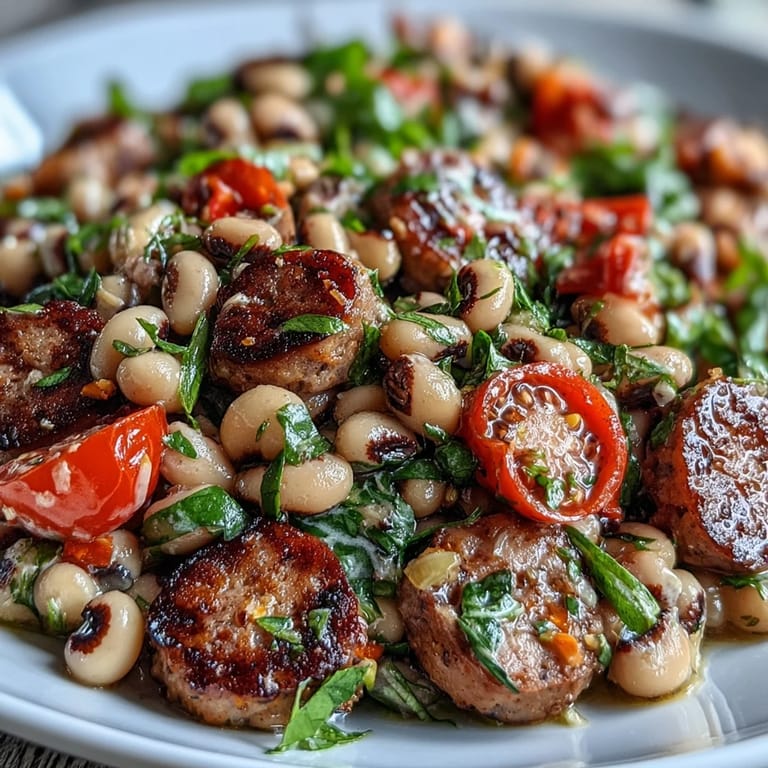
- In a large bowl, combine the drained black-eyed peas with the tomatoes, bell pepper, celery, red onion, and fresh tarragon. At this point, the vegetables should look bright and varied enough that you know this isn't just another bean salad.
- Whisk the dressing together:
- In a small bowl or a jar with a lid, combine the oil, mustard, vinegar, honey, garlic, tarragon, salt, and pepper. Whisk or shake it vigorously for about 30 seconds until the dressing emulsifies and turns creamy rather than separated and thin.
- Bring it all together:
- Once the sausage has cooled slightly (you don't want hot meat breaking down your fresh vegetables), add it to the salad bowl and pour the dressing over everything. Toss gently but thoroughly—you want every bean and vegetable coated without bruising the ingredients.
- Plate with purpose:
- Arrange your mixed greens on serving plates or a platter, then top with a generous portion of the black-eyed pea mixture. The greens provide a fresh base and keep the salad from feeling too dense on the plate.
- Finish and serve:
- Tear or chop a little extra fresh tarragon over the top if you have it, and serve immediately while everything is still cool and crisp.
 Pin It
 There's a moment in the middle of winter when you need something that tastes like spring but still feels substantial enough to be dinner, and this salad does exactly that. It convinced me that Hoppin John didn't need to be heavy to be meaningful.
Why This Twist Works
The original Hoppin John was designed to stretch ingredients and fill bellies, which is beautiful and important history. But when you have good produce year-round and you're cooking for yourself instead of a crowd, you can honor those flavors while creating something that feels completely fresh. The mustard-tarragon combination is what does the heavy lifting here—it's sophisticated enough to make you feel like you're eating something restaurant-quality, but it comes from such simple ingredients that you probably have most of them already.
Variations That Actually Work
I've made this at least a dozen times now, and every version has been good, which is rare for a recipe. In summer, I add corn kernels and avocado slices; in fall, I swap the tarragon for sage and add roasted beets. The vegetarian version is genuinely satisfying if you crisp up some smoked tofu instead of sausage, or you can skip the protein entirely and it becomes a bright side dish that pairs with grilled chicken or fish.
Serving and Pairing Wisdom
This salad works as a lunch, a light dinner, or a side for something heartier—I've served it at picnics, casual dinners, and even one fancy brunch. It pairs beautifully with a crisp white wine like Sauvignon Blanc, or if you're not drinking, a sparkling water with lemon feels equally celebratory. The leftovers keep for three days in the fridge as long as you store the greens separately, though honestly you'll probably finish it before then.
- Toast a few pumpkin seeds or candied pecans on top if you want added crunch and richness.
- Double the dressing recipe if you like things wetter—some people want more sauce, and that's valid.
- Serve it at room temperature or slightly chilled, but never straight from the refrigerator where the flavors go muted.
 Pin It
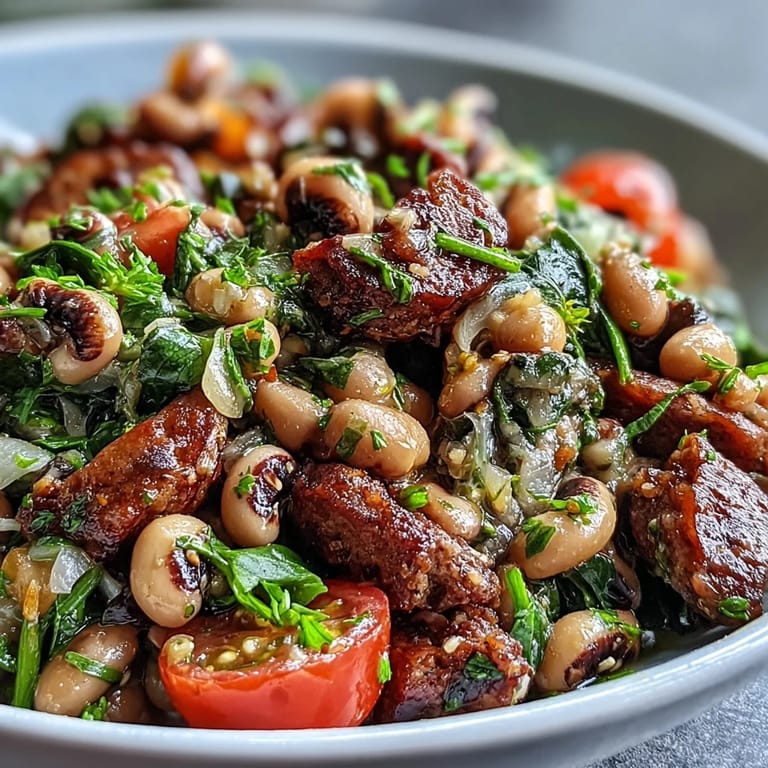
 This recipe became my answer to the question of how to cook something that feels both comforting and exciting, which is probably what I'm always actually trying to do. Make it once and it'll become the thing you reach for again and again.
Recipe FAQs
- → Can I make this black-eyed pea salad ahead of time?
Yes, you can prepare the dressing and chop vegetables up to a day in advance. Store them separately in the refrigerator and toss everything together just before serving for the freshest texture and flavor.
- → What's a good vegetarian substitute for turkey sausage?
Smoked tofu works wonderfully as a vegetarian alternative, providing that savory depth. You could also use plant-based sausage crumbles or simply add extra vegetables like roasted corn or avocado for bulk.
- → How long does the mustard dressing keep?
The mustard-tarragon dressing will stay fresh in an airtight container in the refrigerator for up to one week. Give it a good whisk or shake before using, as the ingredients may separate slightly when stored.
- → Can I use dried black-eyed peas instead of canned?
Absolutely. Cook one cup of dried black-eyed peas according to package directions until tender but not mushy, then drain and cool before using. This typically yields about 3 cups cooked, similar to two cans.
- → What herbs can replace fresh tarragon?
Fresh basil or thyme make excellent substitutes if tarragon isn't available. Basil offers a sweeter, peppery note while thyme adds earthy depth. Use the same quantity called for in the dressing and salad.