 Pin It
 My coworker brought a falafel bowl to lunch one afternoon, and I watched her dig in with this quiet contentment that made me curious. When she offered me a bite, the crispy exterior gave way to something herb-forward and alive, sitting on top of fluffy quinoa that actually tasted like something. That one lunch led me down a rabbit hole of making my own, and now this bowl has become my go-to when I need something that feels nourishing and exciting at the same time.
I made this for a friend who'd just started eating more plant-based, and the way her face lit up when she tasted it told me everything. She kept asking questions about the herbs and the sauce, and by the end of lunch she was already planning to make it herself. It became this funny running joke between us where she'd text me photos of her versions, each one slightly different but always delicious.
Ingredients
- Cooked or canned chickpeas (1 1/2 cups): The backbone of your falafel, and rinsing them well keeps things from getting gummy when you pulse them in the food processor.
- Fresh parsley and cilantro (1/2 cup each): These herbs are what make the falafel taste alive instead of just like a seasoned bean patty.
- Green onions and garlic (2 onions, 2 cloves): The garlic brings a punch while the green onions add a subtle sharpness that ties everything together.
- Ground cumin and coriander (1/2 tsp each): Toast them in a dry pan for a minute before measuring if you want the spices to really sing.
- Cayenne pepper (1/4 tsp, optional): A small pinch adds warmth without overwhelming the other flavors, so don't skip it unless heat isn't your thing.
- Chickpea flour (3 tbsp): This is your binder and it works better than all-purpose flour because it's actually made from chickpeas, so it reinforces the flavor.
- Lemon juice (2 tbsp for falafel): It keeps everything bright and actually helps the mixture hold together better than you'd expect.
- Olive oil (2 tbsp for brushing): A light brush before baking is all you need to get that golden, crispy exterior.
- Quinoa (1 cup): Rinse it under cold water before cooking to remove the natural coating that can make it taste bitter or soapy.
- Water (2 cups for quinoa): The standard ratio is 2 to 1 water to quinoa, and it works like a charm every time.
- Cucumber and cherry tomatoes (1 cup and 1 cup): Fresh, cold vegetables are your textural contrast against the warm falafel and fluffy grain.
- Tahini (1/3 cup): Choose a high-quality brand if you can, because the flavor really matters when it's a star ingredient like this.
- Salt and pepper: Season as you go, especially the sauce, because tahini can mute flavors more than you'd expect.
Tired of Takeout? 🥡
Get 10 meals you can make faster than delivery arrives. Seriously.
One email. No spam. Unsubscribe anytime.
Instructions
- Get your oven ready and set the stage:
- Preheat your oven to 400°F and line a baking sheet with parchment paper so nothing sticks. This setup takes literally two minutes but saves you from a cleanup headache later.
- Pulse the falafel mixture until it's just right:
- In your food processor, combine the drained chickpeas, fresh herbs, onions, garlic, spices, salt, pepper, lemon juice, and chickpea flour. Pulse it all together until it looks mostly smooth with just a bit of texture remaining, which usually takes about 10 to 15 pulses. Stop and scrape down the sides if needed so everything gets incorporated evenly.
- Shape your falafel with damp hands:
- Wet your hands to prevent sticking, then scoop about 2 tablespoons of mixture and roll it into a ball or gently flatten it into a patty. Place each one on your prepared baking sheet and give them a light brush with olive oil all over.
- Bake until golden and crispy:
- Slide them into the oven and bake for about 22 to 25 minutes, flipping them halfway through so they brown evenly on both sides. They're done when they smell incredible and look golden brown.
- Cook quinoa while the falafel bakes:
- In a medium saucepan, combine the rinsed quinoa, water, and salt, then bring it to a boil over medium-high heat. Lower the heat to low, cover the pot, and let it simmer quietly for 15 minutes, then remove from heat and let it sit covered for 5 minutes before fluffing with a fork.
- Whisk together your tahini sauce:
- In a small bowl, whisk the tahini and minced garlic together, then add the lemon juice and salt. Gradually pour in the water, a tablespoon at a time, whisking constantly until you reach a pourable consistency that coats a spoon but still flows.
- Assemble your bowls with intention:
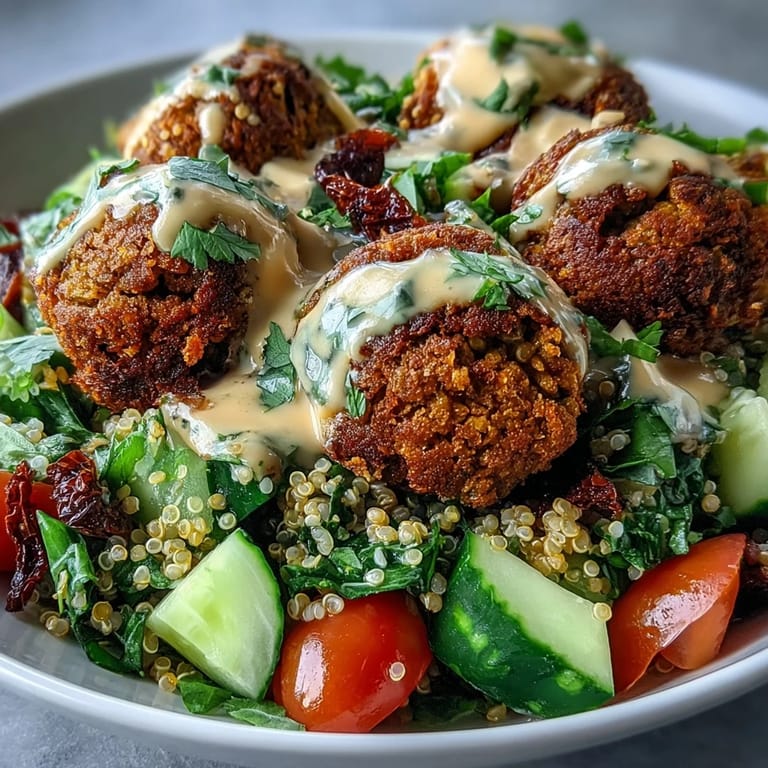
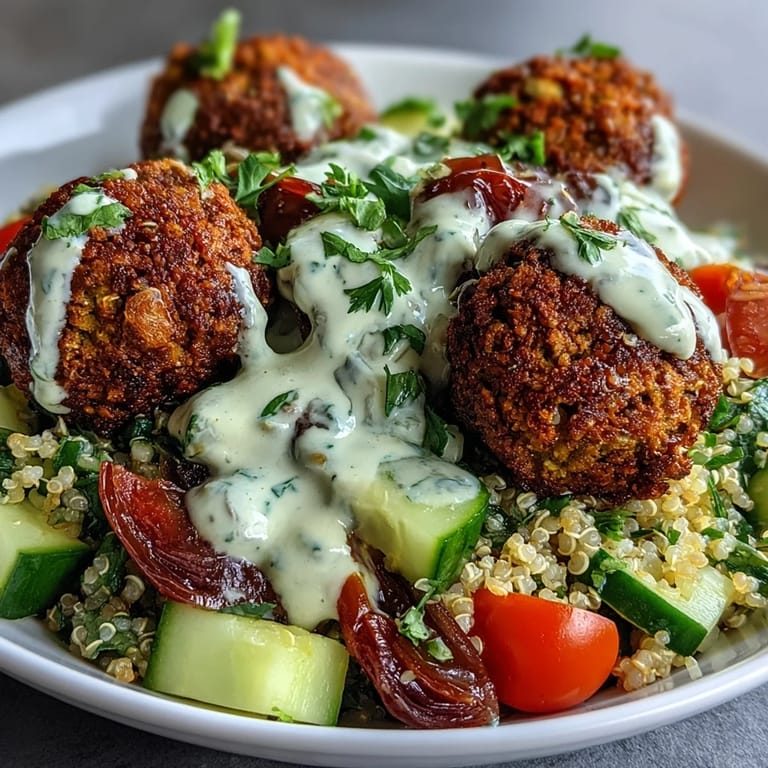
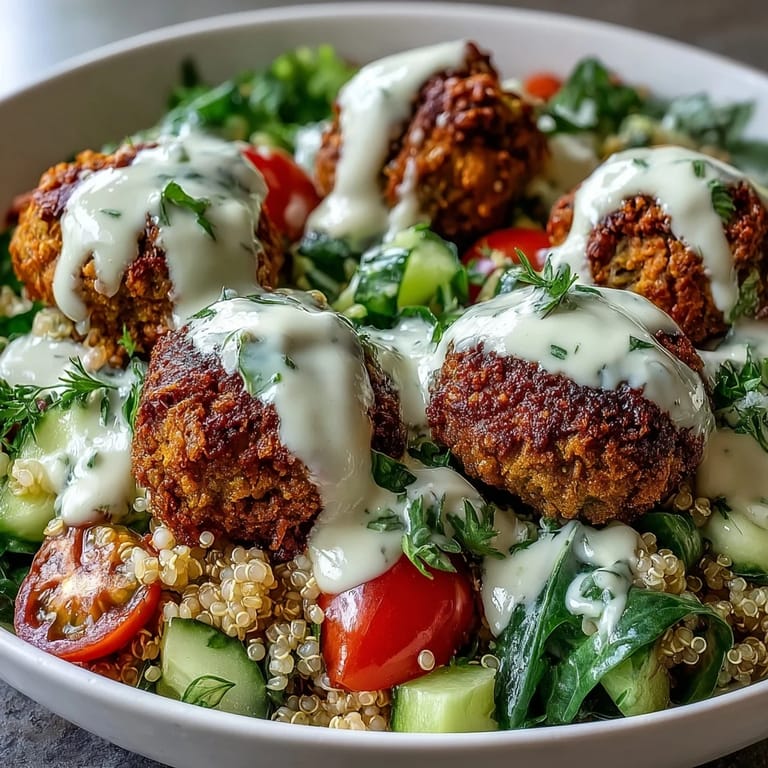
- Divide the warm quinoa among four bowls, then arrange the cucumber, cherry tomatoes, and fresh green onions on top. Crown each bowl with three warm falafel and drizzle generously with the garlic tahini sauce.
- Serve it up and enjoy:
- Eat right away while the falafel are still warm and the veggies are still crisp. A wedge of fresh lemon on the side is optional but honestly elevates the whole thing.
 Pin It
 There's something about a bowl that feels intentional and whole, and this one hits that note every single time. After my first batch, I started making double, not because I was feeding a crowd, but because I genuinely wanted it twice that week.
Why This Bowl Works as a Complete Meal
The combination of quinoa and chickpeas creates a complete protein on its own, which means you're actually getting all nine amino acids your body needs. The fresh vegetables add fiber and vitamins, the tahini brings healthy fats that help you absorb those vitamins, and the herbs make everything taste so good that eating something nutritious doesn't feel like a compromise. I used to think of salads as something you ate because you had to, but this bowl changed that for me.
Make-Ahead and Storage Wisdom
You can absolutely prepare the falafel mixture up to a day ahead and keep it covered in the fridge, then form and bake them whenever you're ready. The cooked falafel keeps in an airtight container for three days and actually reheats beautifully in a 350°F oven for about ten minutes. I usually cook the quinoa and make the sauce the morning I plan to eat, but the tahini sauce also holds fine for a couple of days if you keep it in a covered bowl.
Ways to Make It Your Own
This bowl is honestly a canvas, and I've had fun experimenting with different additions and variations. Some mornings I add roasted sweet potato or beets for color and earthiness, other times I toss in some sautéed spinach or kabocha squash. The spice level is completely adjustable too, so add more cayenne if you like heat or skip it entirely if you prefer something milder. I've also swapped in regular cilantro rice or even barley when I didn't have quinoa on hand, and it's always been great.
- Toasted pumpkin seeds or slivered almonds add a satisfying crunch that makes every bite feel more interesting.
- A dollop of hummus or a scoop of labneh on the side turns this into an even more filling meal if you're extra hungry.
- Serve alongside warm pita bread if you want to build little wraps and eat this more like a casual handheld meal.
 Pin It
 This bowl has become my answer to the question of what to eat when I want something that nourishes both my body and my appetite for flavor. It's the kind of recipe that tastes like you spent more time cooking than you actually did, which is always a win.
Recipe FAQs
- → Can I make the falafel ahead of time?
Yes, you can prepare the falafel mixture up to 24 hours in advance and store it in the refrigerator. Form and bake when ready to serve, or bake completely and reheat in the oven at 350°F for 10 minutes.
- → What can I substitute for tahini?
If you have a sesame allergy, you can use Greek yogurt for a creamy sauce, or make an avocado-based dressing. Cashew butter also works well as a nutty alternative.
- → How do I store leftovers?
Store components separately in airtight containers. The falafel keeps for up to 3 days, quinoa for 5 days, and sauce for 1 week. Reheat falafel in the oven to maintain crispiness.
- → Can I fry the falafel instead of baking?
Absolutely. Heat 2 inches of oil to 350°F and fry the patties for 3-4 minutes per side until golden brown. Drain on paper towels before serving.
- → Is this bowl gluten-free?
Yes, when made with chickpea flour instead of all-purpose flour. Always check your tahini and other condiment labels to ensure they're certified gluten-free.
- → What other vegetables work well in this bowl?
Shredded carrots, diced bell peppers, radishes, roasted eggplant, or sautéed spinach all complement the flavors well. You can also add pickled red onions for extra tang.