 Pin It
 There's something magical about Sunday mornings when you discover a recipe that feels like a shortcut to comfort. I found custard toast on one of those mornings when I was standing at the counter, half-awake, staring at a loaf of brioche and wondering if breakfast could be something more interesting than the usual routine. The idea of soaking thick bread in a creamy, egg-based custard felt familiar yet completely new, like reinventing something I didn't know needed reinventing.
My partner came into the kitchen halfway through baking and the smell stopped them in their tracks. We ended up eating the first batch standing at the counter, dripping honey everywhere, laughing about how something this good shouldn't be this simple. That moment of unexpected joy over breakfast became the reason I keep making it.
Ingredients
- Brioche or challah bread, 2 thick slices (about 1-inch): The richness of these breads absorbs the custard beautifully without falling apart. Look for day-old bread if you want slightly less delicate slices.
- Large egg, 1: This is what creates that custardy, almost creamy center that makes this different from regular toast.
- Greek yogurt, 3 tbsp plain: Yogurt adds tang and moisture while keeping things lighter. Don't use sweetened versions or it'll throw off the balance.
- Honey or maple syrup, 1½ tbsp: Either works, though honey gives a more delicate sweetness while maple syrup adds a subtle depth.
- Vanilla extract, ½ tsp: A small amount goes a long way. Use real vanilla if you have it.
- Salt, pinch: This tiny detail makes everything taste more intentional.
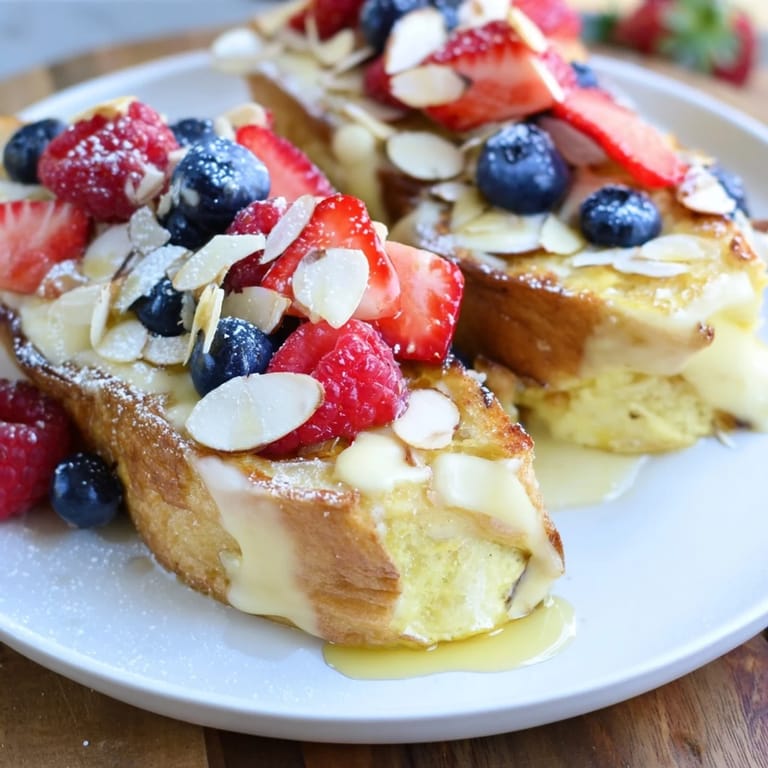
- Mixed fresh berries, ½ cup (optional): Strawberries, blueberries, or raspberries add brightness and break up the richness.
- Sliced almonds or pistachios, 1 tbsp (optional): Pistachios add a subtle flavor that berries alone can't capture.
- Powdered sugar, 1 tsp (optional): A delicate dusting just before serving feels like the final touch that makes it restaurant-worthy.
- Extra honey or maple syrup for drizzling: Don't skip this—the final drizzle changes everything.
Tired of Takeout? 🥡
Get 10 meals you can make faster than delivery arrives. Seriously.
One email. No spam. Unsubscribe anytime.
Instructions
- Heat your oven and prep:
- Set your oven to 375°F (190°C) and line a baking sheet with parchment paper. This gives you a clean surface and prevents sticking.
- Whisk the custard together:
- In a small bowl, whisk the egg, Greek yogurt, honey, vanilla, and salt until everything is smooth and combined. The mixture should look creamy and pale, without any streaks of egg white.
- Create shallow wells in the bread:
- Place bread slices on the prepared sheet and gently press down in the center of each slice with the back of a spoon, creating a shallow well while keeping a border around the edges. This helps contain the custard as it bakes.
- Fill with custard:
- Spoon or pour the custard mixture evenly into the wells. You want it to coat the bread but not overflow.
- Add toppings if you like:
- Scatter berries and nuts over the custard now, while everything is still on the sheet. They'll soften slightly and sink in as it bakes.
- Bake until set and golden:
- Bake for 12–15 minutes, checking around the 12-minute mark. The custard should be just set (it might jiggle slightly in the center, and that's okay), and the bread edges should be golden and crisp. The center will continue setting as it cools slightly.
- Finish and serve:
- Let it cool for just a minute or two, then dust with powdered sugar if using and drizzle generously with honey or maple syrup. Serve while still warm, when the contrast between crispy and soft is at its best.
 Pin It
 This became the dish I make when someone I care about needs a morning to feel less ordinary. There's something about serving warm, honey-drizzled toast on a plate that says you took a moment to make something with intention.
Why This Works Better Than Regular French Toast
Traditional French toast relies on heavy cream and whole milk, which can make breakfast feel heavier than it needs to be. The Greek yogurt in this custard brings the same silky texture and richness while adding a subtle tang that prevents the sweetness from becoming cloying. The honey or maple syrup winds up being enough sweetener on its own, so you're not fighting competing flavors. And because you're baking instead of pan-frying, you get crispy edges without the mess of managing heat and butter in a skillet.
The Science of the Texture
The reason this custard sets properly during baking comes down to protein coagulation—the egg proteins unwind and bond together as they heat, creating that set-but-still-soft texture. The yogurt adds creaminess because its fat content emulsifies with the egg, while the honey helps everything bind and adds a subtle caramelization to the bread edges. None of this is complicated, but understanding it helps you know when to stop baking and trust that it's done.
Variations and Flavor Combinations
Once you make this basic version a few times, you start noticing what you want to change. A tiny pinch of cinnamon brings warmth without announcing itself. Lemon zest brightens everything and pairs beautifully with berries. Cardamom, if you have it, adds an almost perfumed note that feels special. Some mornings I skip the berries entirely and use sliced bananas or fresh figs if I have them. The custard itself is forgiving enough to handle additions without falling apart.
- Add a tiny pinch of cinnamon or freshly grated nutmeg to the custard mixture for warmth and depth.
- Try a small amount of lemon zest or orange zest for brightness that cuts through the richness.
- Serve alongside Greek yogurt, whipped cream, or even a small scoop of vanilla ice cream if you're feeling indulgent.
 Pin It
 This is the kind of breakfast that reminds you why cooking at home matters. It's simple enough to make on a weekday morning but special enough to serve to someone you want to impress.
Recipe FAQs
- → What bread works best for this dish?
Thick slices of brioche or challah are ideal for absorbing the custard while maintaining structure during baking.
- → Can I substitute the yogurt?
Yes, plain Greek yogurt provides creaminess, but dairy-free alternatives can be used for different dietary needs.
- → How do I ensure the custard sets properly?
Press a shallow well into the bread slice to hold the custard evenly and bake until just set, about 12-15 minutes at 375°F (190°C).
- → What toppings complement this dish?
Mixed fresh berries, sliced almonds or pistachios, and a dusting of powdered sugar enhance flavor and texture.
- → Is this suitable for vegetarian diets?
Yes, the ingredients contain no meat products, and it can be adapted easily for other dietary preferences.
- → Can I add extra flavors to the custard?
Adding a pinch of cinnamon or lemon zest to the custard mixture brings additional depth and aroma to the dish.