 Pin It
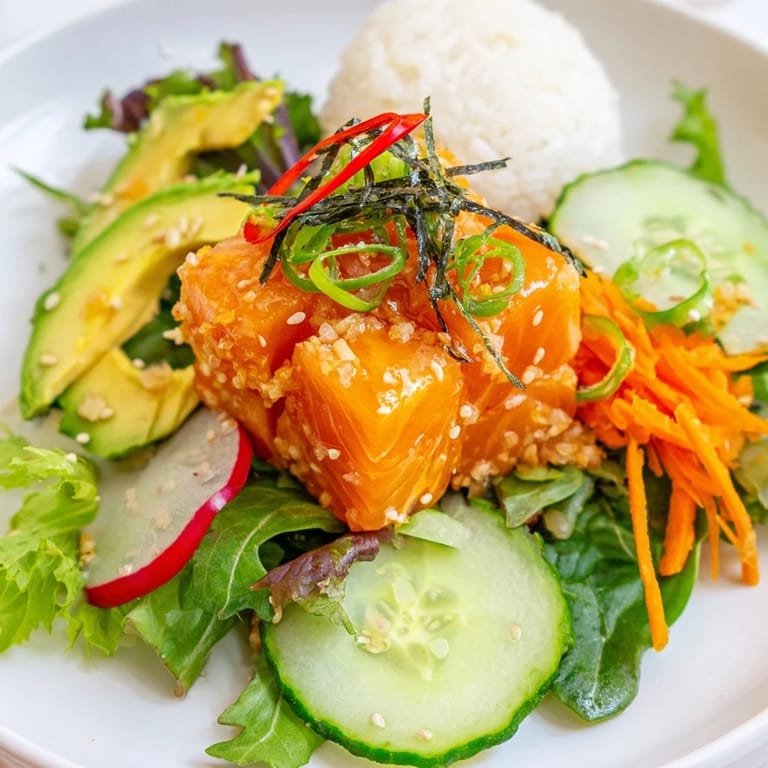
 The first time I assembled a poke bowl, I was standing in my kitchen on a Tuesday evening, sunlight streaming through the window, and I realized I'd been overthinking seafood. A friend had just returned from Hawaii and wouldn't stop talking about the poke she'd eaten there, so I decided to recreate it at home with whatever fresh fish I could find. That single bowl taught me that sometimes the simplest dishes—just good fish, crisp vegetables, and a bright dressing—are the ones that stay with you.
I made this for a summer gathering where everyone arrived tired and hungry, and watching people's faces light up as they took that first bite was worth every minute of prep. Someone asked if I'd ordered it from a restaurant, which I took as the highest compliment—there's something about poke that makes people believe it must have come from somewhere fancy.
Ingredients
- Sushi-grade salmon or tuna, 400 g: This is where quality truly matters; ask your fishmonger for the sushi-grade cut and use it the same day you buy it for the best texture and flavor.
- Soy sauce, 2 tbsp: The backbone of your marinade—use tamari if you need it gluten-free, and don't skimp on quality as it's tasted directly.
- Sesame oil, 1 tbsp: Just a touch adds that toasted, nutty depth that makes people ask what your secret ingredient is.
- Rice vinegar, 1 tbsp: The brightness that keeps everything from feeling too heavy; white vinegar works in a pinch but tastes noticeably sharper.
- Freshly grated ginger, 1 tsp: Always grate it fresh—pre-ground ginger tastes stale by comparison and you'll notice the difference immediately.
- Honey or maple syrup, 1 tsp: A whisper of sweetness that balances the salt and vinegar without announcing itself.
- Garlic clove, 1 small: Minced fine so it distributes evenly and doesn't give you unexpected strong bites.
- Mixed salad greens, 120 g: Choose a mix that includes some sturdy leaves like romaine so they don't wilt under the marinade.
- Cucumber, 1 medium: Thinly slice it just before serving so it stays crisp and cool against the warm spices of the fish.
- Avocado, 1 large: Add it last, just before serving, so it doesn't brown or get mushy from the acidic dressing.
- Carrots, 2 small: Julienned thin so they add crunch without competing with the fish for attention.
- Cooked sushi rice or brown rice, 120 g: Optional but recommended—it soaks up the extra marinade and makes the bowl more substantial.
- Toasted sesame seeds, 2 tbsp: Toast them yourself if you can; the aroma alone will make your kitchen smell like a sushi restaurant.
- Sliced scallions, 2 tbsp: The fresh onion bite at the end ties everything together.
- Nori sheets, 1: Cut into thin strips for a hit of umami and that satisfying seaweed flavor.
- Pickled ginger: Serve on the side so people can add as much or as little as they like.
- Red chili, 1 small: Optional, but a few thin slices add heat that's gentle rather than overwhelming.
Tired of Takeout? 🥡
Get 10 meals you can make faster than delivery arrives. Seriously.
One email. No spam. Unsubscribe anytime.
Instructions
- Whisk the marinade together:
- In a bowl, combine the soy sauce, sesame oil, rice vinegar, grated ginger, honey, and minced garlic, stirring until the honey dissolves completely. You'll smell the ginger and garlic release their oils, and that's how you know it's ready.
- Marinate the fish:
- Add your cubed fish to the marinade and toss gently—you want to coat it without breaking the delicate pieces. Cover the bowl and let it sit in the refrigerator for at least 10 minutes; this is the perfect time to prep your salad vegetables.
- Arrange your salad base:
- Divide the mixed greens, cucumber, carrots, and rice (if using) among four serving bowls, creating a foundation that's colorful and balanced. Think of it like building a canvas.
- Add the marinated fish:
- Spoon the fish and all its marinade over the top of each bowl so every element gets those delicious flavors. The liquid will seep into the greens and rice, making every bite taste intentional.
- Garnish generously:
- Top each bowl with sesame seeds, scallions, nori strips, pickled ginger, and chili if you like heat. This is where the bowl becomes visually stunning and inviting.
- Serve right away:
- The moment you finish plating is the moment to eat; the vegetables stay crisp and the fish stays at its best temperature.
 Pin It
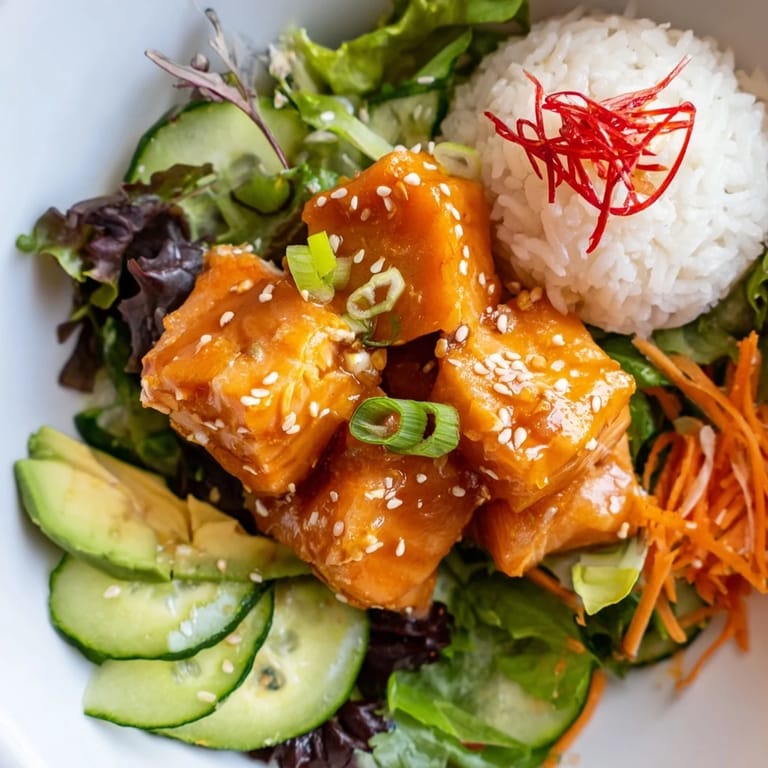
 There's a quiet moment that happens when someone takes their first bite of a poke bowl you've made—that pause where they're tasting the layers, feeling the cold crunch, noticing how the marinade brought everything together. That's when you know you've done something right.
The Art of the Marinade
The marinade is where all the magic lives, and it's simpler than you'd think. The soy gives you salt and umami, the sesame oil brings a toasted warmth, the rice vinegar adds brightness, and the ginger-honey-garlic trio creates a subtle complexity that makes people taste layers they didn't expect. I've learned through trial and error that balance matters more than precision—if your soy is particularly salty, use slightly less; if your ginger is especially pungent, you might hold back a touch. Taste as you go, and you'll develop an instinct for what feels right.
Building Your Perfect Bowl
There's no single correct way to build a poke bowl, which is what makes it so forgiving. Some people love the structure of rice at the bottom; others prefer the bowl to be mostly greens. Some add avocado, some skip it entirely. The only rule I follow is to make sure each spoonful gets a bit of everything—fish, fresh vegetable, and grain if you're using it. That way, no bite feels incomplete, and the flavors work together rather than separately.
Variations and Swaps
Once you understand the foundation, this bowl becomes infinitely adaptable. I've made it with cooked shrimp when salmon wasn't available, added edamame for extra protein and crunch, used microgreens instead of regular greens for a more delicate presentation, and even swapped the rice vinegar for fresh lime juice when I was out. The soy-ginger marinade works with almost any addition you can imagine, so feel free to treat this as a starting point rather than a rigid formula.
- Marinate cubed tofu or tempeh for 20 minutes if you want a vegetarian version that's just as satisfying.
- Add a soft-boiled egg or poached egg on top for richness and a different kind of protein.
- Drizzle extra sesame oil over the finished bowl just before eating for a silky mouthfeel.
 Pin It
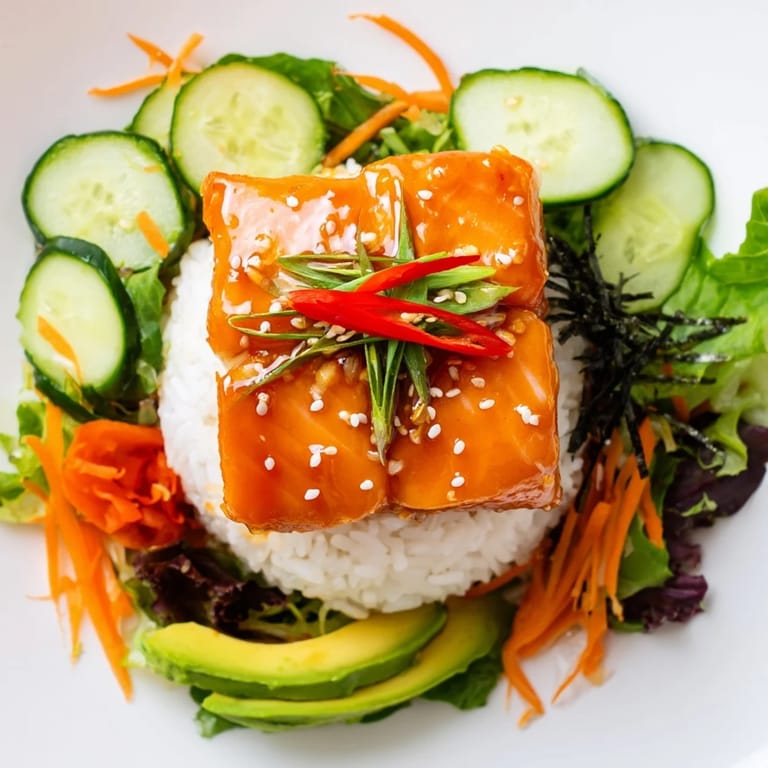
 A poke bowl isn't just a meal; it's an invitation to eat something that tastes like a vacation in a single bowl. Make it with care, taste as you build it, and you'll understand why my friend couldn't stop talking about hers.
Recipe FAQs
- → What type of fish works best for this dish?
Sushi-grade salmon or tuna cut into small cubes is ideal for freshness and texture.
- → Can I make this dish gluten-free?
Yes, use certified gluten-free soy sauce like tamari to keep it gluten-free.
- → What are good vegetarian alternatives?
Substitute the fish with marinated tofu or tempeh for a plant-based option.
- → How long should the marinade soak?
Marinate the fish cubes for at least 10 minutes to absorb flavors without compromising texture.
- → Which toppings enhance this bowl?
Toasted sesame seeds, sliced scallions, nori strips, pickled ginger, and sliced chili add flavor and crunch.
- → Is rice necessary in this preparation?
Rice is optional; sushi or brown rice can be included for added body and balance.