 Pin It
 There's something about a charcuterie board that feels like admitting you're too tired to cook but too hungry to pretend crackers alone will cut it. One evening, I found myself with an unexpected guest and a fridge that had potential but no real plan, so I started pulling out cheeses, some cured meats, whatever fruit hadn't gone soft yet. Twenty minutes later, we were sitting on the couch with a board balanced between us, talking through mouthfuls of brie and prosciutto like it was the most elaborate meal I'd prepared all week. It turns out the best meals don't always require a recipe—sometimes they just require permission to stop overthinking.
The best version of this board happened at a friend's place when she said, "I don't have time for dinner," and I remembered that she always had a good cheese habit. We raided her kitchen on a random Tuesday, and what started as snacking turned into two hours of conversation and laughter—the kind where you forget to check your phone. That's when I realized this isn't about the food being fancy; it's about creating a reason to slow down.
Ingredients
- Brie cheese: The soft one that melts on your tongue and makes everything feel luxe without any effort on your part.
- Sharp cheddar cheese: This gives you something with actual flavor and texture to push against the sweetness of the fruit.
- Goat cheese: Tangy and a little bit different—it's the ingredient that makes people say, "Oh, this is nice."
- Prosciutto: Paper-thin and salty; let it drape loosely so it looks generous and feels delicate.
- Salami: The one that brings a little spice and helps balance all the creamy cheese.
- Seedless grapes: Sweet, cold, and they cut through the richness like a little palate cleanser disguised as snacking.
- Apple slices: The slight tartness keeps everything from feeling one-note; toss them in a tiny bit of lemon juice if you're making this ahead.
- Berries: Color and brightness—they're as much about making the board look alive as they are about taste.
- Crackers or baguette slices: The vehicle for everything else; pick ones you'd actually eat on their own.
- Mixed nuts: Toasted if possible—they add crunch and substance when you need something more substantial than cheese.
- Honey or fig jam: Drizzle it, dip into it, or swirl it into the goat cheese; this is your sweet counterpoint.
- Olives: The salty, briny moment that makes you take a breath between bites.
Tired of Takeout? 🥡
Get 10 meals you can make faster than delivery arrives. Seriously.
One email. No spam. Unsubscribe anytime.
Instructions
- Start with the Cheeses:
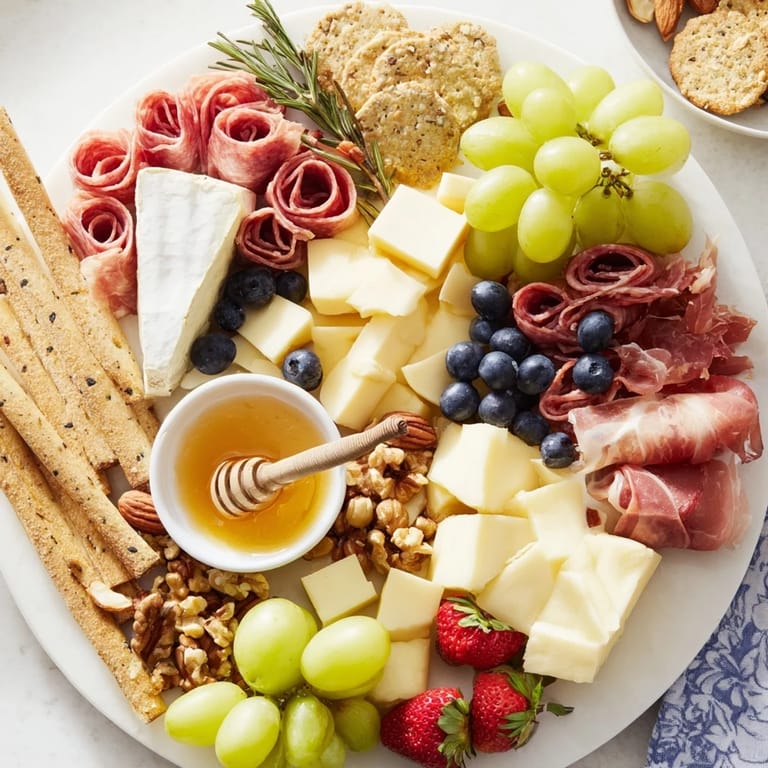
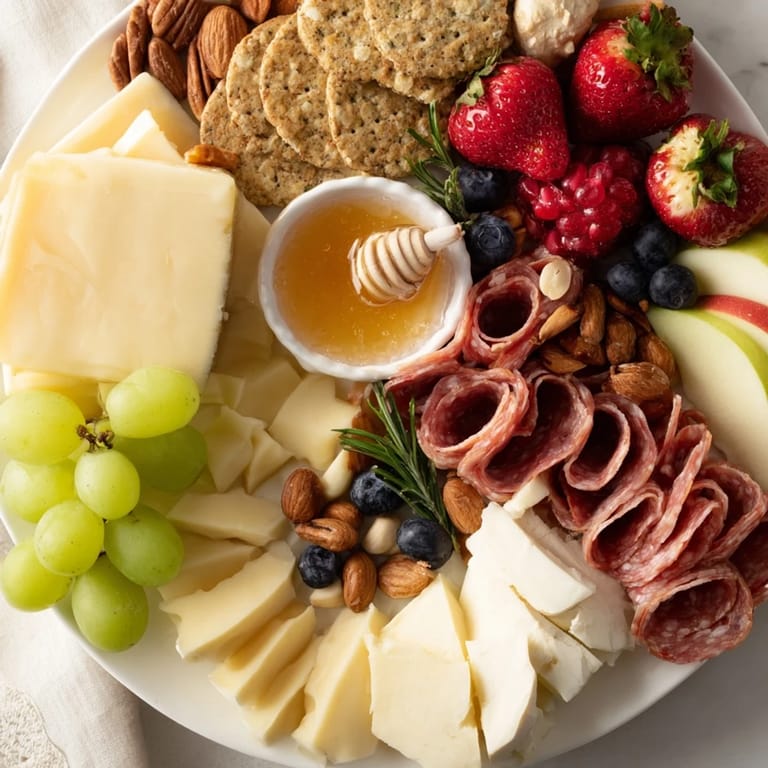
- Tear or slice your brie into wedges, cut the cheddar into small squares, and crumble or slice the goat cheese. Arrange them in separate little clusters across the board—you want people to see all three without hunting for them.
- Add the Cured Meats:
- Fold your prosciutto loosely into quarters so it looks abundant and elegant, then do the same with the salami. Tuck them into the gaps near the cheese, or make them their own section if you like things organized.
- Scatter the Fruits:
- Group the grapes, apple slices, and berries in small piles around the board—they're the punctuation marks that keep everything from looking too heavy. If you're not eating this immediately, put the apple in a separate bowl and add it at the last second so it doesn't brown.
- Fill the Spaces:
- Wedge crackers and baguette slices into the empty spots, then tuck the nuts in wherever they look good. Leave a little negative space; a crowded board feels chaotic instead of curated.
- Finish with the Accompaniments:
- Pour the honey or jam into a small bowl and place it where someone can easily reach it. Scatter the olives across the board or corral them in another small dish—either way works.
- Garnish and Serve:
- A small sprig of thyme or rosemary on top looks effortless and smells incredible when people lean in to eat. Serve it right away while everything is at the right temperature and nothing has wilted.
 Pin It
 The moment this became more than just a snack was when someone reached for a piece of brie, spread it on a cracker with a tiny dab of fig jam, added a single olive slice, and made a small sound of surprise. That's when I understood: the magic isn't in having fancy ingredients or spending hours at a cheese counter. It's in giving people permission to be a little indulgent on a random evening, without pretense or performance.
The Art of the Board
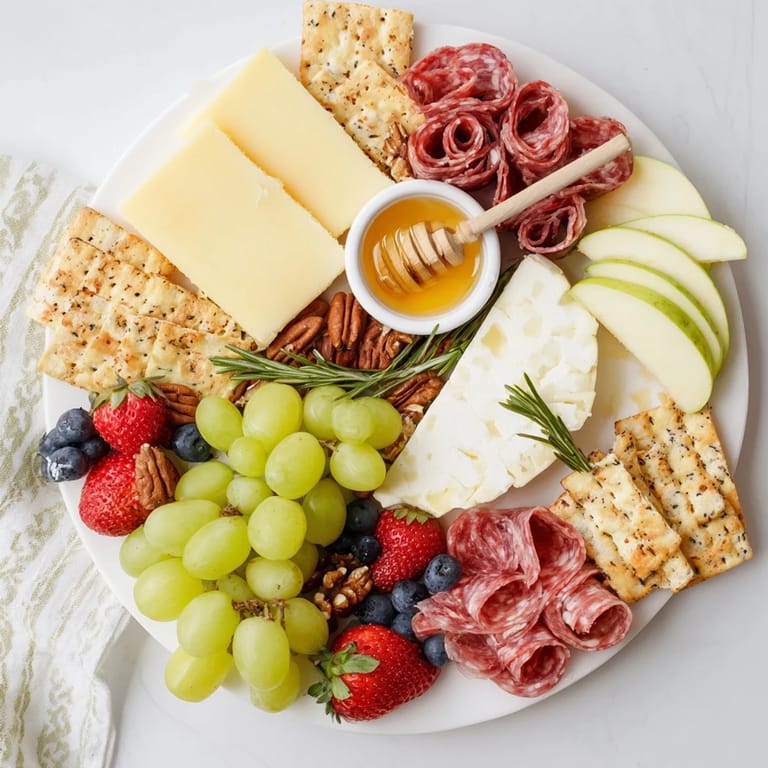
A charcuterie board is really just organized snacking, which sounds boring until you realize that organization is what transforms "leftover cheese" into "a thoughtful spread." The key is thinking about contrast: soft next to hard, salty next to sweet, richness balanced by brightness. Don't be afraid to lean into what you have on hand. If you've got a good blue cheese instead of brie, or dried apricots instead of fresh berries, the board doesn't fall apart—it just becomes yours instead of someone else's.
Building Confidence with Minimal Effort
Every time I make this, I'm surprised by how impressive it looks for something that took me less time than waiting for water to boil. The secret is that you're not actually cooking anything, so all you're doing is choosing good ingredients and arranging them with a little intention. Once you realize that's enough, you stop stressing about whether it's "fancy enough," and you just start enjoying the fact that you pulled together something that makes people happy.
Making It Your Own
The beauty of a charcuterie board is that there's no wrong way to do it—only your way. Maybe you're vegetarian and you skip the meat entirely, doubling down on cheeses and nuts instead. Maybe it's January and you load up on pears and pomegranate seeds. Maybe you've discovered a new Spanish cheese that changes everything, and now that's your signature move. The board is a blank canvas, and you're the one holding the brush.
- Season the board to the moment: autumn calls for dried figs and walnuts, summer wants stone fruit and fresh herbs.
- If you're feeding more than two people, scale everything up but keep the same proportions—more of everything beats trying to cram a galad into the same board.
- Build the board right before serving unless you're okay with apples that have started to brown and cheese that's gotten a little sweaty from warming up.
 Pin It
 This is the recipe I make when I want to feel like I've hosted without actually cooking, and that's not a shortcut—that's just being smart about your time. The people who eat from this board won't remember what was on it; they'll remember that you made space for them to slow down.
Recipe FAQs
- → What cheeses work best for this snack board?
Soft cheeses like brie and goat cheese paired with sharper varieties such as cheddar create a balanced flavor profile and texture contrast.
- → Can I substitute the meats for vegetarian options?
Yes, replacing cured meats with marinated vegetables or extra cheeses keeps the board flavorful and suitable for vegetarians.
- → What accompaniments enhance the platter?
Assorted crackers or sliced baguette, mixed nuts, olives, and a touch of honey or fig jam add varied textures and tastes.
- → How should the board be arranged for serving?
Place cheeses spaced evenly, fold the meats beside them, cluster fresh fruits nearby, and fill gaps with crackers, nuts, and olives for visual appeal.
- → Are there suggested drink pairings?
Light white wine, rosé, or sparkling water pair wonderfully with the mix of flavors on this board.
- → Can fresh herbs be added?
Yes, sprigs of thyme or rosemary can garnish the board for added aroma and decorative touch.