 Pin It
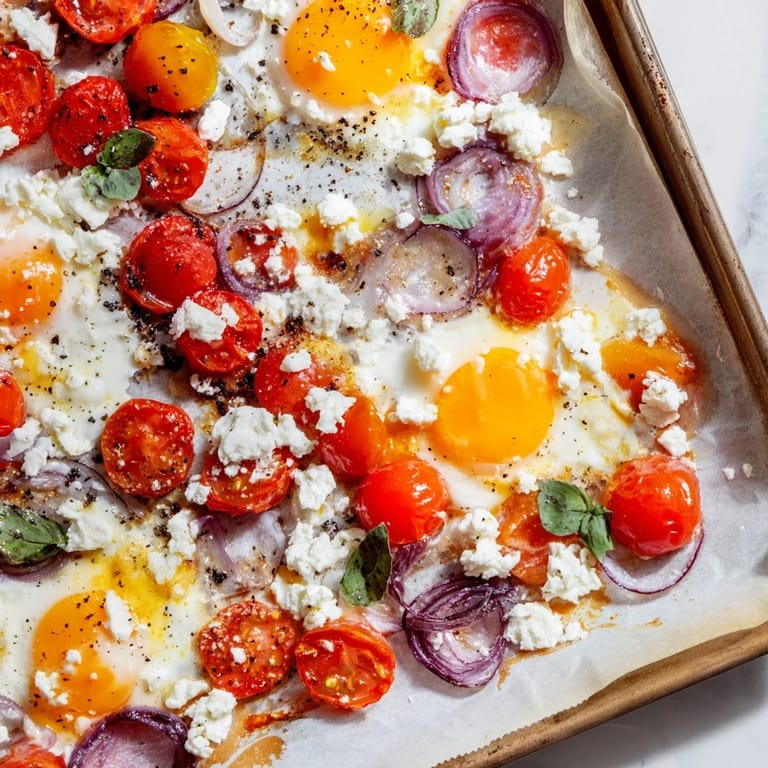
 There's something about the smell of roasting tomatoes that makes a Sunday morning feel less rushed. I discovered this sheet pan dish by accident one summer, when I had too many grape tomatoes ripening at once and not enough time for a complicated breakfast. I nestled eggs right into the warm tomatoes, crumbled some feta over everything, and realized I'd stumbled onto something that felt both effortless and generous enough for guests. Now it's become my go-to when I want to feed people without being stuck at the stove.
I made this for a group of friends who'd all become obsessed with Mediterranean food, and someone said it tasted like a vacation. That stuck with me. It's one of those dishes where humble ingredients—eggs, tomatoes, cheese—suddenly feel intentional and thoughtful just because of how you've arranged them on a pan.
Ingredients
- Grape tomatoes: They release their sweetness as they soften in the oven, and halving them creates little pools of juice that flavor everything around them.
- Garlic: A couple of cloves, minced fine, so they mellow into the roasted tomatoes rather than staying sharp.
- Red onion: Optional, but when you include it, the thin slices turn silky and almost sweet by the time the eggs are done.
- Feta cheese: Crumble it with your fingers right before using so it distributes unevenly—the pockets of extra cheese are the whole point.
- Large eggs: Room temperature eggs integrate better into the warm pan without shocking the yolks.
- Extra-virgin olive oil: Use one you actually like tasting, because it's not cooked long enough to disappear.
- Oregano: Dried works beautifully here, awakening as the tomatoes release their moisture.
- Red pepper flakes: A whisper of heat, but only if you want it.
- Fresh basil: Torn by hand just before serving, so it bruises slightly and releases its perfume.
Tired of Takeout? 🥡
Get 10 meals you can make faster than delivery arrives. Seriously.
One email. No spam. Unsubscribe anytime.
Instructions
- Get your pan ready:
- Preheat the oven to 400°F and line a rimmed sheet pan with parchment paper or a light coat of oil. A rimmed pan keeps the tomato juices from pooling onto your oven floor.
- Season and roast the tomatoes:
- Scatter the halved tomatoes across the pan, add the minced garlic and sliced onion if you're using it, then drizzle generously with olive oil. Sprinkle with oregano, red pepper flakes, salt, and pepper, toss everything together until coated, and slide into the oven for 10 minutes. The tomatoes should soften just enough that they start releasing their juices.
- Make wells for the eggs:
- Pull the pan out carefully—it's hot—and create eight little gaps among the tomatoes by gently moving them aside. These become the nests for your eggs.
- Crack and nestle the eggs:
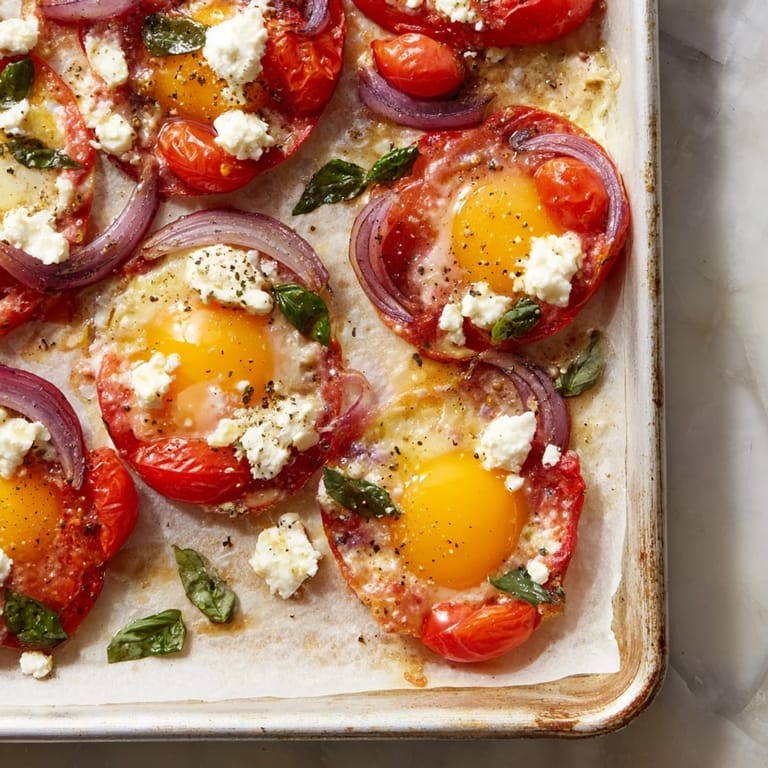
- Break one egg into each well, going slowly so the yolk doesn't break. Once all eight eggs are in, scatter the crumbled feta over everything, covering some of the whites and tomatoes.
- Bake until the whites just set:
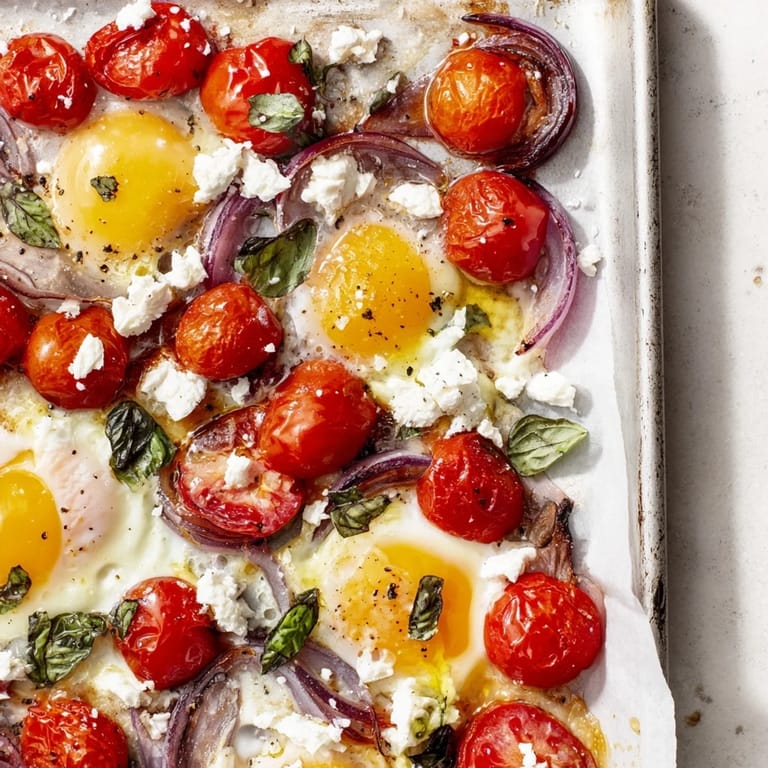
- Return to the oven for 8 to 10 minutes, watching toward the end so the yolks stay slightly runny. You want the whites to be opaque but the yolks to jiggle a little when you move the pan.
- Finish and serve:
- Pull it out and scatter fresh basil across the top while everything is still steaming. Serve straight from the pan—it looks beautiful that way and keeps everything warm.
 Pin It
 I learned the real magic of this dish when someone spread a piece of sourdough with the warm yolks mixed with the tomato juices, and suddenly everyone at the table was doing the same thing. It became less about the eggs and more about that moment when breakfast turned into an event.
Why Room Temperature Eggs Matter
Cold eggs straight from the fridge will cook unevenly when placed on a hot pan—the outsides set while the centers stay too soft. If you have time, let your eggs sit on the counter for five minutes while the oven preheats. The warmth of the tomatoes and pan does most of the cooking, and starting with room temperature eggs gives you much better control over the final texture.
Building Flavor While Things Roast
The first 10 minutes while the tomatoes roast alone is crucial—this is when they concentrate their sweetness and release their juice into the oil. The garlic toasts gently into the background, and if you've added onion, it begins to caramelize. Don't skip this step or rush it by adding the eggs early. Those first 10 minutes make the difference between tomatoes that taste bright and tomatoes that taste like themselves, concentrated and round.
Customizing Without Losing the Soul
This dish is forgiving enough to adapt, but it works best when you respect the balance of acidity and richness. Adding spinach, roasted red peppers, or cooked potatoes before the eggs gives you a heartier dish. If you want to keep it light, basil and feta are enough. The key is not overdoing it—the charm comes from simplicity and quality ingredients showing up as themselves.
- Spinach wilts beautifully in the heat if you add it during the first 10-minute roast.
- A drizzle of pesto or extra olive oil at the end adds richness without changing the core flavors.
- Sourdough bread soaking up the yolks and tomato juice is non-negotiable.
 Pin It
 This recipe asks very little of you and gives back something that tastes like you spent the whole morning cooking. Serve it warm, with bread, and watch what happens when people realize they can do this whenever they want.
Recipe FAQs
- → What kind of tomatoes work best?
Grape tomatoes or cherry tomatoes are ideal as they soften well during roasting and add sweetness to the dish.
- → Can I use a different cheese?
Feta is traditional for its tanginess, but goat cheese or ricotta can also provide creamy texture and richness.
- → How do I achieve runny egg yolks?
Bake until the egg whites are just set but yolks remain slightly soft, typically 8-10 minutes at 400°F (200°C).
- → Can I add other vegetables?
Yes, baby spinach, sliced bell peppers, or cooked potatoes can be added before roasting for extra heartiness.
- → What herbs complement this dish?
Fresh basil provides brightness, while dried oregano adds earthiness. You can also experiment with thyme or parsley.