 Pin It
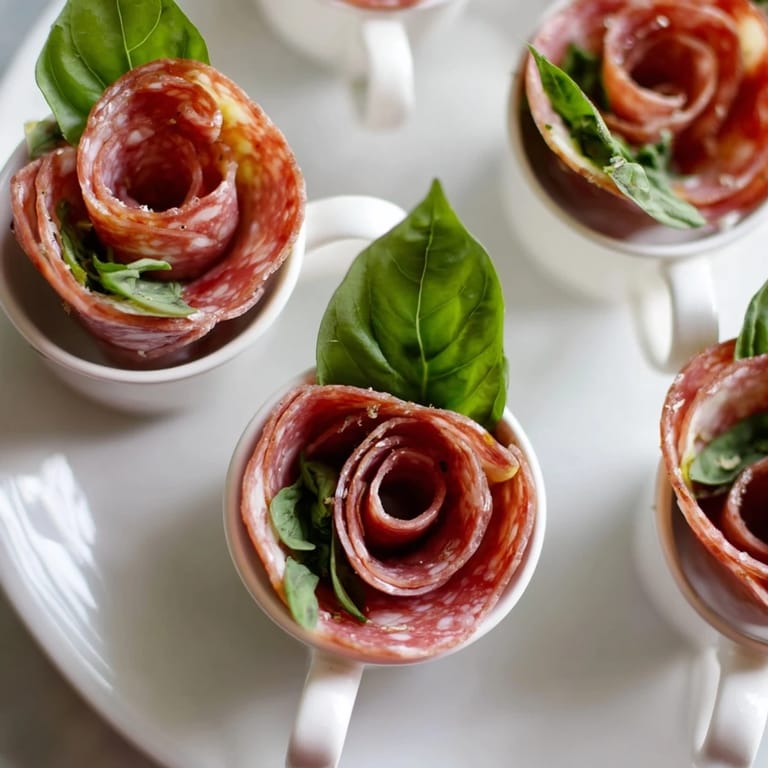
 The first time I folded salami into roses, I wasn't trying to be fancy—I was just rearranging appetizers on a platter when my sister walked in and gasped. "Why does that look like a flower?" she asked. That simple moment sparked something, and within weeks I'd found those vintage porcelain teacups at an estate sale and decided to lean into the whimsy entirely. Now whenever I make these, I can almost feel that same spark of discovery, that moment when something ordinary transforms into something beautiful just by changing how you see it.
I served these at my sister's engagement party, and I'll never forget watching her friends pick them up so carefully, almost reverently, like they were genuine blooms instead of salami. One guest asked if she could take a photo before eating hers, and suddenly everyone was doing the same. It turned into this genuinely sweet moment where food became a conversation starter, and people were talking about the thoughtfulness behind it as much as enjoying the taste.
Ingredients
- Salami slices (18 large, thin ones): The backbone of your roses—buy the thinnest cuts your deli counter offers, as they roll without cracking and create those delicate petal layers that actually look like flowers.
- Pepperoni slices (18 large, thin ones): The bolder sister to salami, pepperoni gives you color variety and a slightly spicier edge that keeps the flavor interesting when you alternate between cups.
- Porcelain teacups (6 small ones): Hunt for actual vintage pieces if you can; they tell their own story and feel so much more intentional than new matching sets.
- Fresh basil or baby arugula (optional but recommended): A whisper of green lining the cup transforms it from clever to genuinely elegant, plus the fresh herb cuts through the richness of the cured meat perfectly.
- Edible flowers like pansies or violets (optional): These are the final flourish that makes people lean in closer—they add a real flower element that completes the illusion.
Tired of Takeout? 🥡
Get 10 meals you can make faster than delivery arrives. Seriously.
One email. No spam. Unsubscribe anytime.
Instructions
- Prepare your salami line:
- Lay six salami slices in a slightly overlapping row on a clean surface, each one covering about a third of the previous slice. Think of it like shingles on a roof—they need to connect but not be completely hidden. You want a continuous strip that's ready to roll.
- Roll into a spiral:
- Starting at one end, gently roll the entire line tightly toward you, creating a compact spiral. Use your fingers to guide the meat as you go—it should feel organic, like you're coaxing it into shape rather than forcing it. Stop when you've rolled through to the other end.
- Release the petals:
- Stand your rolled spiral upright on the work surface (so the spiral end faces up like the center of a rose). With your fingertips, gently loosen and separate each layer outward, letting the petals unfurl naturally. Don't rush this part; slight irregularities make it look more like a real bloom than a perfectly geometric shape.
- Create your pepperoni rose:
- Repeat the entire process with six pepperoni slices. The pepperoni will be slightly more delicate than salami, so handle it with a bit more care as you roll, but the technique is identical.
- Make three of each:
- Repeat both processes one more time so you end up with three salami roses and three pepperoni roses total. This gives you a lovely variety when arranged in the cups.
- Line the teacups:
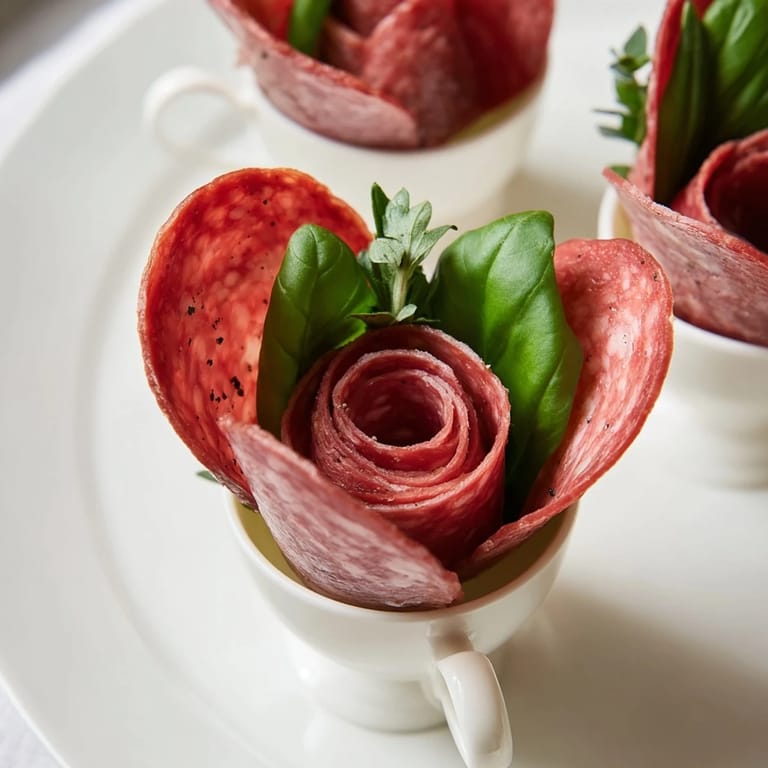
- If using them, place a basil leaf or a small handful of arugula in the bottom of each teacup. This adds color contrast and creates a little nest for your rose to sit in.
- Nestle the roses:
- Carefully transfer each rose into a teacup, adjusting the petals so they're open and full-looking. If a petal folds inward, gently coax it back out with your fingertip—you want the blooming effect, not the closed bud.
- Add the final touch:
- If you're using edible flowers, tuck one gently into the side of each rose where it looks most natural. Let it rest there casually rather than forcing it into the center.
 Pin It
 What struck me most about serving these wasn't that they looked beautiful, but that they tasted good too. The thin salami and pepperoni melted slightly on the tongue, and when you bit into the herb lining, suddenly you had this complete flavor moment—savory, fresh, elegant all at once. It was one of those rare times when pretty food was also genuinely delicious, not just a pretty distraction.
The Story Behind Victorian Presentation
I got obsessed with Victorian tea aesthetics after watching an old film where every detail mattered—the china, the arrangement, even the way someone held a teacup. It felt like that era understood that eating wasn't just about sustenance; it was theater. These salami roses came from trying to capture that same feeling with something modern and casual, turning a simple appetizer into a moment. There's something wonderful about mixing high style with everyday ingredients, pretending for an hour that life is more formal and thoughtful than it usually is.
Flavor Variations That Work Beautifully
Once you master the rose-rolling technique, the world opens up. I've used prosciutto for a delicate, almost translucent rose, and it creates this entirely different visual effect—more fragile-looking, more refined. Coppa works too, with its marbling creating interesting texture variations as you unfold the petals. Even mixing two different meats in one rose creates a subtle color gradient that looks intentional, like you're showing off your creativity rather than covering up a mistake.
Serving Strategies and Make-Ahead Magic
These are the secret weapon for entertaining because they're completely forgiving. You can assemble them hours ahead, refrigerate them (which actually makes the meat a bit firmer and easier to handle), and pull them out when guests arrive. I love arranging them on a board with crackers, soft cheeses like brie, and fresh grapes—the cool, salty roses paired with fruit and creamy cheese creates this unexpectedly harmonious spread that looks intentional and curated, even if you threw it together right before people arrived.
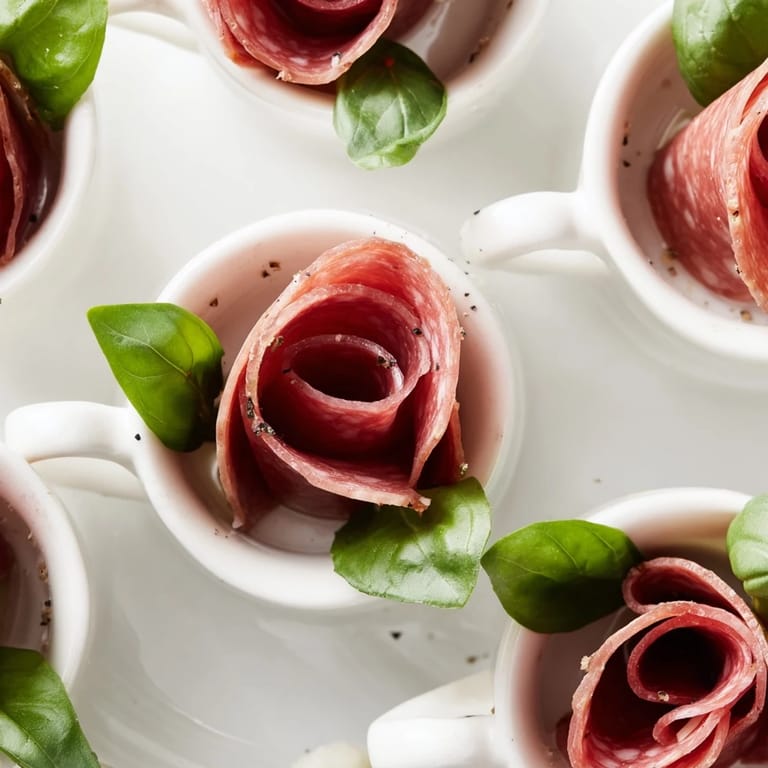
- A light brush of olive oil mixed with cracked black pepper before rolling adds depth without overpowering the delicate meat flavor.
- Keep everything chilled until the last moment—warm salami loses its structure and doesn't hold the rose shape nearly as well.
- If you're serving at a casual gathering, arrange the cups standing upright on a board so guests can simply grab a teacup and enjoy it as a single-bite elegance moment.
 Pin It
 These little roses remind me that the best entertaining moments come from caring about details and enjoying the process rather than stressing about perfection. They're proof that simple ingredients, a bit of intention, and maybe some old teacups are all you need to create something that feels special.
Recipe FAQs
- → How do I create the rose shapes from the meats?
Arrange slices in overlapping lines and roll tightly into spirals, then gently loosen the edges to resemble petals.
- → Can I use other meats for the roses?
Yes, cured meats like prosciutto or coppa can be substituted for variety.
- → What garnishes complement the presentation?
Fresh basil or baby arugula works well to line the cups, and edible flowers add a beautiful decorative touch.
- → Should the appetizer be served warm or chilled?
It is best served slightly chilled; prepare up to two hours ahead and refrigerate until serving.
- → Are there recommended accompaniments?
Assorted crackers, mild cheeses like brie or havarti, and fresh grapes or berries complement the flavors nicely.