 Pin It
 There's something almost magical about carbonara—how it transforms a handful of pantry staples into something that tastes like you've been cooking all afternoon. I discovered the real speed of this dish by accident one weeknight when I was too tired to think, too hungry to wait, and too stubborn to order takeout. Twenty minutes later, I was twirling silky pasta that somehow tasted richer and more indulgent than anything I'd made in hours. It became my secret weapon for nights when I needed comfort food but not commitment.
I made this for my partner on a random Tuesday after they'd had the worst day, and watching their face when they took the first bite—that moment when exhaustion just melts into contentment—is exactly why I keep coming back to this recipe. It's proof that sometimes the fastest meals carry the most weight.
Ingredients
- Spaghetti (200g): Dried pasta cooks to that perfect al dente texture, and the starch in the cooking water becomes essential for the sauce, so don't skip reserving it.
- Eggs (2 large): Room temperature if possible—they'll incorporate more smoothly and create that silky finish without scrambling.
- Parmesan cheese (40g, freshly grated): Pre-grated cheese has anti-caking agents that won't melt as smoothly, so investing in a wedge and a grater makes a surprising difference.
- Bacon or pancetta (100g, diced): Pancetta is the traditional choice and has more fat, which enriches everything, but good bacon works beautifully too.
- Black pepper (1/4 tsp freshly ground): Freshly ground pepper tastes almost like a different spice entirely compared to pre-ground—it's worth the five seconds of grinding.
- Extra Parmesan and cracked black pepper: For finishing, because these final touches are where the elegance lives.
Tired of Takeout? 🥡
Get 10 meals you can make faster than delivery arrives. Seriously.
One email. No spam. Unsubscribe anytime.
Instructions
- Get your water going:
- Fill a large pot with salted water—it should taste almost like the sea—and let it come to a rolling boil while you prepare everything else. This is the one moment where rushing makes sense.
- Prepare the egg mixture:
- Whisk eggs, grated Parmesan, and pepper in a bowl until completely combined, smooth, and ready to work its magic. Set it aside and don't touch it again until you need it.
- Cook the pasta:
- Add spaghetti to boiling water and cook according to package instructions until al dente—when it still has the slightest resistance when you bite it. Before draining, measure out 1/3 cup of the starchy cooking water into a small cup; you'll thank yourself in moments.
- Crisp the bacon:
- While pasta cooks, heat a large skillet over medium heat and add diced bacon or pancetta. Let it sizzle and brown for about 3 to 4 minutes until the edges curl and brown spots appear, releasing all that savory fat into the pan. Remove from heat—this is crucial.
- Bring it all together:
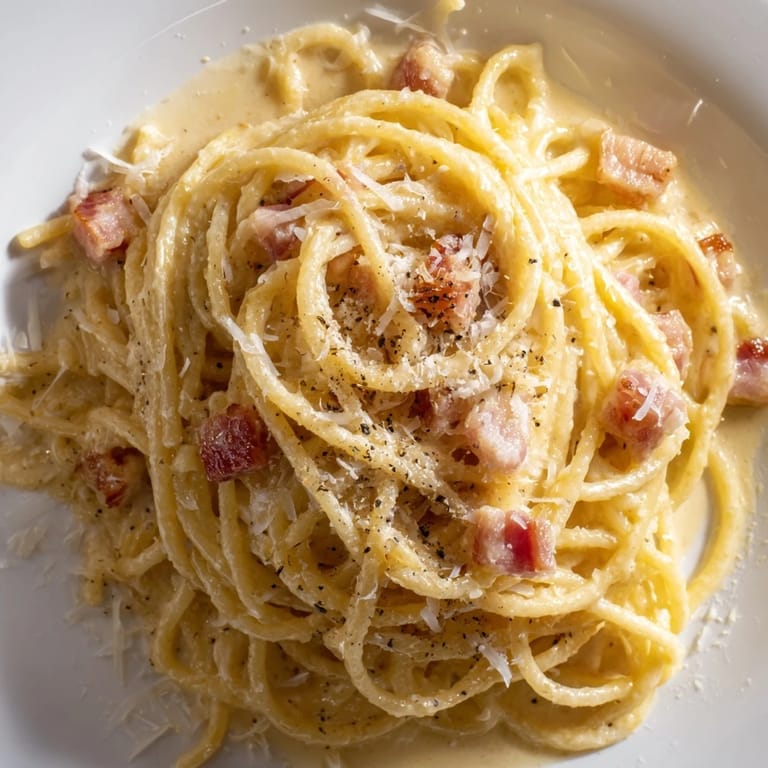
- Add the hot drained pasta directly to the skillet with bacon, then immediately pour in the egg-Parmesan mixture while tossing frantically with tongs or a fork. The residual heat cooks the eggs into a silky sauce, not scrambled bits—keep moving, keep tossing, and add pasta water a splash at a time until everything coats in glossy, creamy sauce.
- Finish and serve:
- Plate immediately while the sauce is still flowing and silky, then top with extra Parmesan and a generous crack of fresh black pepper. This is a dish that waits for no one.
 Pin It
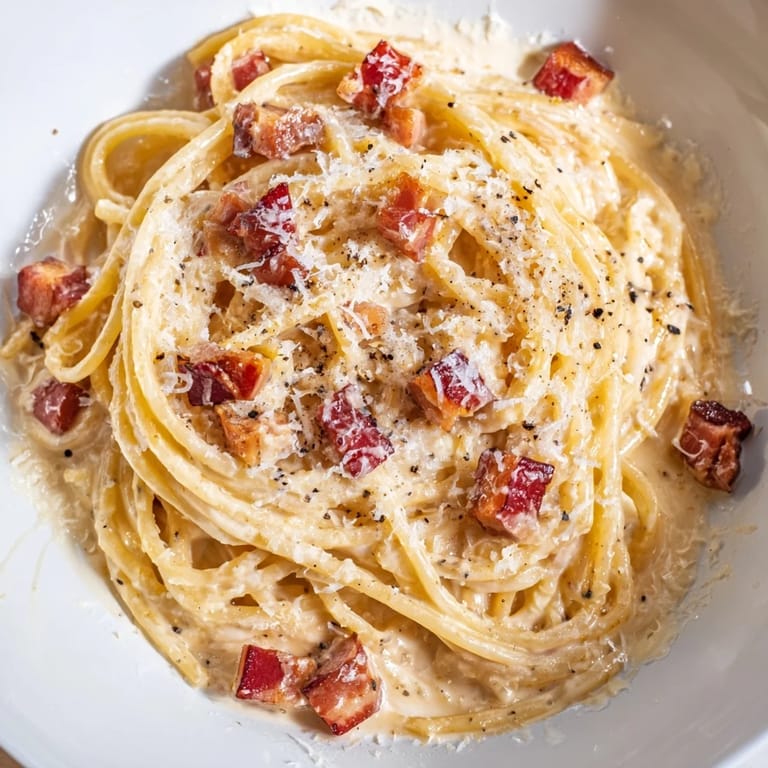
 I remember standing in my kitchen in that golden light before dinner service, watching the egg mixture catch the light as it transformed into something creamy and whole, thinking about how pasta has this way of bringing people together even on the nights when nobody planned for it. That's the heart of carbonara: unfussy, honest, and deeply generous.
Timing and Rhythm
The secret to carbonara isn't in technique alone—it's in choreography. Everything needs to happen in sequence, and the beauty is that once you understand the rhythm, your hands remember it. Boiling pasta, crisping bacon, and whisking eggs all happen simultaneously, which sounds stressful until you realize it's actually meditative. You're moving between pot and pan and bowl in this elegant dance where nothing burns because you're present and attentive. That attention is what separates carbonara from a scrambled pasta accident.
Why This Version Works
Classic Roman carbonara can intimidate home cooks, but this express version strips away nothing essential—just the waiting. Some recipes add cream, which is wonderful but unnecessary and, honestly, slightly heretical to a Roman cook. Here, the starch from pasta water and the fat from bacon and egg yolks create sauce from first principles, which somehow tastes more authentic even though it comes together in minutes. The restraint is the whole point.
Variations and Moments
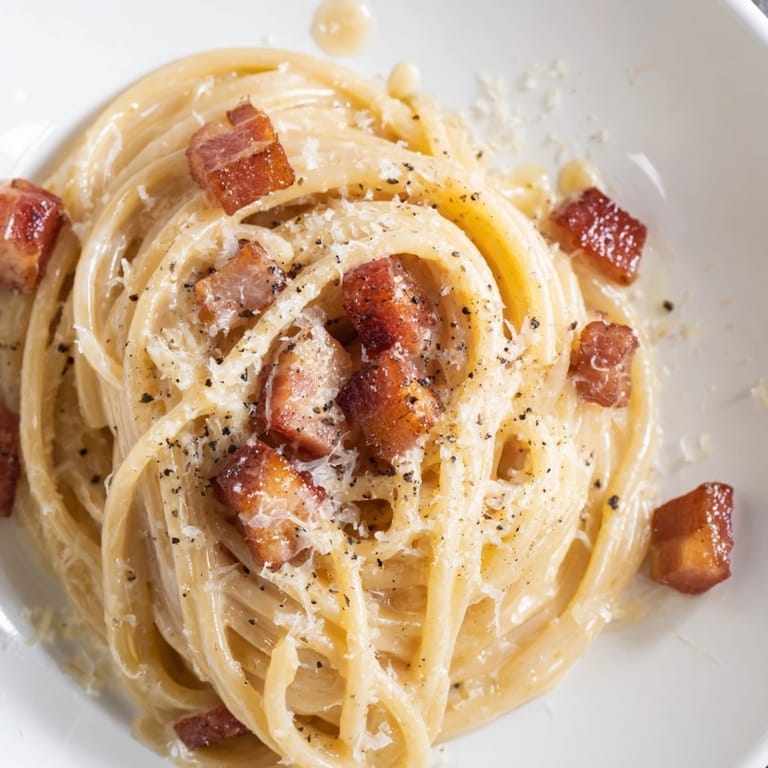
I've made this with a clove of minced garlic added to the bacon oil—just for a minute before the pasta goes in—and it shifts the flavor toward something warmer and deeper. I've tried Pecorino Romano instead of Parmesan, and the sharpness wakes up the whole dish. Some nights I've cracked in a touch more pepper, other times I've held back. The skeleton of the recipe is strong enough to hold small changes without losing its soul.
- Add garlic only for a minute to the bacon fat, then remove it before tossing pasta to avoid burnt bits.
- Pecorino Romano gives a more assertive, traditional flavor if you want sharper intensity.
- This doubles easily, but keep to a single large skillet so the pasta tosses properly in the residual heat.
 Pin It
 Carbonara taught me that simplicity isn't lack of ambition—it's the opposite. Mastering a dish with five ingredients is harder than hiding behind a dozen flavors. This version, fast as it is, carries every ounce of that discipline.
Recipe FAQs
- → How do I prevent eggs from scrambling in the sauce?
Work quickly when mixing the egg and cheese mixture with the hot pasta off the heat, adding reserved pasta water slowly to create a smooth, creamy texture.
- → Can I substitute bacon with another ingredient?
Pancetta works well as a substitute for bacon, adding authentic flavor and a similar texture to the dish.
- → What type of cheese is best for this dish?
Freshly grated Parmesan is traditional, but Pecorino Romano offers a sharper, more authentic taste.
- → Is it necessary to reserve pasta water?
Yes, reserved pasta water helps emulsify the sauce and achieve the perfect creamy consistency.
- → Can I add garlic for extra flavor?
Adding minced garlic while frying the bacon enhances the aroma; just remove it before combining the pasta and sauce.